






 Portuguese
  Spanish


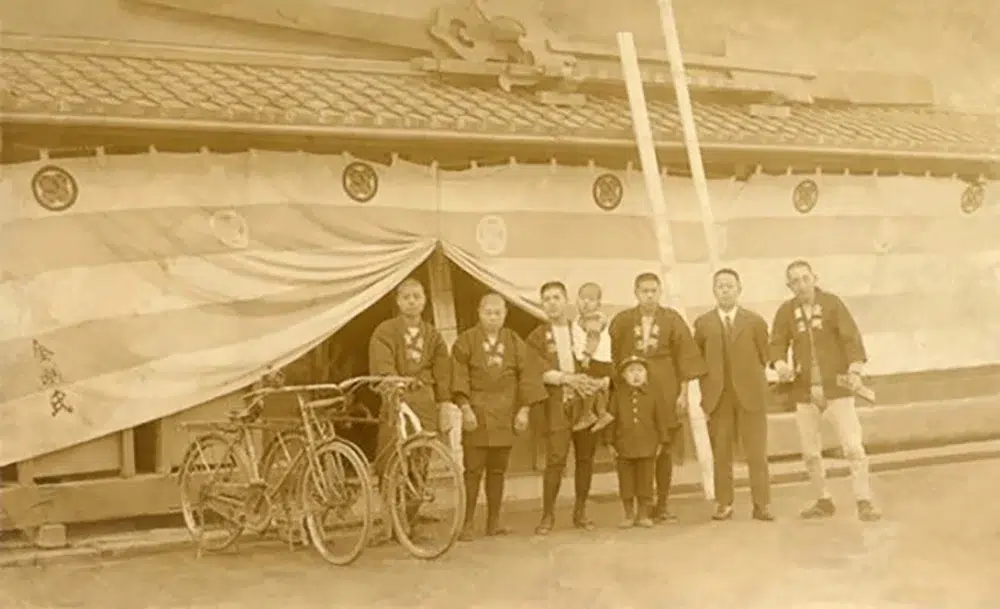


In a World Where Companies Rise and Fall Quickly, One Company Stands Out for Being in Operation for Almost 1,500 Years. The Oldest Company in the World Has Withstood Many Challenges
Thousands of companies are created and close their doors daily around the world. Some last for years, others for only months. Even the most valuable companies on the planet, which dominate entire sectors, have only a few decades of existence. In this scenario, we will talk about the oldest company in the world.
But there is one impressive exception. The oldest company still in operation was founded nearly 1,500 years ago. It is Kongo Gumi, a Japanese construction company that started its activities in the 6th century.
Origin of Kongo Gumi — The Oldest Company in the World
The company’s history begins in the year 578, when the Korean carpenter Kongō Shikō arrived in Japan.
-
Cold War Secret Plane Lost Engine Mid-Flight, Forcing Six to Parachute in Darkness; Wreckage Remains in Death Valley Mountains 73 Years Later

-
Opened in 1980, Shopping Recife was Pernambuco’s first mall and helped transform Boa Viagem into a bustling and sought-after district in southern Recife.
-
Tired of Monthly Water Supply, South African Villagers in Limpopo Connect Mountain Spring to Taps, Bringing Water to 5,000 People with $700 Initiative

-
Rare Case of Neurocysticercosis in Spain: 60-Year-Old Man’s Suspected Brain Cancer Turns Out to Be Tapeworm Cysts, Avoiding Invasive Cancer Treatments




He was part of a group of artisans specialized in building Buddhist temples. The country, which at the time was dominated by Taoism, was undergoing an intense process of adopting Buddhism.
To推动这一变化, the Japanese royal family decided to raise the first Buddhist temple in the archipelago: the Shitenno-ji, in Osaka.
As there was no local workforce with knowledge in Buddhist architecture, Kongō Shikō and two other carpenters were invited to execute the project.
Once the work was completed, Kongō Shikō decided to stay in Japan and founded Kongo Gumi, beginning a story that would span centuries.
Surviving the Test of Time
Since the construction of the Shitenno-ji, Kongo Gumi has specialized in the construction and restoration of Buddhist temples all over Japan.
Throughout its existence, it has faced significant challenges, such as wars, economic crises, and political changes. Still, it has managed to remain active for almost a millennium and a half.
According to Hidekazu Sone, an associate professor at Shizuoka University of Art and Culture, the company’s longevity is directly linked to the quality of its craftsmen and the efficient management of its leaders.
Historical records indicate that the company has always had the most qualified carpenters in Japan.
The internal competition among these professionals led to the constant improvement of construction techniques, ensuring Kongo Gumi’s superiority in the market.
Leadership and Tradition
For most of its existence, Kongo Gumi has been managed by direct descendants of Kongō Shikō. There have been 40 generations of the same family leading the company. But this continuity was not based solely on blood ties.
The family always prioritized competence over tradition. If the firstborn did not demonstrate sufficient skill, another family member would take over leadership.
If there were no male descendants, daughters would marry talented carpenters, ensuring the continuity of management.
During the Edo Period (1603-1868), Kongo Gumi faced fierce competition from other groups of carpenters.
To remain in the market, it began selecting leaders who, in addition to being skilled craftsmen, had administrative abilities. This flexibility helped the company navigate crises over the centuries.
Crises and Restructuring
Despite its long history, Kongo Gumi was not immune to difficulties. In the early 20th century, during the Showa Depression, the company faced severe financial problems.
World War II also brought challenges.
With the economy devastated and the demand for temple construction reduced, the company had to reinvent itself to survive.
However, the hardest blow came in 2006. Accumulating large debts, Kongo Gumi could no longer operate independently.
It was then acquired by the Takamatsu Construction Group, a construction company in Osaka.
Legacy and Influence
Today, Kongo Gumi continues to exist, but as a subsidiary of Takamatsu. Its historical identity remains alive, and its influence can still be seen in the construction and restoration of Buddhist temples across Japan.
However, no descendant of the Kongo family occupies leadership positions in the company. Only one family member still works at the company, keeping the tradition alive in some way.
The legacy of Kongo Gumi goes beyond business history. Its management model, adaptation to change, and the quality of its labor are examples of longevity and resilience.
Few companies in the world can boast such an impressive history.
Even without the independence of the past, Kongo Gumi remains a symbol of tradition and innovation in Japanese construction.





oi
Em um mundo tão devastador para as empresas , saber que uma atravessou séculos, e uma inspiração para empreendedores, manter – se ativo e prosperar, seguir firme e focar o futuro, parabéns.