Portuguese
  Spanish


Powdered drink mix that marked generations in Brazil, Ki-Suco went through ownership changes, lost prominence on the shelves, and found a new space within Enova Foods, keeping the Jarrão as a symbol of emotional memory and a commercial bet on popular consumption.
The Ki-Suco, a powdered drink mix that marked generations in Brazil and came to be treated as synonymous with the category itself, has not disappeared from the shelves: the brand was relaunched, changed ownership, and today is part of the portfolio of Enova Foods, a food company linked to Order VC and mainly focused on popular consumption.
The trajectory shows how a product associated with Brazilian kitchens of the 1970s, 1980s, and 1990s lost space to competitors who adopted other communication strategies but maintained enough commercial relevance to be part of a food industry’s portfolio.
During its peak market presence, Ki-Suco was sold in packets prepared with water and sugar, yielding one liter per package.
-
6-Year-Old Finds Ancient Neanderthal Axe on English Beach, Discovers Its Significance Three Years Later

-
Over 500,000 Wild Boars Culled in Eight Months, but Industry Estimates 1.25 Million, Raising Concerns About Crop Damage, Threatened Livestock, and Health Risks in Rural Brazil

-
Chinese Spacecraft Releases Mysterious Object in Orbit, Sparking Global Debate on Space Technology and Earth Monitoring

-
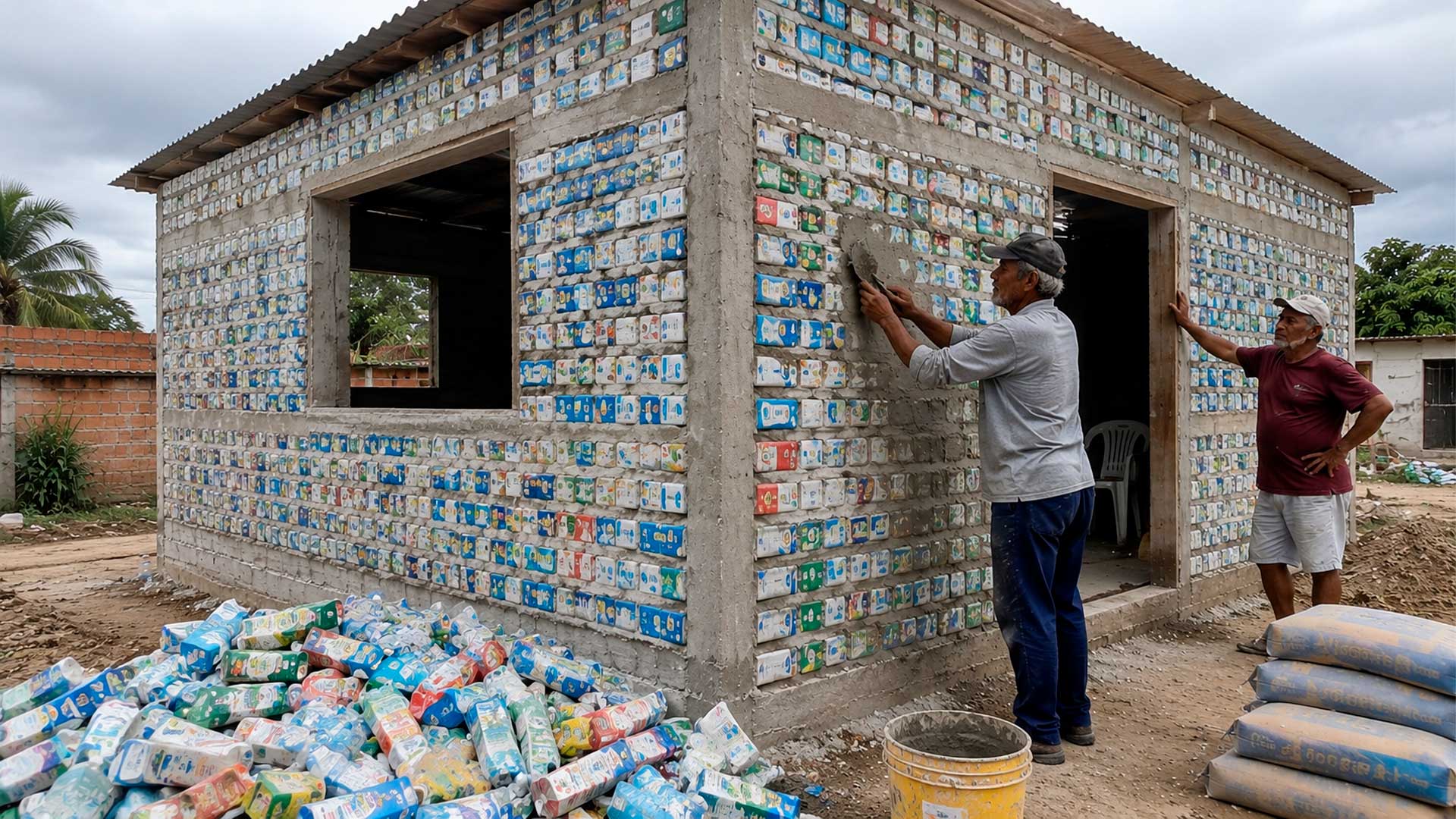
Retired Builder Constructs House Using Over 4,000 Milk Cartons in Brazil, Engineer Estimates Structure Could Last 100 Years



The format, combined with the low price and wide distribution, brought the drink to birthdays, school snacks, home refrigerators, and small businesses that used the powder to prepare popsicles, slushies, or homemade ice cream.
According to the brand’s historical communication, the product arrived in Brazil in 1961 under the name Q-Suco and later became known as Ki-Suco.
The change brought the drink closer to Kibon, the company responsible for launching the beverage in the Brazilian market after being incorporated by General Foods.
Origin of Ki-Suco began in the United States
Before arriving in Brazil, the story of Ki-Suco began in the United States, with the product that gave rise to Kool-Aid.
The drink was born in Nebraska, from a solution created to reduce packaging, ingredient, and transportation costs of a concentrated beverage sold in bottles.
In 1928, the powdered version entered the North American market after Edwin Perkins’ initial tests with a dehydrated formula.
The new format allowed the product to be transported in lightweight envelopes, cheaper and less prone to losses, a factor that favored the expansion of a drink aimed at home preparation.
In 1953, General Foods bought the Kool-Aid brand.
A few years later, the concept arrived in Brazil through Kibon, which launched the drink in 1961, initially as Q-Suco, in packets aimed at family consumption and quick preparation.
The image of the Jarrão, a mascot in the form of a smiling jar, became a central part of the brand’s identity.
Inspired by the character used by Kool-Aid in the United States, the symbol began to appear on packaging, advertisements, and promotional materials, helping to associate the product with jar preparation.
Low price and Jarrão boosted success
The growth of Ki-Suco in Brazil was linked to a combination of low price, high yield, simple preparation, and constant advertising presence.
In a scenario of high inflation and pressured income, the packet that yielded one liter offered a cheaper alternative to soda and natural juice.
The brand also adopted a promotional strategy based on distributing plastic jars to consumers.
As a result, the preparation ritual gained presence at home and kept the brand visible in the kitchens of middle and lower-class families.
During its peak circulation years, the slogan “Ki-Suco quenches thirst playfully” reinforced the association between the product and the children’s universe.
The phrase positioned the refreshment as a drink for snacks, parties, and everyday life, without relying on sophisticated attributes or nutritional discourse.
The institutional page of Ki-Suco states that the brand reached its peak in 1980 and became synonymous with the powdered juice category in the country.
The percentage of about 70% of the market, cited in reports about the brand, is treated as historical data associated with the phase of greatest commercial dominance, but does not appear accompanied by detailed public data.
Tang changed the powdered refreshment competition
The loss of space for Ki-Suco gained momentum with the arrival of competitors who began to use communication based on practicality, vitamins, and modernization of consumption.
Among them, Tang, linked to the Kraft universe, competed with consumers using an advertising strategy supported by different attributes than those explored by Ki-Suco.
The relaunch of Tang in Brazil in 1987 marked an important change in this competition.
While the rival expanded the discourse of convenience and innovation, Ki-Suco maintained the traditional communication of Jarrão and the association with the popular brand territory for a longer time.
In the 1990s, economic opening also increased competition on Brazilian shelves.
In addition to imported brands and new national competitors, consumers began to find more ready-to-drink juices, boxed beverages, competitively priced sodas, and private label products in supermarkets.
This environment altered the competition in categories dependent on high turnover and low price.
Throughout this process, Ki-Suco lost prominence, ceased to occupy the center of the category, and came to be remembered by many consumers as a brand associated with childhood and domestic consumption.
Relaunch bet on emotional memory
The brand regained prominence in August 2017, when Kraft Heinz relaunched Ki-Suco with a new formula and national campaign.
The initiative aimed to reconnect the product with the adult audience who had consumed the drink in childhood and, at the same time, introduce it to younger consumers.
Signed by the Africa agency, the campaign used a version of the song “Brincadeira de Criança” by the group Molejo, and explored references associated with the 1980s and 1990s.
The relaunch also featured participation from Whindersson Nunes, then one of the biggest Brazilian names on YouTube.
In that return, the brand began to communicate a formula with fruit juice, amidst a market more attentive to ingredients, health, and naturalness.
Even so, the Jarrão was maintained as a visual element to preserve the immediate recognition of the packaging.
The strategy adopted by Kraft Heinz combined nostalgic references with formula updates and a digital campaign.
In the case of Ki-Suco, emotional memory functioned as a communication axis while the product returned to compete in a broader and fragmented category.
Ki-Suco became a relevant asset of Enova Foods
Currently, Ki-Suco belongs to Enova Foods, a group that brings together food and beverage brands, including powdered drinks, snacks, peanuts, nuts, paçocas, children’s meals, and lines aimed at dietary restrictions.
The company reports operating in Brazil and international markets.
Enova was formed from the association between Agtal and Casadoce, although there is a difference between sources about the year of creation: the Order VC page cites 2014, while Enova’s own institutional history states 2015 as the year the group was established.
This divergence remains without a single definition in the available institutional information.
In 2020, Enova underwent a phase of structural and capital expansion under new management linked to Order VC.
The Order page informs that the company has controlling interest in Enova, with Alothon Group and Partners Group mentioned in sources about the corporate structure as minority investors.
The entry of Ki-Suco into the Enova conglomerate appears in the company’s institutional history in 2021.
In the institutional presentation, the company describes the brand as an icon of the powdered drink category and associates the acquisition with the attempt to recover the emotional memory of Brazilian consumers.
A NeoFeed report published in May 2024 stated that Ki-Suco represented 50% of Enova Foods’ revenue.
The same report attributed the company’s commercial strategy to indirect sales through wholesale clubs and wholesalers, a channel aligned with the brand’s history of low prices and high turnover.
With the change, Ki-Suco began to occupy a significant position within a food platform aimed at classes C, D, and E.
The brand did not regain the dominance attributed to its peak period, but maintained enough recognition to support a new business phase.
In the current market, the operation seeks to combine price, distribution, and emotional memory in a more competitive sector than observed in the 1980s.
The Jarrão remains an element of brand identification, while the commercial strategy tries to keep the product competitive in wholesale, wholesale club, and popular retail channels.