





 Portuguese
  English
  Spanish
  4 min of reading
  0 comments



Known as the coldest paint in the world, it uses radiative cooling to send heat directly into space and become cooler than the shade, without using energy. A YouTuber named James Orgill tested the paint on panels and even on his own clothes to face the summer heat.
Imagine a paint that keeps an object cooler than its own shade, even under strong sunlight and without consuming a single watt of energy. It exists, is nicknamed the coldest paint in the world, and works by sending the heat directly into space.
The phenomenon was demonstrated in a video on the Action Lab YouTube channel, published in June, and is based on a scientific principle called radiative cooling. Curious, the presenter went beyond testing on panels and applied the paint on his own clothes to try to face the summer heat without air conditioning.
How the paint can be cooler than the shade
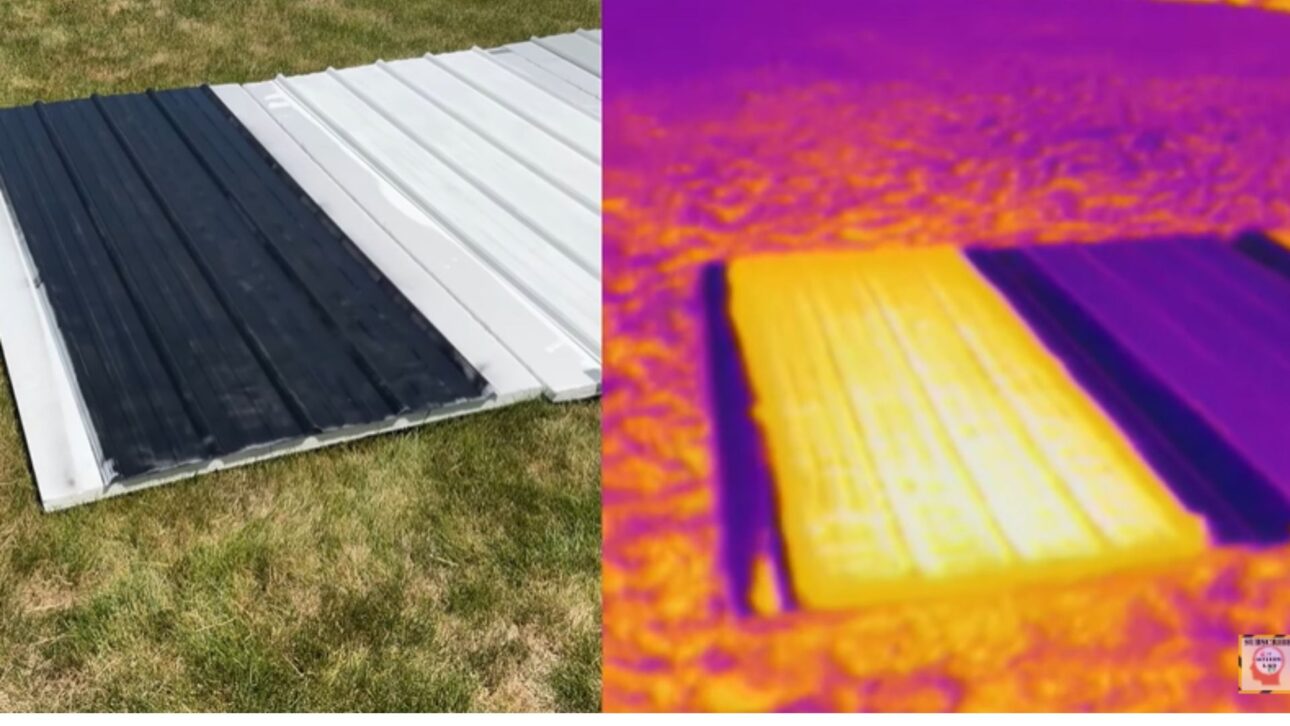
In the video, James Orgill compared panels exposed to the sun. A black panel became scorching, too hot to touch, while a regular white one was much cooler. The panel covered with the special paint reached a surprising mark: it was cooler than the shade next to it, close to the air temperature, even receiving direct sunlight. To the touch, the difference was clear, with the painted surface almost cold.
-
Engineers want to carve through Africa with a giant canal to bring water from the world’s second-largest river to a dying lake on the edge of the Sahara Desert that has already lost 90% of its water.

-
Brazilian city becomes a ‘darling’ and gains new residents every year; elected the 4th best to live in, the city combines quality of life, jobs, strong higher education, and an agribusiness powerhouse that moves billions
-
540-horsepower truck with reinforced chassis and 14-speed transmission pulls the weight of a small building within the forests of Três Lagoas in Mato Grosso do Sul because above 74 tons, the law prohibits circulation on open roads.
-
How 3 million trees planted each year are trying to reverse a thousand years of deforestation caused by the Vikings in Iceland, a green island that erosion has turned into the most eroded land in Europe, even though the forest covers only about 2 percent.




It is important to note that these measurements came from a homemade experiment, so the values should be read as approximate. Even so, the behavior matches the science: it is a radiative cooling paint, designed to lose heat even under the sun. The effect is the opposite of what we see on black asphalt, which absorbs radiation and heats up, turning heat into a problem on hot days.
The secret: using the sky as a heat sink
To understand the trick, it’s important to remember that there are three ways to transfer heat: conduction, by direct contact; convection, when a moving fluid carries the heat away; and radiation, where energy travels in the form of waves, at the speed of light, even in a vacuum. Every object, including the human body, emits radiation all the time and, in doing so, loses heat to the surrounding environment.
The cleverness of the paint is choosing exactly which infrared range it emits this radiation. It was designed to release heat in the so-called atmospheric window, around 8 to 13 micrometers, a range where the atmosphere is practically transparent. Thus, the heat escapes directly into space and almost nothing returns, like a one-way door. This is why radiative cooling can lower the temperature without any energy expenditure, using the open sky as a gigantic heat sink.
From Laboratory Paint to Roof and Clothing
The concept didn’t originate in the video. In 2021, researchers from Purdue University in the United States, led by Professor Xiulin Ruan, presented an ultra-white paint based on barium sulfate that reflects about 98% of sunlight and keeps surfaces around 4.5°C below air temperature under direct sunlight. According to the study, when applied to a roof, it would have enough cooling power to rival a central air conditioner, all through radiative cooling.
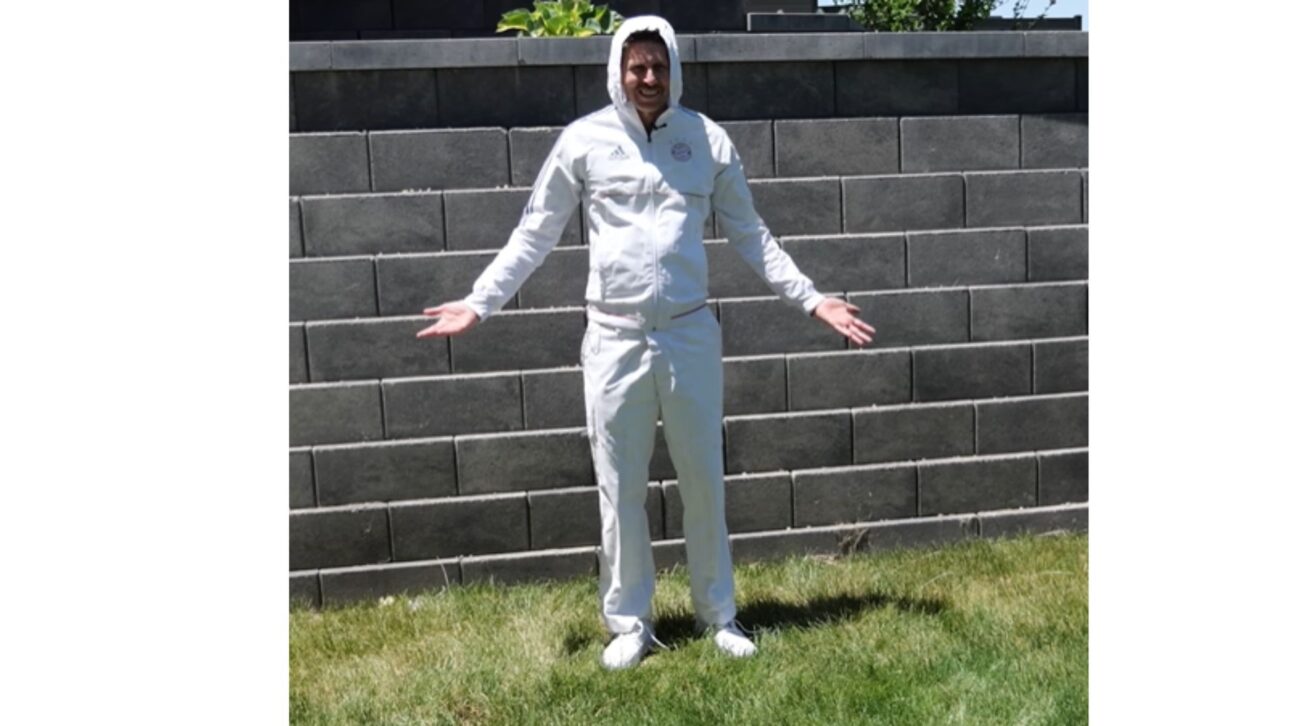
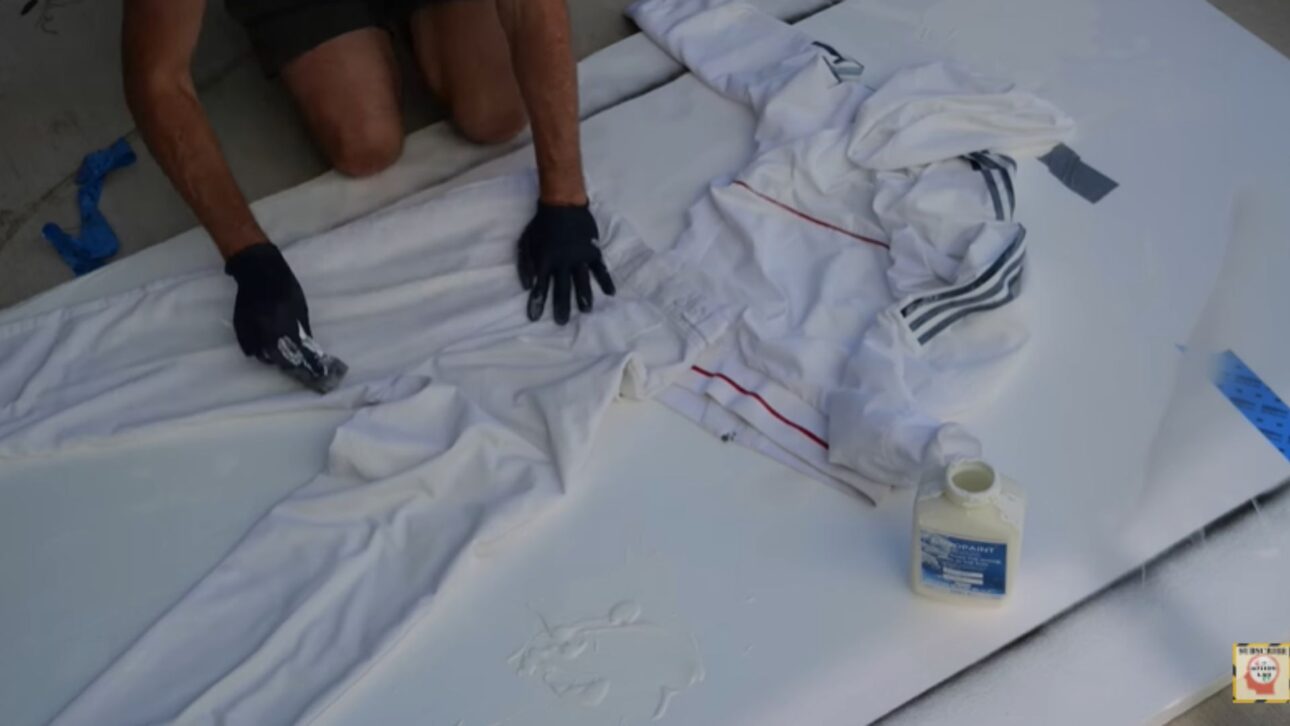
The practical applications follow this line. The idea is to use the paint on roofs and facades to reduce air conditioning use, save electricity, and alleviate city heat. In the video, after testing a roof, the presenter decided to go further and applied the paint to his own clothing. At around 32°C, he claimed to feel much less heat, as if the clothing didn’t heat up under the sun, fueling the long-standing dream of garments capable of cooling the wearer in the summer.
Real Promise, but with Limits


The radiative cooling is a concrete promise to save energy and function as a passive alternative to air conditioning, without consuming electricity. But it’s necessary to balance enthusiasm with some limits. The effect heavily depends on clear skies, as clouds act like a blanket that retains heat and hinders the exchange with space. Therefore, on cloudy days, efficiency drops.
In the case of clothing, there are still challenges such as durability, washing, comfort, and breathability of the fabric, and the homemade version tested in the video is not the same as the formulations developed in the laboratory.
For this reason, although companies and scientists are working to bring the paint to the market, it is not yet on all roofs and clothes. Even so, the technology emerges as an interesting bet to tackle the extreme heat of summer and cool buildings and cities.
A paint that sends heat into space and promises to cool roofs and even clothes in the summer seems like fiction, but it’s real science.
Tell us in the comments if you would use radiative cooling in your home or clothing to escape the heat.






Be the first to react!