Portuguese
  Spanish


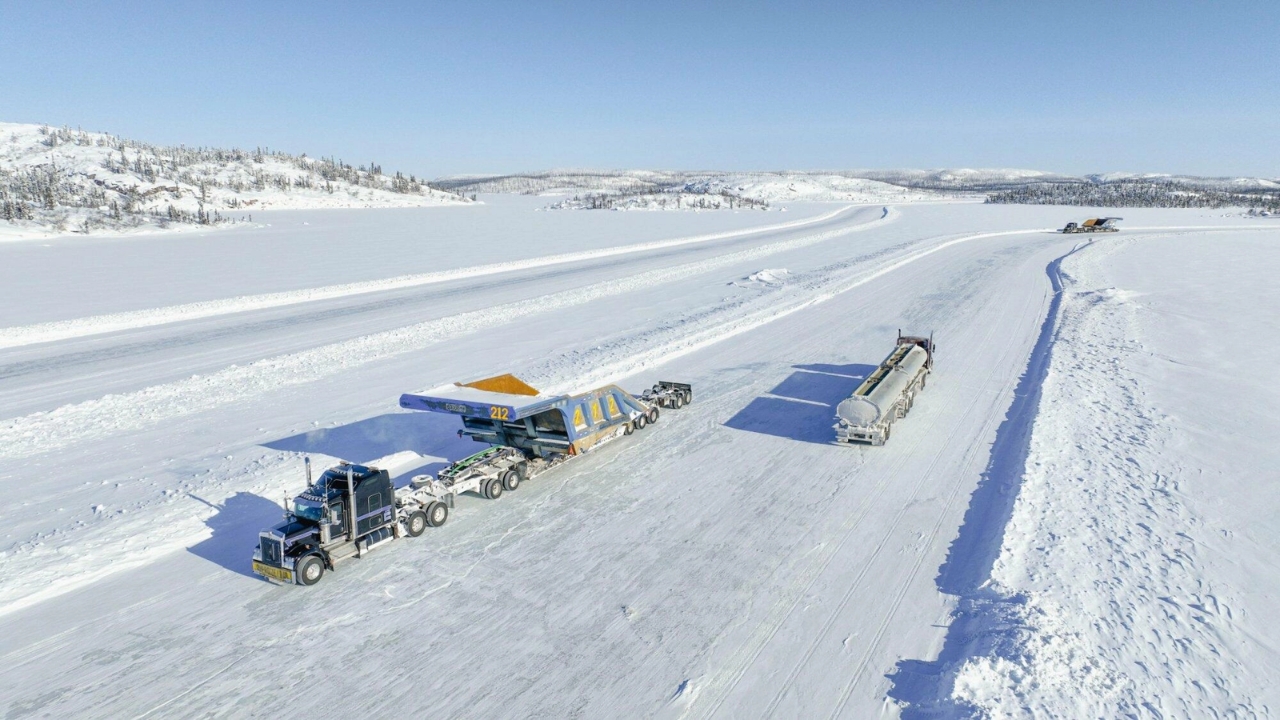

A Temporary Route Supports Supply and Mining for a Few Months, with Direct Impact on Logistics, Living Costs, and Safety
There is a place where the road appears only when extreme cold turns water into solid ground.
For a few months of the year, heavy vehicles cross frozen lakes and remote areas to ensure essential supplies. When the temperature rises, the route simply ceases to exist.
The survival of entire communities depends on this temporary infrastructure, which only functions while the ice can support weight and vibration.
-
She spent 73 years breathing inside an iron lung, survived the aftereffects of polio, and became the last woman in the United States dependent on the equipment before dying at 78 years old.

-
Brazilian students created a $1 filter using pine bark, cotton, and 3D-printed parts to clean cassava wastewater, reduce the toxicity of a hazardous waste, and transform contaminated water into biofertilizer.

-
Astronaut from Artemis II steps down after mission to the Moon and decision surprises after a record of 406,771 km, a historic 10-day journey, and an unprecedented achievement for Canada.

-
A fossil kept for years in a small museum in Montreal concealed 450-million-year-old soft tissue, a discovery that has only happened once before in history.


What Happened and Why It Garnered Attention
In northern Canada, the absence of permanent highways makes winter the only viable window for overland transport.
Deep freezing creates a surface capable of supporting loaded trucks, allowing routes to be opened over lakes and flooded terrain.
This model draws attention because it inverts the traditional logic: the road arises from extreme weather and disappears when conditions improve.
How the Ice Road Works and Why It Is Safe

The most well-known route is the Tibbitt to Contwoyto Winter Road, built over lakes and natural stretches that freeze completely.
The operation depends on constant monitoring of ice thickness, strict speed control, and weight limits.
Only when the ice reaches adequate resistance is circulation allowed, reducing the risk of cracks and sinkholes.
The Role of the Road in Supply and Mining
The winter road allows for the transport of fuel, food, equipment, and heavy materials to isolated areas.
A large part of the annual supply arrives during this short period, reducing dependence on air transport, which is more expensive and limited.
For mining, the route is essential for moving loads that would be unviable outside this climatic window.
What Changes When the Ice Begins to Melt

With the arrival of spring, traffic is halted, and the road is officially closed.
The thaw returns the lakes to their natural state, erasing any trace of the route used weeks earlier.
From this point on, access once again depends on planes and waterways, raising costs and limiting volumes transported.
Why This Type of Road Is Under Climatic Pressure
Changes in the duration and intensity of winter directly affect the operating period of the road.
Shorter windows reduce the available time for transport and increase logistical pressure on communities and businesses.
Each season requires precise planning, as delays or failures can compromise supply for months.
The road that only exists in winter has become a symbol of extreme adaptation to the environment.
While the ice holds, it connects isolated regions and supports local economies. When it melts, it disappears completely, reminding that there the infrastructure depends directly on the climate to exist.