Portuguese
  Spanish


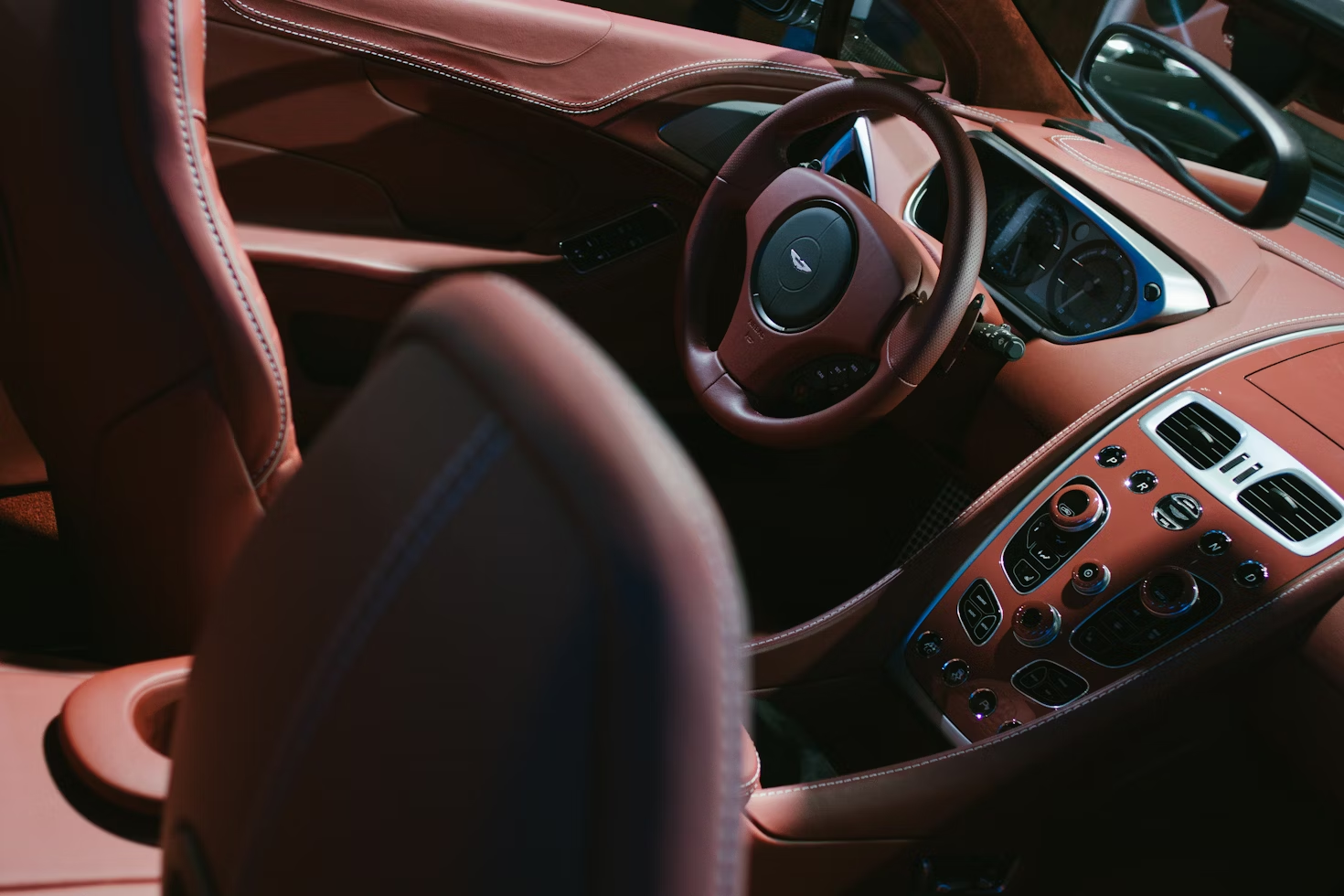

The Famous “New Car Smell” Is Caused By Compounds Released By Materials Used In The Internal Finishing Of Vehicles. Find Out Where This Aroma Comes From And If It Harms Health
The new car smell is one of the most striking sensations when acquiring a vehicle. It is not exactly a fresh smell, but it conveys the idea of something untouched. It represents a new beginning, an achievement. Without the smell of anyone else, a blank slate. A strengthening investment, sometimes with long payments ahead.
The Origin Of The New Car Smell: Chemical Compounds
Despite seeming something unique and special, that characteristic new car smell is actually the result of a far less romantic chemical combination. It comes from a mixture of 50 to 60 volatile organic compounds, known as VOCs.
These compounds are released into the air and even cause the formation of that oily film seen on the new windshield.
-
2027 Toyota Corolla Cross Unveiled: New Design, Enhanced Fuel Efficiency, Reduced Maintenance Costs, Advanced Technology, Connected Services, and Up to 10-Year Warranty

-
Fiat Cronos Precision 2018: Affordable Sedan with Spacious Trunk and Reliable Maintenance
-
Volkswagen to Cut Production by 1 Million Cars by 2030, Reducing Jobs and Platforms, Focusing on More Profitable Models

-
Toyota Launches First 100% Electric Car in Brazil: bZ4X with 343 HP, All-Wheel Drive, 361 km Range, Priced at $419,990 BRL, Limited to 99 Units




These VOCs are not exactly dangerous in the normal concentrations of a new car, but they are also not harmless. They have no therapeutic value nor are they aromatherapy, although they provoke a marked olfactory response.
The good news is that they dissipate over time. On average, there is a 20% reduction per week in the emission of these compounds. That’s why the new car smell lasts a short time. It disappears quickly — just enough for the name “new car smell” to make sense, and not “old car smell”.
The Industry Tries To Eliminate The Smell
Automakers, despite considering the fame of the smell, are trying to eliminate it. This doesn’t happen out of disdain for the aroma, but because of the chemical compounds that cause it.
The industry seeks alternatives with fewer VOCs, such as using soy-based foam in seats, which emit fewer gases and practically have no smell.
With this change, the new car smell may end up confined to memories — or to bottles of artificial fragrances. Yes, there are perfumes that attempt to mimic the original smell. But in this case, manufacturers are not bottling the real VOCs, but reproducing the aroma safely. Thank goodness.
The Five Most Common Compounds In The New Car Smell
Even though the new car smell comes from many compounds, five VOCs are more common. These are the ones that form most of the aroma we feel when entering a newly delivered car.
Toluene: A liquid solvent extracted from petroleum. It is used in paints and glues, which are present in various parts of the vehicle. It also appears in the exhaust, as it is a gasoline agent. Toluene is known for its use in nail polish removers.
Ethylbenzene: A flammable and colorless gas. It also comes from petroleum and coal tar. It is used in paint and styrene production. When it comes into contact with air, it decomposes into other elements within three days.
Styrene: A synthetic compound. It is present in various materials used in cars: rubber, coatings, carpets. Although it exists in small quantities in fruits and vegetables, its version in cars is laboratory-made. It decomposes quickly — within one to two days after release.
Xylene: It has a sweet smell, but is highly flammable. Also extracted from coal tar and petroleum, it is used in the leather and rubber industries. As it is among the 30 most produced chemicals in the United States, its presence inside vehicles is quite common.
Trimethylbenzene: It has a “strong and peculiar odor,” according to Toxipedia.org. It serves as a solvent, thinner, and fuel additive. It has the advantage of decomposing with sunlight, so leaving the car parked in the sun for a few days can help eliminate the car smell faster.
The Best Solution Remains Fresh Air
For those who don’t want to wait or don’t like the smell, the simplest tip is still the best: open the windows. Letting the air circulate helps disperse the compounds more quickly and accelerates the renewal of the internal environment.
The trend is for the new car smell to become increasingly rare as the industry seeks safer materials with lower VOC emissions.