Portuguese
  Spanish


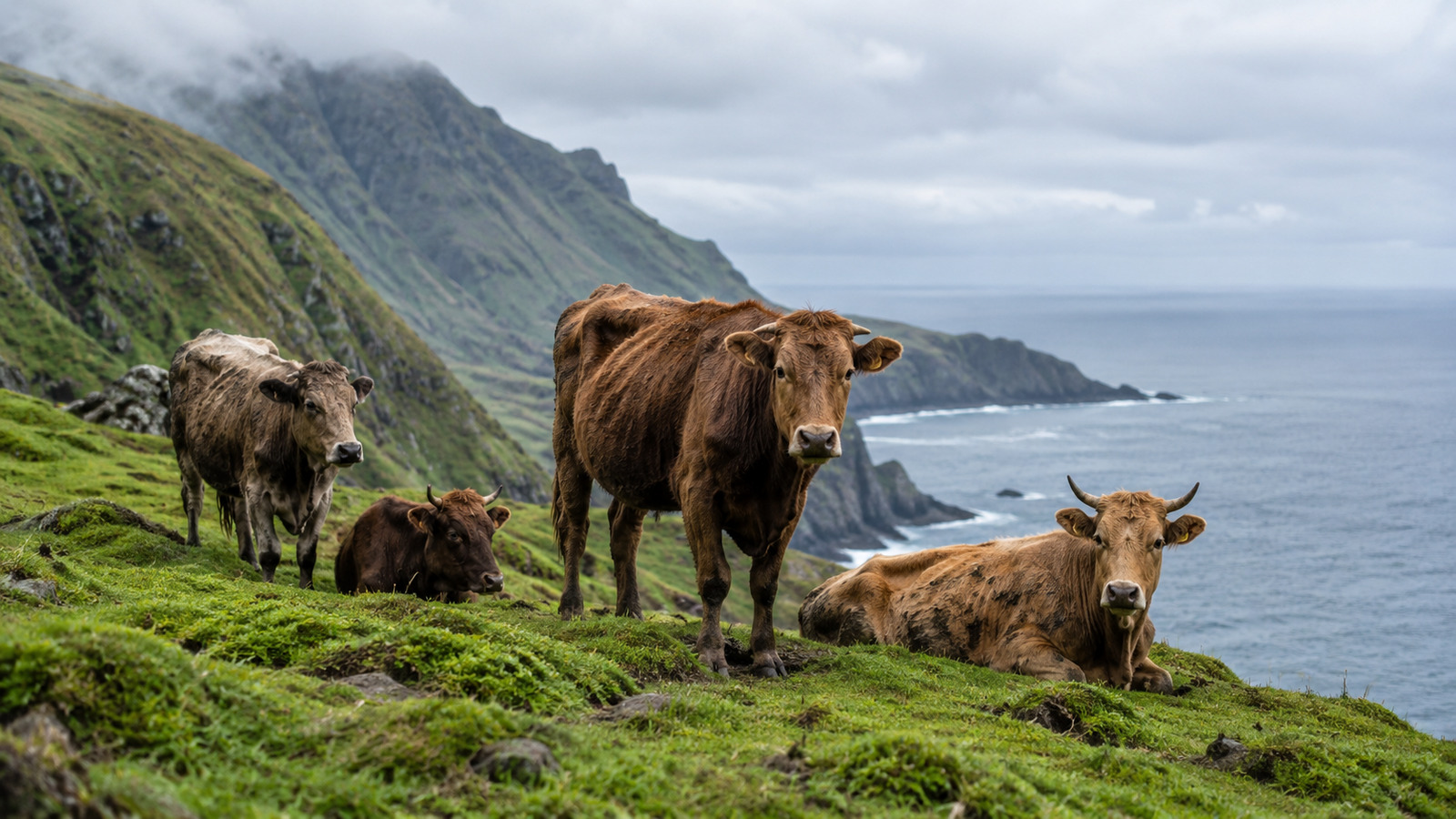


Cattle left on Amsterdam Island in the 19th century lived freely for generations, faced extreme isolation, and had their origin reconstructed by preserved DNA after the removal of the last animals from the territory
The isolated cattle of Amsterdam Island, started with five bovines in the 19th century, lived freely for over a century and had their history partially reconstructed by DNA analysis preserved in laboratory tissues.
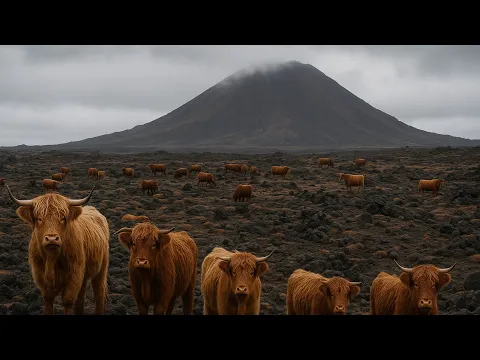

A domestic herd that became a free population
In the mid-19th century, a small group of bovines was left on this remote island in the Indian Ocean. After that, they received no new animals, veterinary assistance, pens, farms, or management.
The French island has a subantarctic climate, strong winds, wet slopes, and little fresh water. There, the animals faced uneven terrain and native vegetation sensitive to trampling, without planned pastures to sustain the herd.
-
Germany Opens World’s Largest Smart Power Semiconductor Factory with €5 Billion Investment, Creating 1,000 Jobs and Doubling Capacity for AI and Energy Needs

-
Kazakhstan’s Torysh Valley Holds Thousands of Giant Stone Spheres, Intriguing Scientists with Ancient Oceanic “Cannonballs”

-
Egypt Discovers 18 Ancient Tombs with Gold Tongues, Unveiling Unusual Funeral Rituals and Amulets Believed to Give Voice to the Dead

-
Nigeria Dumps 120 Million Tons of Sand into Atlantic to Build Massive City with 8.4 km Sea Wall for Protection Against Ocean Waves and Erosion



Even under these conditions, the isolated cattle multiplied over generations. The population, formed from a few founders, was confined to a small piece of land in the ocean.
The case became a reference for understanding introduced populations without genetic replenishment, without continuous management, and under environmental pressure on isolated islands.
What made the case rare for science
The scientific interest involves population genetics, ecology, and conservation. The combination of extreme isolation, long duration, and environmental impact turned the isolated cattle into an unusual observation system.
In genetics, the case allows investigation of what happens when an entire population descends from a very small initial group. In ecology, it shows the effects of large herbivores on fragile island habitats.
In conservation, the story reveals a conflict: the cattle had high scientific value but shared space with threatened native species, in a territory under environmental managers.
Among the central points were few founders, extreme geographic isolation, absence of external genetic replenishment, and coexistence with native species of conservation interest.
DNA showed hybrid origin and smaller body
Using current techniques, researchers analyzed the genome of these cattle to investigate the origin of the herd’s ancestors. The data indicated a hybrid composition, with a predominance of variants from European taurine breeds.
The analysis revealed a consistent presence of genes from zebu lineages typical of regions in the Indian Ocean. This indicates that the introduced animals had already undergone crossbreeding before reaching the island.
The genomic data help explain the reduced size observed in the bones. Instead of indicating rapid insular dwarfism, the smaller size appears linked to the body pattern inherited from the breeds.
Thus, the isolated cattle maintained the physical profile brought from the origin, possibly with subtle adjustments over time. The reconstruction was only possible because tissue samples had been preserved in the laboratory.
Inbreeding did not prevent expansion
With only five animals at the origin, inbreeding was inevitable. This scenario increases the risk of accumulating harmful mutations, especially when a population remains closed for many generations.
DNA analyses indicated high levels of internal relatedness. Even so, historical reports indicate that the number of cattle reached thousands at some periods, revealing the capacity for expansion.
The data suggest that the initial mixture of lineages and a rapid growth phase helped limit the loss of genetic diversity in the group.
Removal ended the feral phase of the herd
The presence of the cattle conflicted with conservation goals. Large herbivores modify the soil, consume sensitive vegetation, and affect the reproduction of ground-nesting birds.
To protect endemic species, rare trees, and seabirds, managers decided to gradually remove the herd. The measure was accompanied by the restoration of native vegetation and protection of the birds.
The eradication of the last animals ended the feral phase of the population. Even so, the genetic samples retained value for research on small populations, historical introductions, and management on isolated islands.
With information from O Antagonista.