






 Portuguese
  Spanish


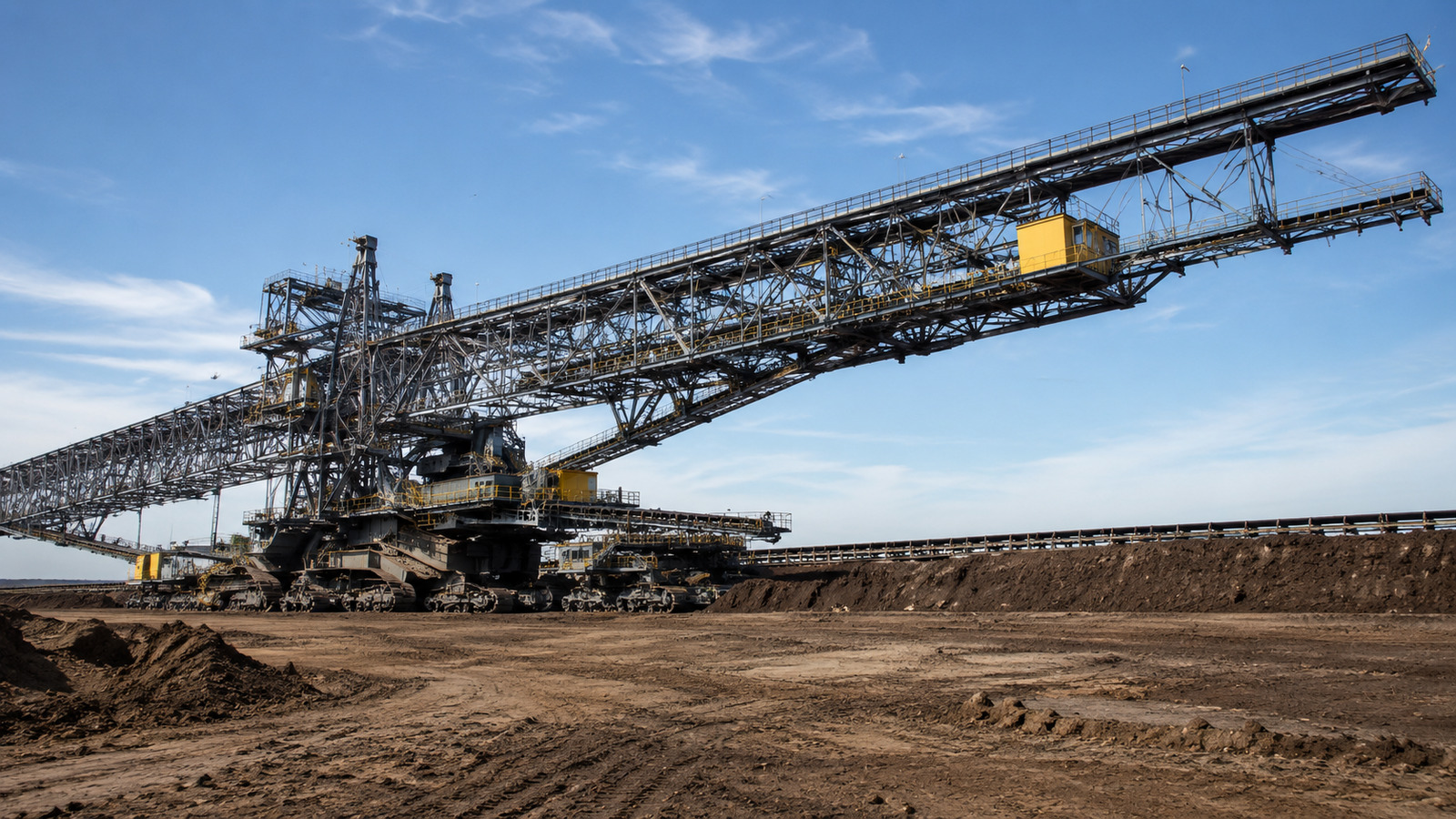
With 502 meters in length and 13,500 tons, the F60 impresses in Lusatia by removing soil, rocks, and moving 29,000 cubic meters per hour in large-scale mining
With about 502 meters in length and 13,500 tons, the lying Eiffel Tower F60 impresses in Lusatia, Germany, by removing soil and rocks over the coal and moving 29,000 cubic meters of material per hour.

A giant compared to the French monument
The F60 received the nickname lying Eiffel Tower due to the similarity between its metal lattice and the French monument. Horizontally, the structure surpasses the height of the original Eiffel Tower and dominates the Lusatia landscape.
The machine was presented by the WELT Documentary channel, which has 1.26 million subscribers. It is a conveyor bridge for overburden, created for large-scale mining operations.
-
How Many Outlets Should Each Room Have? Guidelines Suggest 6 to 10 in the Kitchen, One Every 3.5 Meters in Living Rooms, and Specific Recommendations for Bedrooms, Bathrooms, Laundry Rooms, and Outdoor Areas

-
Family Turns Homemade Cheese Bread Recipe into a $17 Million Frozen Foods Business with 200 Tons Monthly Production and Over 1,400 Clients

-
Ancient 4,000-Year-Old City in Brazil Grew Wealthier and Reduced Inequality, Study Finds
-
Lost Page from Archimedes Palimpsest Resurfaces in French Museum After Decades, May Reveal Hidden Mathematical Calculations with X-ray and Multispectral Imaging




With its unusual dimensions, the F60 is considered one of the largest mobile machines ever built by humanity. The nickname helps convey the impact of a structure over 500 meters long.
How the F60 removes the overburden
The main function of the lying Eiffel Tower is to remove the layer of soil and rocks that covers the coal. This material is carried by continuous belts to already explored areas, maintaining the workflow within the mine.
The operation relies on integrated systems. The crawler chassis distributes the machine’s weight and allows controlled advancement, while the excavation systems automatically feed the conveyor belts.
The high-capacity belts move the overburden in large volumes. At the same time, electronic command centers adjust speed and alignment in real-time so that the process does not stop.
The F60 moves about 29,000 cubic meters of material per hour. This reduces the need for large fleets of heavy trucks in open-pit mining operations.

Operational and environmental impact
Studies by Mining World indicate that conveyor bridges like the F60 reduce local emissions by replacing diesel vehicles with electric systems. This exchange also decreases operational costs and the carbon footprint.
In practice, the Horizontal Eiffel Tower concentrates extraction, continuous transport, and electronic control in a single structure. The result is an operation designed for large volumes, less dependent on the intensive use of trucks.
Stability in open-pit mines
The stability of the F60 comes from the lattice design, which distributes loads throughout the structure’s length. Sensors monitor millimetric deformations and inclinations during continuous operation.
This data allows for adjustments in the machine’s position, preventing structural failures. The system helps keep the F60 safe on uneven terrain in open-pit mines, without compromising workers around it.


Industrial heritage in Lusatia
One of the most well-known units of the F60 has been transformed into an industrial museum in Lusatia. The site offers guided tours along the entire metal structure and attracts tourists and engineering professionals.
The preservation of the machine shows the historical role of the F60 in European mining. It reflects the energy transition currently experienced by the region, where this work remains a symbol of heavy engineering and industrial memory.
With information from Revista Fórum.




Be the first to react!