Portuguese
  Spanish


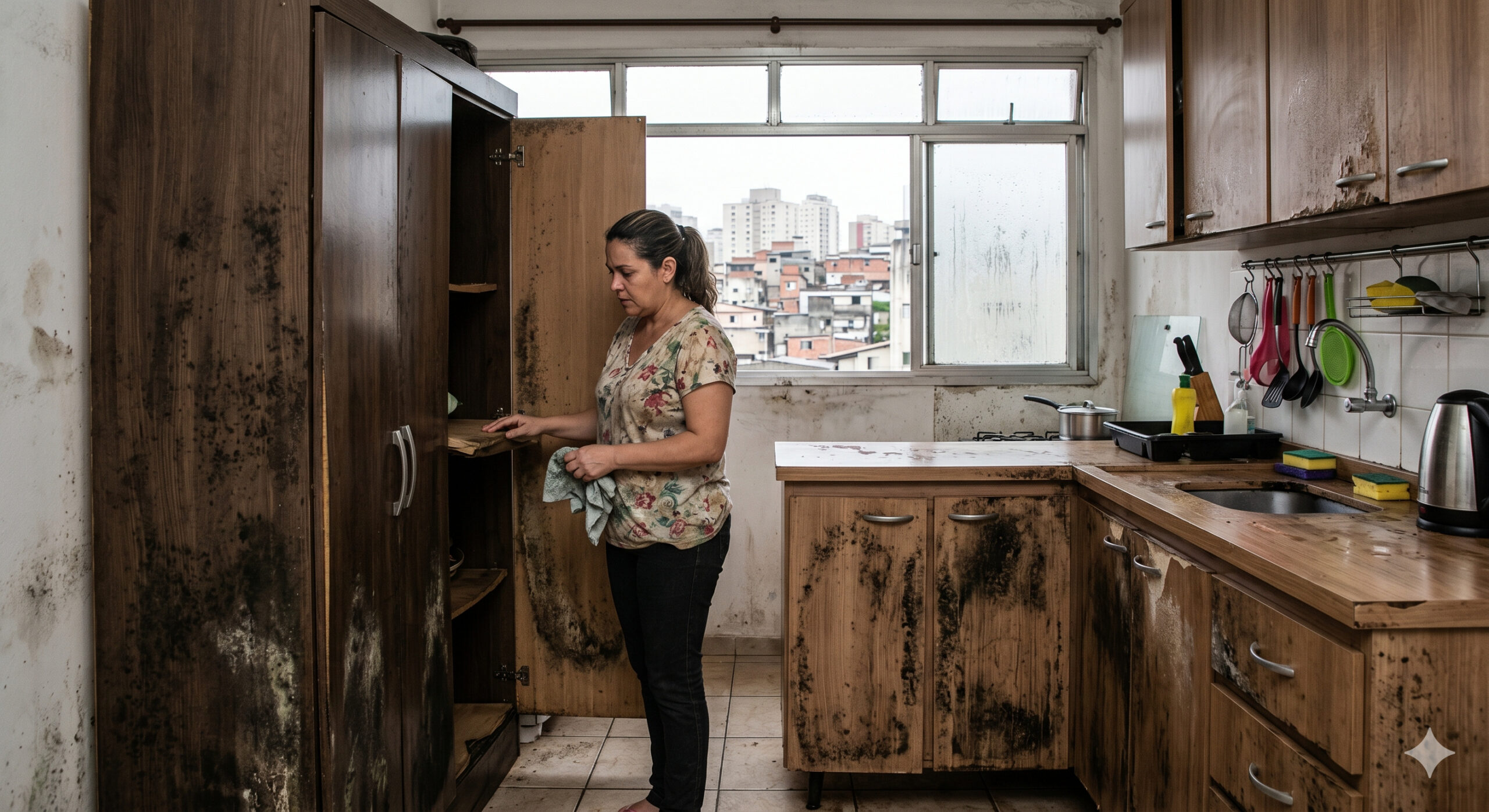

Humidity and poor ventilation favor mold in MDF furniture, causing stains, mildew, and damage in cabinets, wardrobes, and planned kitchens.
Mold in MDF furniture, wardrobes, planned cabinets, and kitchens has become a concern for Brazilians in different states due to a combination known by experts: high humidity, poor ventilation, lack of natural light, and materials sensitive to water. Fiocruz points out that mold contamination in indoor environments is concerning due to its relation to air quality, respiratory health, and the integrity of spaces.
The problem becomes more pronounced during rainy periods, in houses closed for a long time, properties with infiltration, and rooms where furniture is placed against cold or damp walls. In MDF pieces, furniture manufacturers warn that extra care is needed because excess water and humidity can lead to stains, mildew, and damage to the finish.
The warning is not just about appearance. Mold can worsen indoor air quality, exacerbate allergies, and accelerate the deterioration of furniture used daily. Understand why the problem is affecting so many cabinets and what explains the vulnerability of planned furniture.
-
Apple Raises MacBook and iPad Prices as Memory Costs Surge by Up to 98%, Losing Edge Over Rivals and Highlighting AI Boom’s Impact on Consumers

-
China Establishes State Centers to Train Humanoid Robots, While the West Lags Behind with Makeshift Solutions
-
The Trap of Modern Technology: How Screen Overload and Digital Connections Can Impact Your Mental Health and Well-being
-
Wyoming Couple Grows Tropical Fruits Year-Round in -40°C Using Geothermal Greenhouse, Demonstrating Earth’s Heat Can Produce Oranges and Lemons in Snow Without Traditional Heating





Mold in MDF furniture increases with high humidity, poor ventilation, and environments closed for long periods
Mold develops when fungi find a favorable environment, with humidity, organic matter, and low air circulation. According to Fiocruz, indoor environments with mold can affect air quality and worsen respiratory problems, especially in people with asthma, allergies, and chronic lung diseases.


Inside homes, the most affected areas are usually the backs of wardrobes, built-in cabinets, closed niches, planned kitchens, closets, and furniture placed against external walls. These locations accumulate moisture more easily because they receive little light and have almost no air exchange.
The problem becomes more severe when the wall already shows infiltration, condensation, or constant contact with moisture. In these cases, the furniture acts as a barrier that prevents the wall from drying, creating a microenvironment ideal for mildew.
Wardrobes, planned cabinets, and kitchens are the most vulnerable furniture to mildew inside the house
Wardrobes are often affected because they remain closed for many hours and store fabrics, shoes, boxes, and objects that absorb moisture. When the air does not circulate, the musty smell appears even before visible stains.

Planned kitchens also fall into the risk group because they deal with steam, water, sinks, cold walls, and constant temperature variation. In lower cabinets, small leaks and accumulated splashes can accelerate the problem.
In the case of built-in furniture, the risk increases because many pieces are installed without sufficient clearance from the wall. When there is no gap for air circulation, mold can advance through the back without being noticed by the resident.
MDF can swell, stain, and lose finish when exposed to moisture for a long time
MDF is widely used in the manufacture of planned furniture because it allows for a good finish, precise cuts, and lower cost than several solid wood alternatives. However, it requires protection against water and prolonged moisture.
Arauco, a manufacturer in the wood panel sector, advises that MDF furniture should be kept in ventilated environments, with good natural lighting and, when possible, with the use of dehumidifiers or absorbent products in closed places like closets and cabinets.

When MDF absorbs moisture, swelling, deformation, stains, and loss of coating adhesion can occur. In advanced cases, doors warp, drawers jam, and internal parts begin to crumble or lose strength.
Mold inside the house also raises an alert for respiratory health and indoor air quality
The problem should not be seen only as material damage. Fiocruz states that exposure to mold can cause respiratory problems, allergies, and worsen pre-existing conditions such as asthma and chronic lung diseases.

The Ministry of Health also warns that mold formed after floods or excessive moisture can increase respiratory risks, including airway infections and worsening of lung conditions in vulnerable people.
The strong smell of mold is a sign of fungal activity in the environment. When it appears inside closets or closed rooms, it indicates that humidity is persistent and needs to be controlled before the problem spreads.
Closed houses, constant rain, and furniture against the wall create a silent trap for fungi
During rainy periods, many people keep doors and windows closed to prevent the entry of water, cold, or wind. The side effect is reduced ventilation precisely when the external humidity is higher.
The situation worsens in small apartments, rooms with little sunlight, ground-floor properties, coastal areas, and rooms where clothes dry indoors. The excess moisture in the air finds cold surfaces and begins to condense.
Over time, this moisture accumulates behind the furniture. The resident only notices when the smell appears, the clothes become moldy, or the MDF already shows stains and swelling.
Incorrect cleaning can worsen the damage to MDF and spread mold to other surfaces
A common mistake is trying to wash MDF furniture with excess water. This type of cleaning can remove some of the visible mold but also increases the moisture in the panel and encourages new fungal growth.
The technical guidance for MDF is to avoid soaking, use a soft cloth slightly dampened for superficial cases, and completely dry the area after cleaning. Arauco recommends paying special attention to ventilation and protecting the pieces from recurring moisture.
When mold returns quickly after cleaning, the problem is probably not just in the furniture. There may be infiltration, condensation, hidden leaks, a damp wall, or insufficient ventilation in the room.
Prevention depends on ventilation, natural light, humidity control, and moving furniture away from walls
The main preventive measure is to reduce the accumulated humidity in the environment. Opening windows during dry times, allowing natural light to enter, and avoiding keeping large furniture completely against external walls helps reduce the risk.

It is also important to observe signs of infiltration, swollen baseboards, wall stains, persistent smell, and the presence of mold on clothes or shoes. These indications show that the problem may be in the environment, not just in the furniture.
In closets, custom cabinets, and kitchens, the use of moisture-absorbing products or dehumidifiers can help, especially in more humid regions. Still, if there is structural infiltration, the source of the moisture needs to be corrected.
Mold in furniture shows how the house can seem dry on the outside and hide a moisture problem inside
The spread of mold in Brazilian furniture reveals a silent flaw within homes: many houses seem protected but accumulate moisture in hidden spots. The backs of cabinets, MDF panels, and custom kitchens can act as late sensors of this problem.
The difference between a superficial stain and permanent damage lies in the exposure time. The longer the furniture remains damp, the greater the risk of warping, loss of finish, and recurring fungal contamination.
The warning is clear: when mold appears on furniture, it has usually already found a favorable environment inside the house. The question is how many Brazilians will only notice the hidden moisture when the cabinet, wardrobe, or custom kitchen is already compromised?