Portuguese
  Spanish


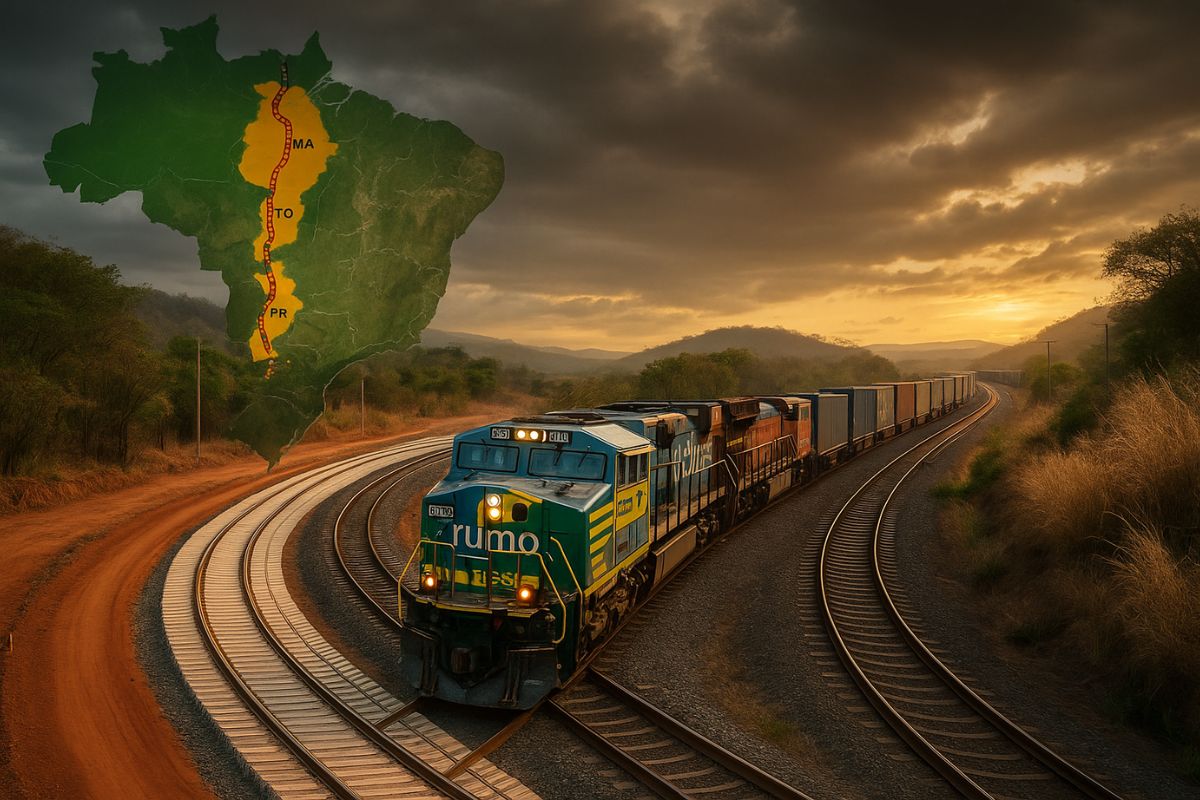


After More Than 30 Years, Brazil’s Main Railway Project Is Theoretically Completed, But The Gauge Difference And Congestion In São Paulo Limit The Impact Of The North-South Railway On The Economy.
The North-South Railway, designed to be the “backbone” of Brazilian logistics, has finally reached its destination. After a saga of over three decades, the railway corridor cutting through the heart of Brazil now connects to the network leading to the Port of Santos. A monumental achievement, but in practice reveals a paradox.
The railway reaches its destination, but not with its full strength. A series of historical bottlenecks, such as the gauge difference and congestion in São Paulo’s network, cause the North-South Railway to function like a high-capacity artery that drains into congested capillaries, preventing it from fully transforming the country’s transportation matrix.
A 30-Year Project: The Long And Controversial Saga Of The “Backbone” Of Brazil
The story of the North-South Railway began in 1987, during José Sarney’s government. The idea was to create an axis linking the north to the southeast of the country, integrating the new agricultural frontier of the Cerrado to the main ports. However, the project dragged on for decades, marked by slow progress, economic instability, and investigations into irregularities.
-
Farewell to Toilet Paper? New Technology Sparks Debate on Bathroom Habits

-
Young Entrepreneur Who Started Recycling Bottles at Age 3 Becomes Environmental Icon in the U.S.

-
$134.7 Million Project in São Paulo Installs Over 5 Kilometers of Pipes, Creates New Underwater Crossing to Boost Water Supply for Over 450,000 People

-
Nivea Blue Tin Cream: Popular Post-Beach and Pool, But Pharmacist Warns About Missing Ingredients and Common Summer Mistakes Regarding UVA and UVB Protection.




The pace of construction only began to accelerate in 2007, with the Growth Acceleration Program (PAC). The consolidation phase came in 2019, when Rumo Logística acquired the auction for the Central and Southern sections, investing R$ 4 billion to finally complete the corridor. The official inauguration of the final section, connecting Goiás to the Port of Santos, took place in June 2023.
The Final Connection: The Challenge Of Getting The Cargo To The Port Of Santos
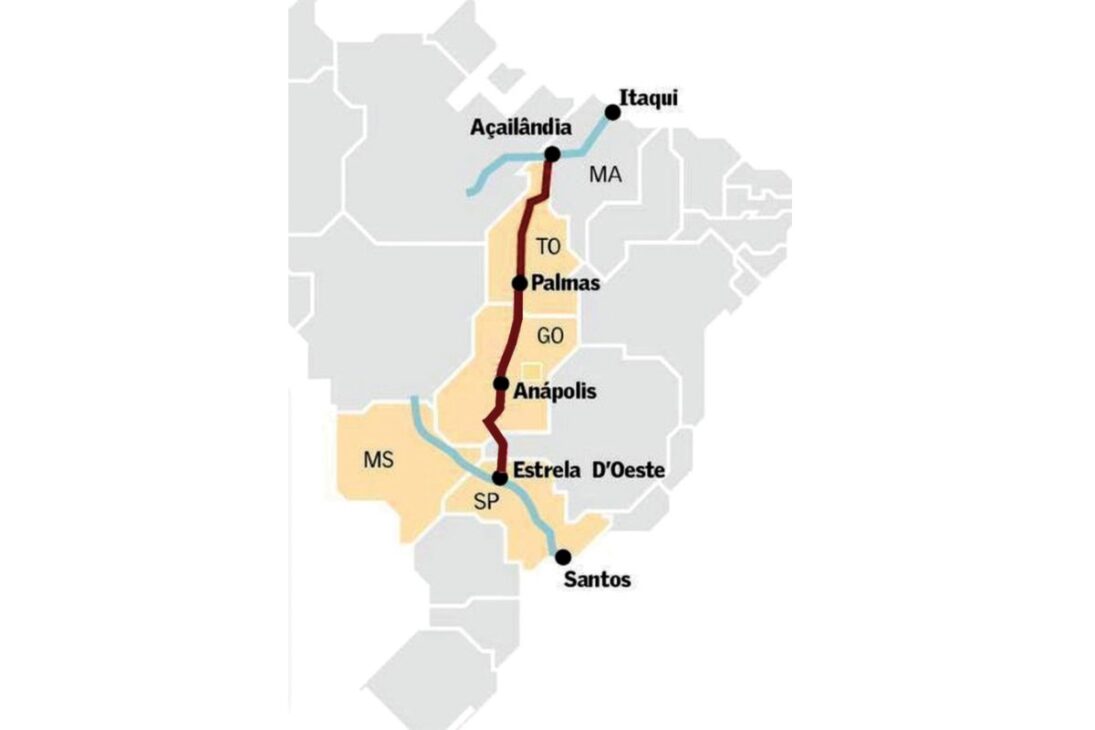
The meeting point that makes the North-South Railway an export corridor is in Estrela d’Oeste (SP), where it connects to the Paulista Network, also operated by Rumo. This network is the main route for agribusiness to reach the Port of Santos.
Rumo has invested billions to increase the capacity of the Paulista Network, with trains that can have up to 135 cars. The problem is that all this growing volume of cargo reaches a bottleneck. The rail access to the Port of Santos already operates close to saturation, with a reception capacity that cannot keep pace with the influx from afar.
The Great Obstacles Along The Way: Gauge And The Conflict In São Paulo
Two major structural problems limit the potential of the North-South Railway. The first is the gauge difference. The FNS was built to the wide gauge standard (1.60 m), which is more efficient. However, about 75% of the Brazilian railway network uses the metric gauge (1.00 m). This prevents trains from moving from one network to another, requiring transloading operations that increase cost and travel time.
The second bottleneck, and perhaps the most critical, is crossing the Metropolitan Region of São Paulo. Freight trains are required to share tracks with passenger trains operated by CPTM. This restricts freight movement to specific times, usually at night, creating congestion that affects the entire logistics chain. The solution, the São Paulo Ferroanel, is a project that has been discussed for decades but has yet to be materialized.
The Impact On The Economy: Reducing The “Brazil Cost” Despite The Obstacles
Even with the bottlenecks, the North-South Railway is already showing its positive impact. The transportation of grains and other commodities by rail is much more efficient and cheaper than by road. Studies indicate that rail freight can be 30% to 40% cheaper over long distances.
This cost reduction makes Brazilian agribusiness products more competitive in the international market. In 2022, even before total completion, the operation of the central sections of the railway contributed to a 25% increase in exports from the state of Goiás, proving the pent-up demand for more efficient transportation.
Is The North-South Railway The Solution Or An Incomplete Project?


The North-South Railway is a transformative infrastructure project, but its potential is far from fully unlocked. The image that remains in 2025 is that of a “high-capacity artery that drains into congested capillaries.”
The completion of its main axis was a great victory, but the real battle for Brazil’s logistical efficiency now shifts outside of it. The future of the North-South Railway and its real impact on the economy critically depends on resolving the historical bottlenecks that still trap the railway network in the Southeast, especially the construction of the São Paulo Ferroanel.