






 Portuguese
  Spanish
  4 min of reading
  0 comments


In Canada, The Largest Oil Operation in The Country Melts Sand with Steam to Extract Millions of Barrels Per Day. See How Athabasca Became a Global Energy Powerhouse.
In the vast northern region of Alberta province, Canada, there is one of the most impressive operations in the global energy industry. Beneath the frozen boreal forest lies Athabasca — the main exploration zone for the so-called oil sands, where billions of barrels of oil are trapped in a thick mix of sand, clay, water, and bitumen. Unlike conventional fields, where oil flows naturally, in Athabasca, the oil needs to be heated underground to over 250 degrees Celsius to become liquid. It is in this extreme scenario that Canada excels with the application of SAGD (Steam Assisted Gravity Drainage) technology, which injects steam deep underground to melt the oil and allow for its extraction. It is an expensive, complex method, but it has made the exploration of over 160 billion recoverable barrels feasible, placing the country among the top three holders of reserves in the world, behind only Venezuela and Saudi Arabia.
How Steam Transforms Sand into Oil: The Engineering Behind Production
In the SAGD method, two parallel drillings are made horizontally underground. The upper one injects high-pressure steam to heat the reservoir; the lower one collects the bitumen that becomes fluid with heat. The process can take weeks to reach the ideal temperature, but after that, oil flows continuously by gravity.
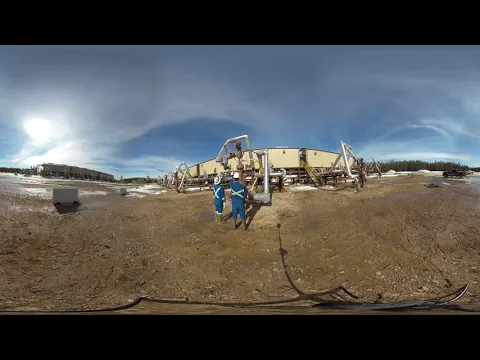

In the shallower areas of Athabasca, where the reservoir is up to 75 meters from the surface, oil is extracted through open-pit mining. Giant excavators remove the soil, which is processed with hot water in industrial facilities to separate the oil from the sand. Despite being visually more aggressive, this method represents a smaller portion of current production.
-
Oil production grows in Rio, but reserve replacement raises a warning sign

-
Petrobras is expected to complete the drilling of the Morpho well in the Foz do Amazonas in August 2026, the first well in the Equatorial Margin, an oil frontier that the ANP estimates at more than 30 billion barrels and could redraw the map of Brazil.

-
Oil returns to the center of concerns with tension between the US and Iran

-
IEA reduces forecast for global oil demand in 2026 after impacts of the Middle East crisis



Much of the extracted bitumen goes through upgrading units, where it is transformed into light synthetic oil, suitable for refining. The entire process — from extraction to transportation — takes place at extreme temperatures and in remote areas, requiring cutting-edge engineering, heavy logistics, and self-sufficient energy and supply structures.
National Scale Production: 3.3 Million Barrels Per Day
The volume extracted from Canadian oil sands is immense. In 2023, production surpassed 3.3 million barrels per day, and projections indicate it could reach 3.8 million by 2030, even with the pressure for decarbonization. Most of this oil comes from the Athabasca region, which houses the largest industrial projects in the sector.
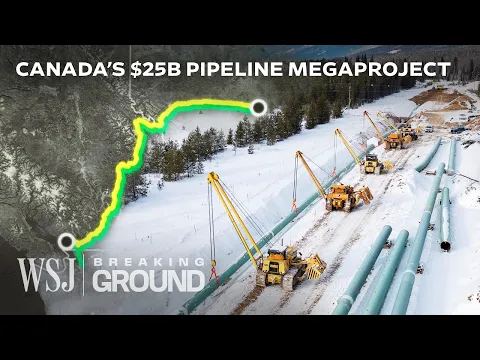
Companies like Suncor Energy, Syncrude Canada, Cenovus Energy, Canadian Natural Resources and Imperial Oil are responsible for continuous operations, 24 hours a day, even under extreme winter conditions. These ventures function like industrial cities: they have housing for workers, their own runways, dedicated power generation systems, and high-performance processing plants.
A large portion of Canadian production is exported to the United States. It is estimated that more than 98% of the oil from oil sands is sold to the American market, through pipelines like the Keystone Pipeline and Enbridge Line 3, as well as railways dedicated to transporting liquid cargo.
The Economic Power That Sustains Alberta — and Pressures The Environment
Oil sands account for more than two-thirds of Canada’s total oil production and generate billions of dollars in royalties, taxes, and export contracts. Alberta province alone collects more than 10 billion dollars a year from the sector, which accounts for about 10% of national GDP and generates hundreds of thousands of direct and indirect jobs.
But the environmental cost is also high. Production in oil sands is among the most carbon-intensive per barrel extracted. The intensive use of steam, burning natural gas for heating, and the impact on watershed areas are constant targets of criticism. There are also concerns about the creation of large tailings ponds and the slow processes for environmental recovery of mined areas.
In response, various operators invest in carbon capture and storage (CCS) technologies, improvements in the thermal efficiency of SAGD projects, and pilot projects for electrification of heating with renewable energy. Although these advancements reduce the environmental footprint, Canadian oil remains among the heaviest and most difficult to produce.
Difficult Oil, but Indispensable in The Energy Transition
Even amid the global energy transition, oil from oil sands remains relevant. The demand for heavy oil in the international market remains high, especially from American refineries adapted for this type of oil.
Moreover, Canada is seen as a reliable and geopolitically stable supplier — a differential in a scenario dominated by tensions involving OPEC countries, sanctions against Iran, and instabilities in the Red Sea. This strengthens the country’s position as a strategic energy partner for the West.
With abundant reserves, established infrastructure, and favorable export margins, Athabasca will continue to be one of the world’s leading sources of oil for at least another two decades — even under increasing pressure for decarbonization and investments in clean energy.








-

1 person reacted to this.