






 Portuguese
  Spanish
  3 min of reading
  0 comments


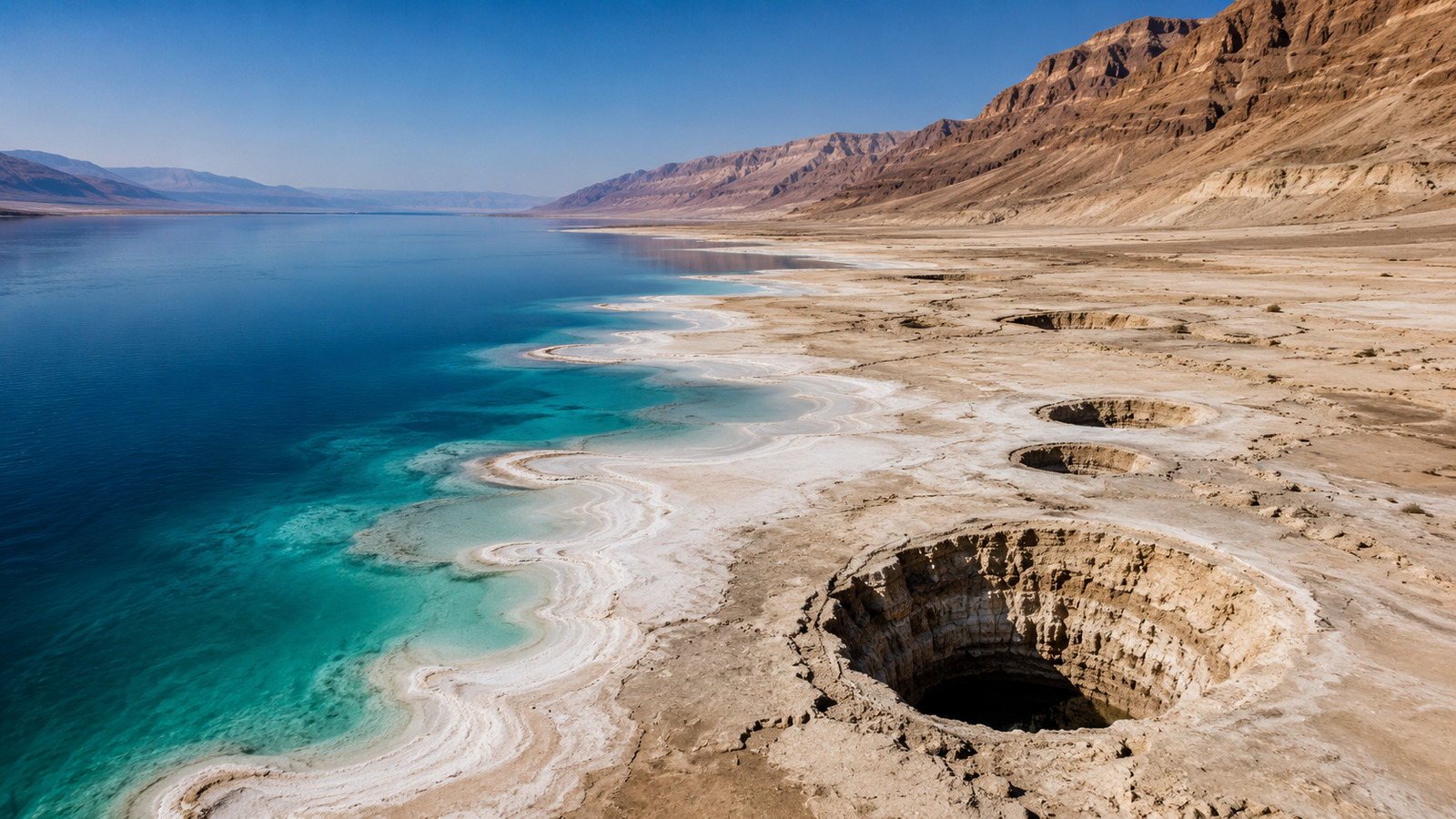
Located between Israel, Jordan, and the West Bank, the Dead Sea has already lost one-third of its surface area in five decades, while plans to contain the deterioration remain stalled due to costs, regional tensions, and political decisions
The Dead Sea, located between Israel, Jordan, and the West Bank, shrinks about 1.2 meters per year and has already lost approximately one-third of its surface area in the last five decades. The retreat exposes salt-covered shores, creates sinkholes, and increases uncertainty for residents, tourists, and businesses along the coast.
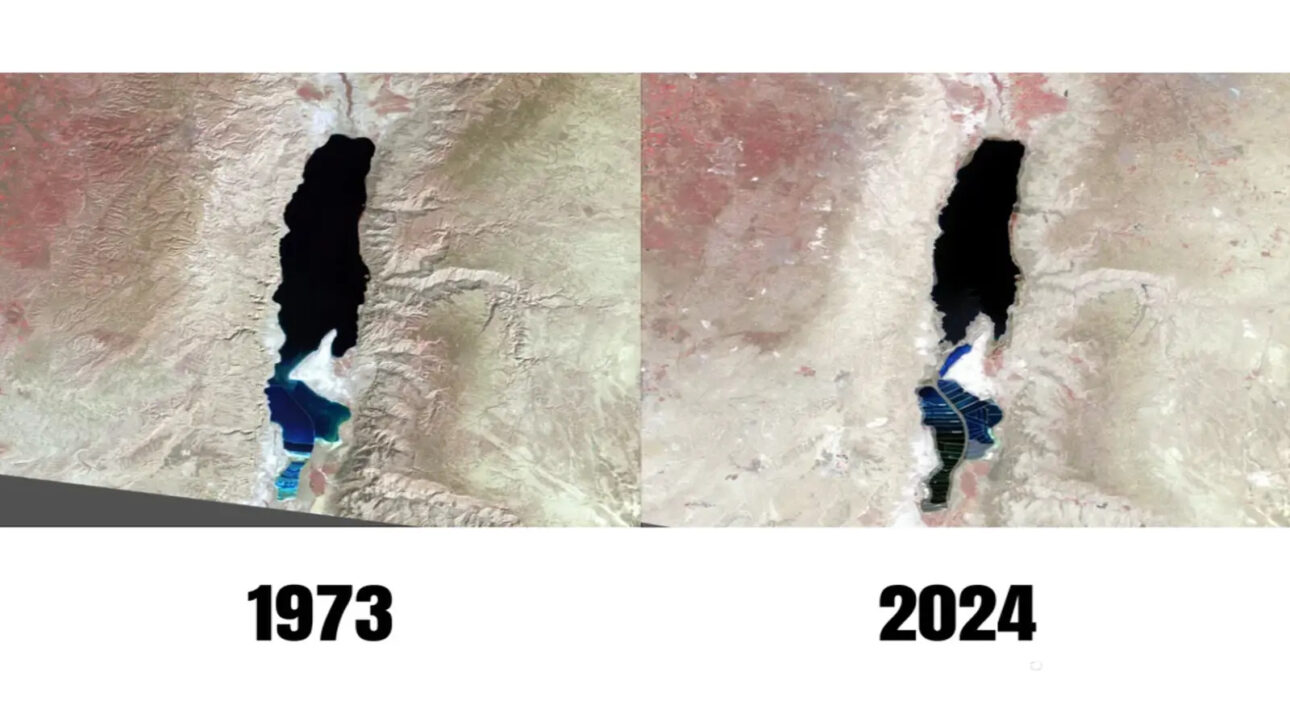
Dead Sea is the lowest point on Earth’s surface
Situated about 427 meters below sea level, the Dead Sea is considered the lowest point on Earth’s surface. Despite the name, technically it is a lake, primarily fed by the Jordan River.
The water, almost 10 times saltier than the ocean, makes the place known for the ease of floating.
-
Ghost town of 4,000 residents, abandoned after the collapse of an iron mine, now becomes a drone training field for police, rescue, and emergency teams.

-
Colorectal cancer advances worldwide, but most cases can be prevented.

-
NASA takes another look at the M87* black hole and finds details in the cosmic jet in X-rays that seem to reveal a much more unsettling universe than previously imagined.

-
NASA’s space probe passes just 4,609 km from Mars, receives a boost of 1,600 km/h, and continues towards the asteroid 16 Psyche, a body valued at up to $10,000,000,000,000,000.



This characteristic occurs due to the high density of the water, one of the most famous features of this unique body of water in the world.


Diversions of the Jordan River reduced water inflow
In recent decades, dams and diversions built by Jordan, Syria, and Israel have decreased the flow of the Jordan River. The water has been redirected for agriculture, livestock, and population supply.
Another factor pointed out in the consulted material is the mineral extraction industry. The combination of reduced water inflow and industrial use has contributed to accelerating the drop in the Dead Sea’s level.
Climate change exacerbates the scenario. Studies cited in the material indicate that even without river diversions or industrial activity, prolonged and intense droughts would cause a significant reduction of the lake.
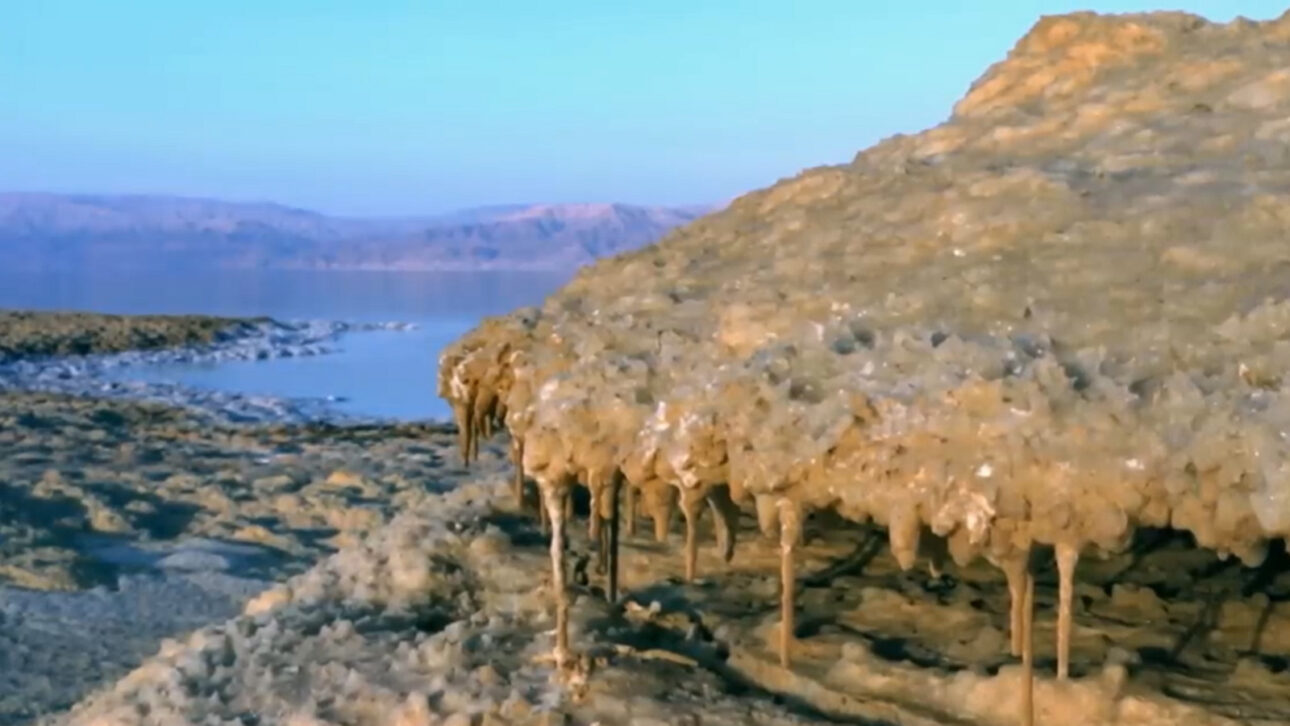
Sinkholes change the landscape and pose a risk to the coast
The retreat of the water revealed a landscape marked by salt and large circular holes. In Ein Gedi, a popular seaside resort, signs warn of danger and prohibit pedestrian access in affected areas.
These sinkholes appear as a direct consequence of the water level drop. Besides altering the landscape, they affect the safety of those who live, visit, or conduct business in the coastal region.
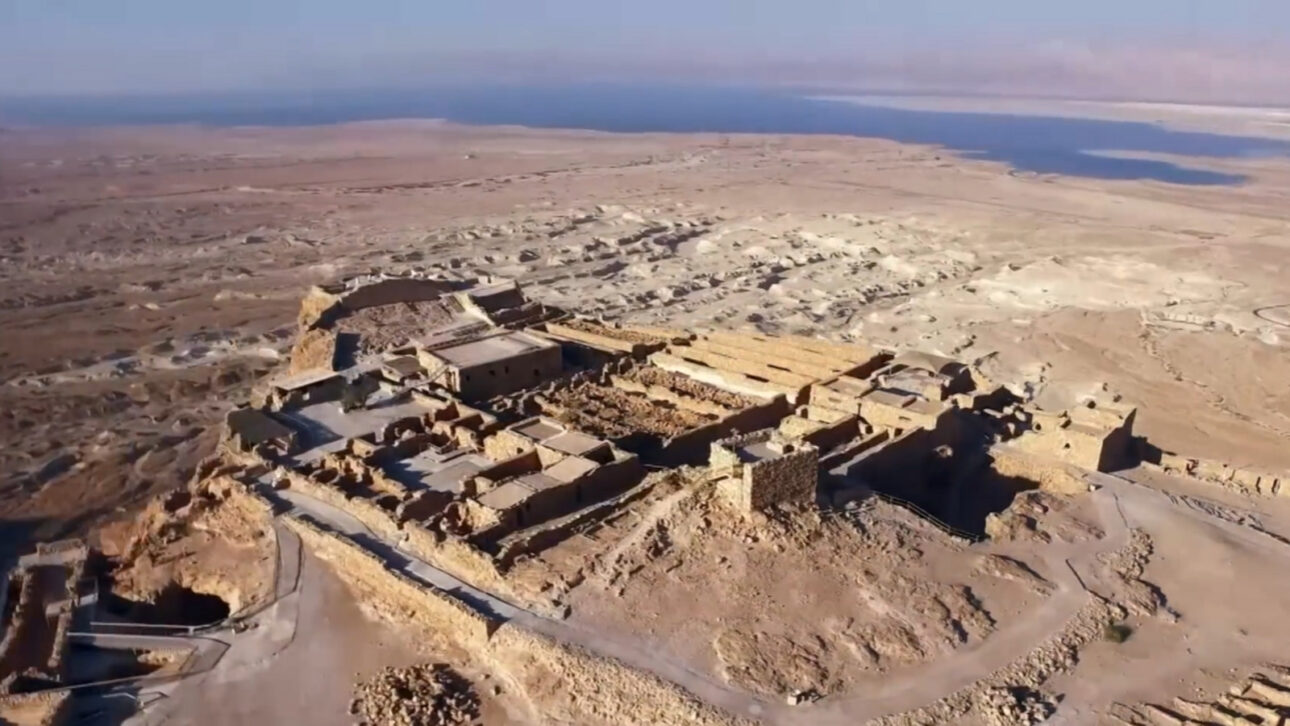
Plan with Red Sea water remains without definitive progress
In 2013, the Palestinian Autonomous Government, Jordan, and Israel signed a memorandum of understanding to study the pumping of water from the Red Sea to the Dead Sea.
The proposal included a desalination station on the Jordanian coast to produce fresh water and a pipeline over 160 kilometers long to carry the brine generated in the process to the Dead Sea.
Other ideas involve reducing the diversion of the Jordan River and decreasing water consumption by industry. Environmental experts cited in the material, however, state that restoring the level of decades ago is almost impossible, advocating a focus on stabilizing the deterioration.
The Israeli Ministry of Environmental Protection refuted accusations of a lack of political urgency and stated that the continuous deterioration of the Dead Sea is a serious environmental problem of national and regional importance.
This article was prepared based on the information provided in the source material about the Dead Sea, with data, numbers, and statements preserved as per the consulted material.


Be the first to react!