






 Portuguese
  Spanish




Discover Li-Fi Technology, A New Standard for Wireless Communication That Is Already a Reality in Some Sectors and Promises to Transform Connectivity with More Speed and Security.
According to technology portals like TecMundo, the promise of an ultra-fast wireless internet, more secure and free from the interferences that affect traditional Wi-Fi, is becoming a reality. Li-Fi technology (Light Fidelity) uses the light from LED lamps to transmit data, opening a new chapter in wireless communication. Companies like Signify (formerly Philips Lighting) are already implementing commercial solutions, and the recent global standardization is expected to accelerate its adoption.
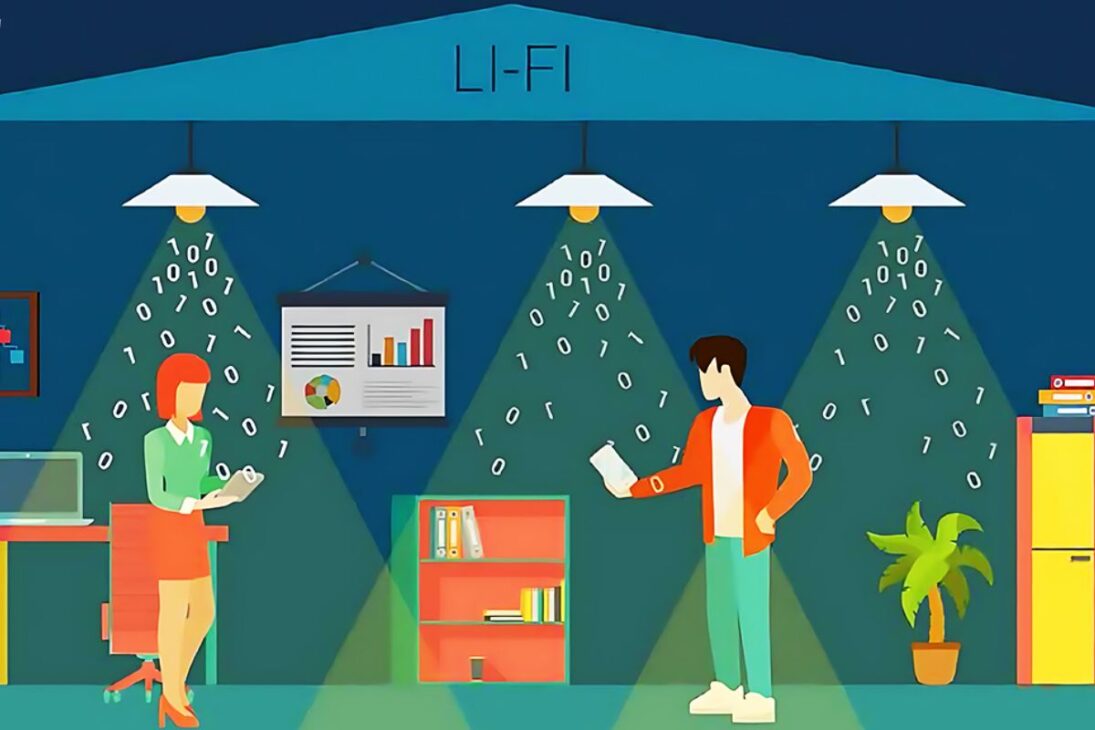
Unlike Wi-Fi, which uses radio waves, Li-Fi technology operates by modulating the intensity of light at speeds imperceptible to the human eye. A transmitter attached to an LED lamp sends data, and a receiver (photo detector) on the device, such as a laptop or mobile phone, decodes it. This turns any point of light into a potential high-speed internet access point.
What Is Li-Fi Technology and How Does It Work?
The foundation of Li-Fi technology is communication through visible light (VLC – Visible Light Communication). The system is composed of two main parts:
-
The industrial waste that even recyclers didn’t want has gained value in the interior of Bahia: two entrepreneurs invested R$ 2.8 million to transform 350 tons per year of foam, rubber, and plastic into boards that can replace wood and MDF.

-
What is a red flashlight used for, after all? See why it is so commonly used at night.

-
He has never read a line of code, but he already knows how to work: the French company UMA presented in Paris the Northstar, its first AI-powered humanoid robot designed for factories and warehouses, capable of copying tasks just by observing an employee in action.

-
A young Kenyan engineer collects plastic waste from the streets and transforms it into robots that translate physics lessons into sign language in real-time, a machine made with old bottles that teaches what was missing to deaf children left out of science.




Transmitter: an LED lamp equipped with a modem that modulates (turns on and off in nanoseconds) the light to encode the data.
Receiver: a photodiode connected to a device that captures these variations of light and converts them back into an electrical signal/data.
Data transmission occurs invisibly and continuously as long as the receiver is within the light cone of the lamp. The communication is bidirectional (two-way), allowing both downloading and uploading of information. Companies like Signify already offer systems like Trulifi, which uses invisible light (infrared) and delivers stable connection speeds.
What Changes with the New IEEE 802.11bb Standard?
A fundamental milestone for the expansion of the technology occurred in 2023. The Institute of Electrical and Electronics Engineers (IEEE), the same organization that standardizes Wi-Fi (802.11), officially launched the 802.11bb standard for Li-Fi.
This standardization is crucial because it ensures interoperability between devices from different manufacturers. In practice, this means that a notebook with a Li-Fi receiver can connect to a transmitter from any brand that follows the standard, just like Wi-Fi does today. This measure is seen as the main catalyst for mass production and integration of Li-Fi technology into consumer devices.
Advantages and Disadvantages: Does Light Outperform Radio Waves?
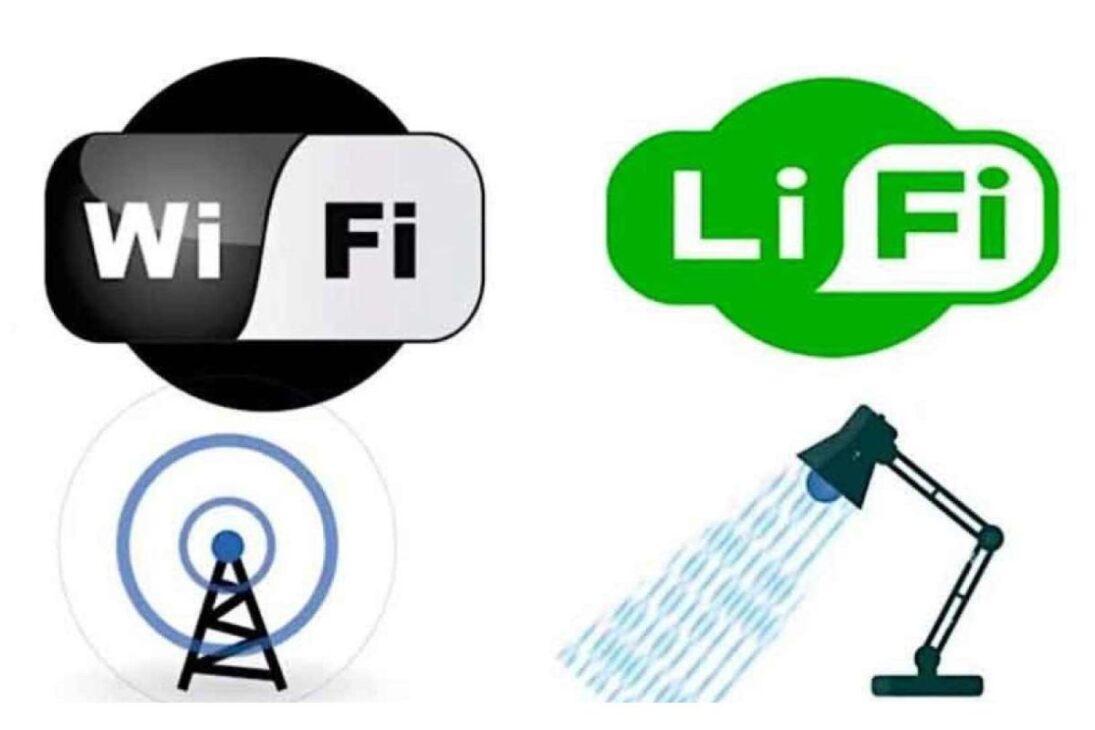
Li-Fi technology offers clear benefits but also has limitations that need to be considered.
Main Advantages:
Superior Speed: in laboratory tests, Li-Fi has reached speeds of up to 224 Gbps. Current commercial solutions, like Signify’s Trulifi, already offer up to 845 Mbps.
Increased Security: as light does not pass through walls, the wired-free internet signal is confined to the environment. This creates a physical barrier against external access attempts, making the network extremely secure.
No Radio Interference: as it does not use the radio frequency spectrum, Li-Fi is immune to interference from other Wi-Fi networks, microwaves, or Bluetooth devices. It is ideal for places with high network density, such as hospitals and industries.
High Connection Density: the light spectrum is 10,000 times larger than that of radio frequencies, allowing a much greater number of simultaneous connections without loss of quality.
Main Disadvantages:
Range and Line of Sight: the device needs to be in the line of sight of the light source. Physical obstacles block the signal.
Dependency on Lighting: if the light is turned off, the connection is interrupted.
Infrastructure Costs: the initial implementation, which requires changing or adapting fixtures and purchasing receivers (USB dongles, for now), still has a high cost.
When Will Li-Fi Technology Be in Our Homes?
Despite the standardization, Li-Fi technology is still not ready to replace home Wi-Fi on a large scale. The expectation is that the technologies will coexist, with Li-Fi being the choice for applications requiring maximum security and speed, while Wi-Fi will continue to offer mobility.
Currently, the focus of Li-Fi is in professional and industrial sectors, where security and lack of interference are critical. Companies like pureLiFi, which played a key role in creating the IEEE standard, are already distributing components for electronic manufacturers to integrate the technology into future devices. The expectation is that, as costs decrease and greater integration occurs in laptops and smartphones, wired-free internet via Li-Fi will start to gain popularity among end consumers in the coming years.





Em 2005 fazendo um curso da Tyco, foi comentado sobre o li-fi, hoje 20 anos depois voltam a falar do mesmo assunto sempre que comentei isso fui motivo de chacota.