






 Portuguese
  Spanish


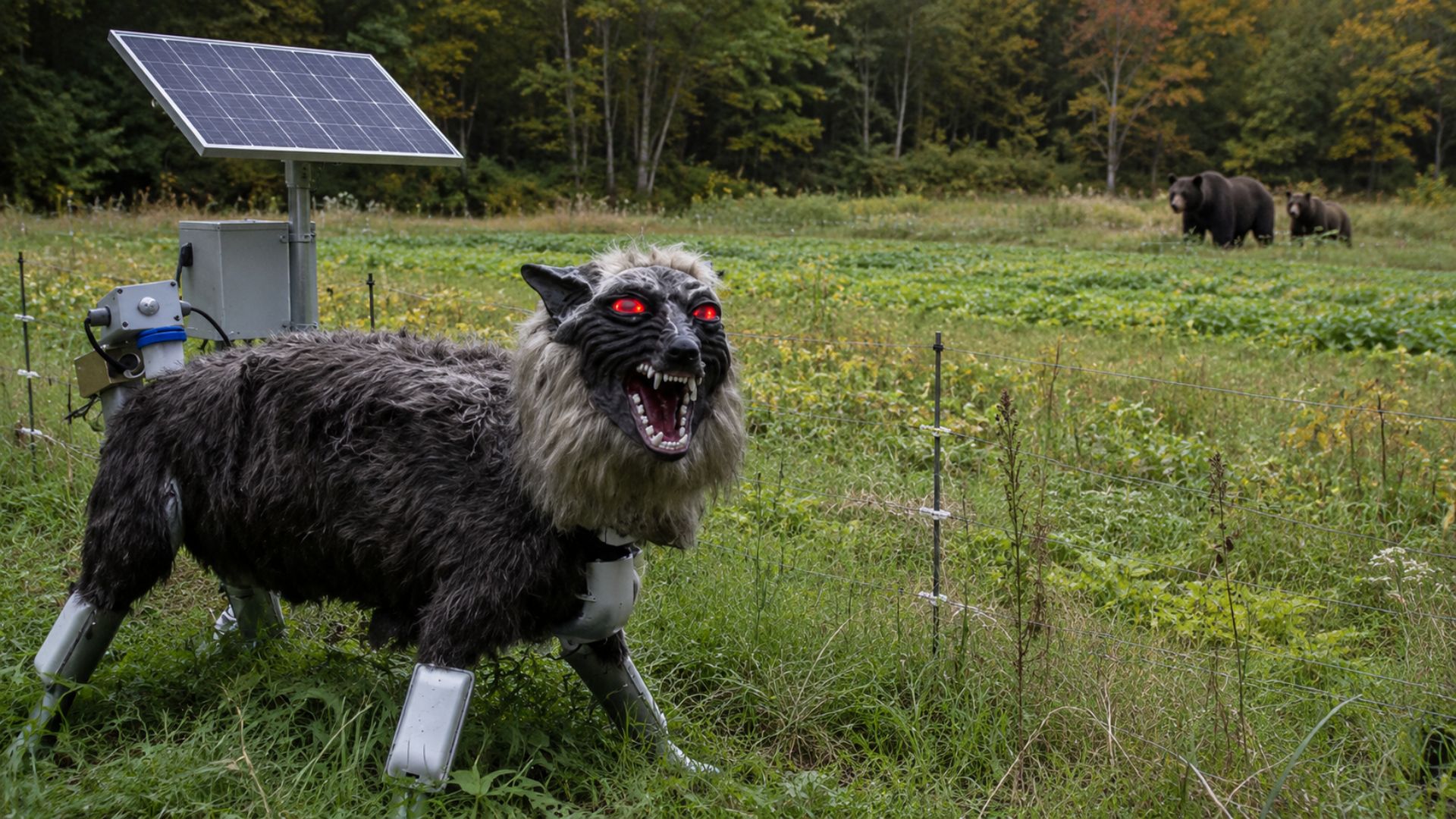

A Japanese manufacturer called Ohta Seiki produces robot wolves nicknamed “Monster Wolf” that cost from R$ 22 thousand, operate with sensors, solar panels, and speakers that emit more than 50 types of sounds audible up to one kilometer. The waiting list for purchase is already up to three months after Japan recorded 13 deaths caused by bear attacks between 2025 and 2026, more than double the previous record.
The Japanese manufacturer Ohta Seiki, based on the island of Hokkaido, cannot meet the demand for its robot wolves. The number of orders this year has already surpassed the volume normally recorded in an entire year, and the company’s president, Yuji Ohta, told the AFP agency that customers are being advised to wait between two and three months for delivery. According to information from G1, the reason for the rush is an alarming record: Japan recorded 13 deaths caused by bear attacks between 2025 and 2026, more than 50 thousand sightings of the animals across the country, and 14,601 bears captured and killed, all historic numbers.
The equipment, named “Monster Wolf,” has a deliberately frightening appearance. Open mouth, flashing red LED eyes, a head that moves from side to side, and an illuminated tail make up the look of a wolf that does not exist in nature, but functions as a technological scarecrow against bears, boars, and deer. The Japanese manufacturer produces each unit by hand, which explains the limited production capacity that prevents the company from keeping up with the explosive increase in demand for a product that, a few years ago, was treated as a curiosity.
How a R$ 22 thousand robot wolf works

Photo: Toru YAMANAKA / AFP/File
The Monster Wolf is more than a sculpture with lights. The equipment operates with a battery powered by solar panels, has sensors that detect the approach of animals, and automatically activates a speaker system capable of emitting more than 50 types of recorded sounds. The sound repertoire includes howls, growls, human voices, and electronic noises, all designed to scare away wild animals that approach protected areas. The sounds are audible up to one kilometer away.
-
China Develops Custom 140-Ton Electric Mining Truck with 770 kWh Swappable Battery, Deploys 290 Units in Xinjiang’s Largest Zinc Mine

-
Meta to Launch Arena, a New Prediction App Targeting 3.56 Billion Users, Competing with Polymarket and Kalshi

-
Scientist Challenges Famous Human Evolution Theory, Argues Homo Sapiens Evolved Gradually Over Thousands of Years
-
15-Year-Old American Builds Ocean Generator with PVC Pipe and 3D-Printed Propeller for $12, Wins National Prize, Presents at White House, and Makes Forbes 30 Under 30 List





When the sensors detect movement, the robot wolf simultaneously activates the speakers, the LEDs in the eyes and tail, and the mechanism that moves the head sideways. The combination of unpredictable visual and sound stimuli creates a threat experience that prevents animals from getting used to the device, a common problem with conventional scarecrows that lose effectiveness after a few days. The variety of more than 50 different sounds ensures that the stimulus constantly changes, maintaining the surprise effect over time.
13 deaths and 50,000 sightings: the record that triggered the demand
The rush for the Japanese manufacturer’s robot wolves did not happen by chance. Japan recorded 13 deaths caused by bear attacks between 2025 and 2026, a number that more than doubled the previous record and put the entire country on alert. Official data also points to more than 50,000 bear sightings throughout Japanese territory, another historic milestone that highlights the expansion of these animals’ presence in inhabited areas.
Bears have been seen entering homes, roaming near schools, and even invading supermarkets and hot spring resorts. For rural communities that live with this threat daily, the situation has become unsustainable. Farmers lose entire crops when bears invade plantations, construction workers in remote areas face real risks during work, and golf course operators deal with cancellations from frightened customers. These are the main buyers of the Japanese manufacturer’s robot wolves.
From curiosity to necessity: the trajectory of the Monster Wolf
The robot wolf was launched in 2016 with the aim of protecting crops from attacks by boars, deer, and bears. At the time, the Japanese manufacturer’s equipment was received with a mix of curiosity and skepticism, treated more as an eccentric novelty than as a serious solution to an agricultural problem. But the field results changed this perception: rural owners who installed the Monster Wolf reported a significant reduction in animal invasions on their properties.
With the dramatic increase in bear attacks over the past two years, skepticism gave way to urgency. Demand exploded and Ohta Seiki, which manufactures each unit manually, found itself unable to keep up with the volume of orders. The transition from niche product to essential safety equipment happened faster than the company’s production capacity could adapt, resulting in the two to three-month waiting list that buyers currently face.
New versions: wolves with wheels and artificial intelligence
The Japanese manufacturer does not intend to stop at the current version of the Monster Wolf. The company is working on new versions of the product, including models with wheels capable of chasing animals that approach, an evolution that would transform the robot wolf from a static sentinel into a mobile patrol. For those who need to protect extensive areas like rice fields or orchards, the ability to move would significantly expand the equipment’s range of action.
In addition to mobile models, Ohta Seiki is studying the integration of cameras with artificial intelligence into the next robot wolves. AI would allow the equipment to identify the type of animal approaching and adapt its response specifically, using sounds and movements optimized for each species. The Japanese manufacturer is also developing portable versions intended for hikers, fishermen, and students who travel through areas where the risk of bear encounters is high. Yuji Ohta summarized the motivation: “We wanted to use our manufacturing experience to do our part in combating bears.”
Solar panels and autonomy: the technology behind the wolf
A practical aspect that makes the Monster Wolf viable for isolated rural areas is its energy autonomy. The equipment operates with a battery recharged by solar panels, eliminating the need for connection to the power grid or frequent battery changes. For farmers who install the robot wolf in fields far from any electrical infrastructure, this feature is essential. The device can operate continuously without energy maintenance, turning on and off automatically as sensors detect or stop detecting movement.
The initial cost of R$ 22,000 may seem high, but for rural properties that lose entire crops to animal invasions, the investment quickly pays off. A single harvest destroyed by bears or wild boars can represent a loss far greater than the price of the equipment. For operators of golf courses and construction companies in remote areas, the cost of a robot wolf is irrelevant when compared to the legal and financial risks of an attack on employees or customers.
A wolf that never existed, but that Japan needed
The Japanese manufacturer Ohta Seiki created an animal that nature did not produce: a robot wolf with red eyes, 50 recorded sounds, and sensors that operate with solar energy. The Monster Wolf was born as a curiosity in 2016, became a necessity after the record of bear attacks, and now evolves into versions with wheels and artificial intelligence. The three-month waiting list to purchase a R$ 22,000 equipment is the most accurate measure of the problem Japan faces with its bears.
Would you buy a robot wolf to protect a rural property? Tell us in the comments what you think of the Monster Wolf, if you believe this type of technology would work in Brazil against animals like wild boars or capybaras, and which future version caught your attention the most: the model with wheels or the one with artificial intelligence. We want to hear your opinion.






