






 Portuguese
  Spanish




Discover How The World’s Largest Sodium-Ion Battery In China Is Revolutionizing Renewable Energy Storage And Powering 12,000 Homes Daily
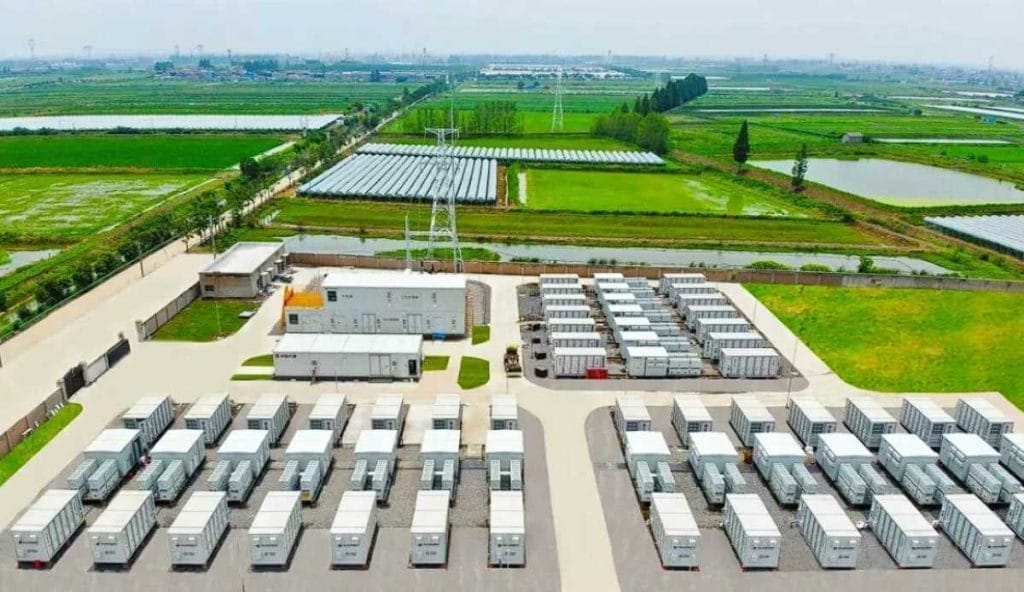
China has put into operation the world’s largest sodium-ion storage battery, with a capacity of 100 MWh, in Qianjiang, Hubei province. The Datang Group, a state-owned power generation company, connected the battery to the grid at the end of June.
The Importance Of Energy Storage In The Transition To Renewable Energies
As the world moves towards the elimination of fossil fuels, battery-based energy storage solutions are essential for utilizing solar and wind energy. A large-scale renewable energy plant, powered by wind turbines or solar panels, needs an equally large storage solution to overcome the intermittency in power generation and store it for future use.
-
China Surpasses U.S. and Russia Combined in Submarine Production

-
Xiaomi Unveils Smart Glasses in Brazil with 12MP Camera, 4K Video, and AI Features, Challenging Ray-Ban Meta

-
Volkswagen Unveils Bold Strategy to Compete with Chinese Automakers in Brazil, Featuring 5,000 Parts, 76% Localization, and a Surprising Turnaround
-
Three Teens Win Global Prize for Low-Cost AI Microscope Diagnosing Malaria Species in Seconds for Remote Villages


Due to their high storage density, lithium-ion batteries have been the preferred solution for energy storage in electronic devices and electric vehicles. However, large-scale energy storage requires massive battery packs.
Challenges Of Lithium-Ion Batteries
As renewable energy plants are located in some extreme environments, the battery packs are also exposed to excessive heat, exacerbating the issues of lithium-ion batteries, such as fire risks and less-than-optimal storage performance.
For this reason, scientists have been seeking more user-friendly alternatives and have found a scalable solution in sodium-ion batteries.
Advantages Of Sodium-Ion Batteries
Compared to lithium-ion batteries, sodium-ion batteries have several advantages. They are made from sodium, which is abundantly available and easier to obtain than lithium, which requires extensive mining.
Due to high demand, lithium prices are at an all-time high, making the transition to greener energy sources difficult. An alternative from an abundantly available and cheaper source facilitates this transition.
In addition, sodium-ion batteries have a better safety track record and perform well in extremely low and high temperatures.
The batteries can ensure 85% charging and discharging efficiency at minus 20ºC, which is unmatched by other batteries. They can also ensure 1,500 charging and discharging cycles at a high temperature of 60ºC.
A 100 MWh project also demonstrates that the technology is scalable.
The World’s Largest Sodium-Ion Battery
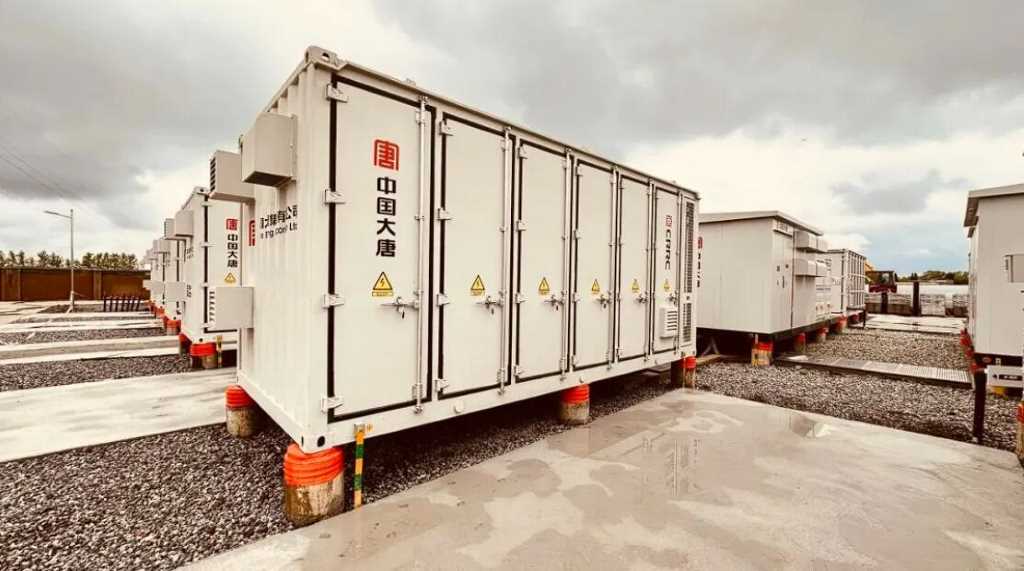
The world’s largest sodium-ion battery system was built using 185 Ah sodium-ion batteries manufactured by HiNa Battery, a supplier based in China. The system consists of 42 battery storage containers and 21 boost converter sets.
Interestingly, with the connection of this system to the grid, HiNa Battery has broken its own record for the largest sodium battery unit in the world, which had a 10 MWh unit located in Nanning, southwestern China, that was commissioned in May this year.
At the Qianjiang facility, the sodium-ion battery system will store up to 100,000 kWh of electricity in a single charge and distribute it to 12,000 homes for their daily needs. At this scale, the facility will help avoid carbon emissions equivalent to 13,000 tons annually.
While the Nanning facility is expected to increase its energy capacity to 100 MWh in the future, the Qianjiang facility will also grow to a capacity of 200 MWh in its next phase, as reported by CNEVPost in its report.
The growing storage of these units shows that sodium-ion batteries are no longer confined to labs and are making their presence felt in the market.
Source: cnevpost.com


