Portuguese
  Spanish


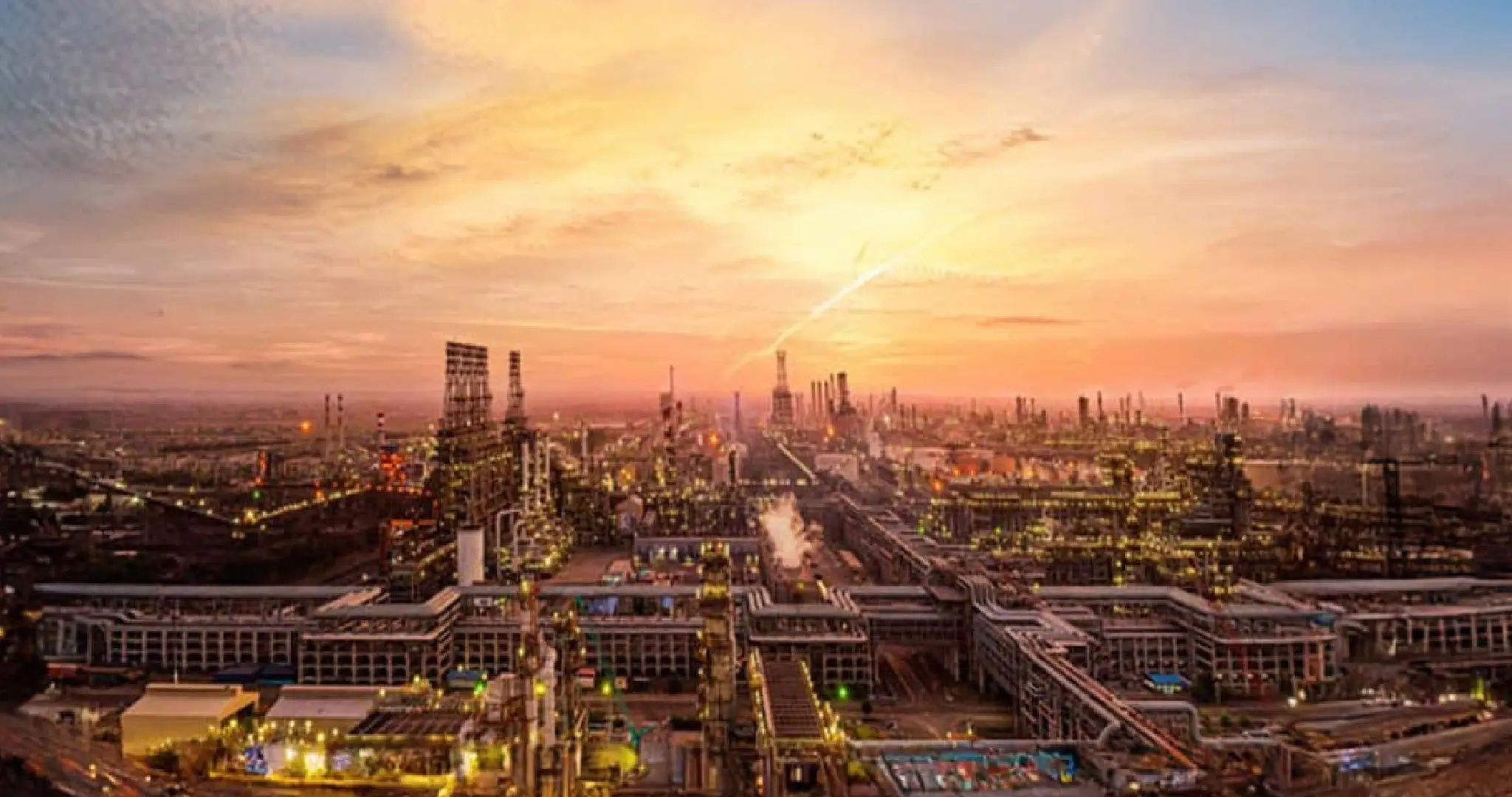


With a Capacity of 1.4 Million Barrels Per Day, Reliance’s Jamnagar Refinery Is the Largest in the World Built on a Single Site. See How India Created One of the Largest Industrial Complexes on the Planet.
As the world discusses the energy transition, a gigantic industrial structure in western India continues to break records and redefine what it means to operate at maximum scale. The Jamnagar Refinery, owned by Reliance Industries, is not only the largest in the world in processing capacity — it was also built in a single integrated complex, housing refining, petrochemical, power generation, and export terminals on the same site. With a combined capacity reaching an impressive 1.4 million barrels per day, the Jamnagar refinery is not just an energy colossus: it is a showcase of modern industrial engineering, global integrated logistics, and the ambition of an emerging nation that transformed a coastal desert into one of the epicenters of the global oil industry.
What Is Jamnagar — And Why Is It Unique in the World
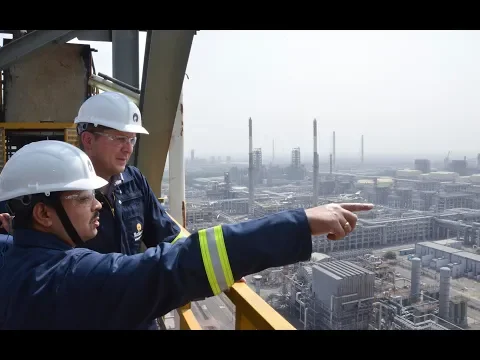

Located in the state of Gujarat, on the western coast of India, the city of Jamnagar transformed from a fishing village to an industrial powerhouse in less than two decades. The driving force behind this transformation was the Reliance group, led by Mukesh Ambani, one of the richest men on the planet.
When deciding to build a refinery on the site, the company did not spare any expense in scale: it created a complex that integrates a refinery, petrochemical facilities, private seaports, self-generated power, warehouses, and internal pipelines.
-
Brazil’s ANP Opens 86 New Oil Blocks in the Equatorial Margin, Expanding the Amazon River Mouth Frontier

-
OPEC+ Boosts Oil Supply by 188,000 Barrels per Day in July 2026, Leading to Price Drop from $112 to $89 per Barrel in Under Two Months

-
TotalEnergies Signs 20-Year Deal to Purchase 2 Million Tons of LNG from Alaska, Boosting Project Viability
-
Turkey Deploys Çağrı Bey Drilling Ship to Explore New Oil Frontier Off Somalia’s Coast
Although construction occurred in phases — the first between 1999 and 2000, and the second expansion between 2005 and 2008 — the entire complex was designed to operate as a single unit, with full operational integration. Reliance itself defines Jamnagar as a “single-site plant,” a concept that distinguishes it from other megarefineries spread across different locations.
This configuration allows for incredible economies of scale: one barrel of oil enters and, in a few hours, can leave as aviation fuel, polypropylene, or chemical products directly exported by ship.
Capacity That Challenges Even Entire Countries
With 1.24 to 1.4 million barrels processed per day, the Jamnagar refinery alone exceeds the refining capacity of entire countries, such as Argentina, South Africa, Norway, or even Australia. And this volume is not just theoretical: the plant operates with very high operational efficiency, providing fuels for the domestic market and, primarily, exporting petroleum products to over 100 countries.
This export-oriented vocation is a key differentiator. Unlike other refineries that supply local markets, Jamnagar is a refinery geared towards global trade, with direct access to the Arabian Sea, its own terminals, and contracts with large tanker ships.
In practice, this means the refinery acts as a global hub for derivatives, positioning India as a strategic player in the international fuels, plastics, and petrochemicals chain — even without being one of the largest producers of crude oil.
A Refinery That Is Almost An Industrial City – Jamnagar Refinery
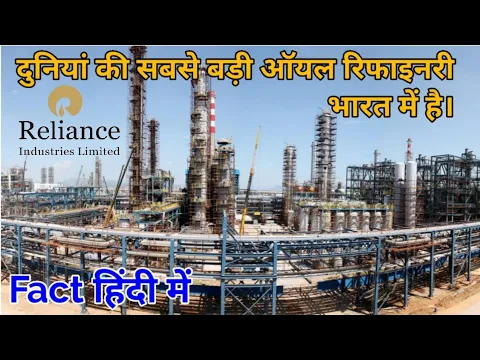
The size of the Jamnagar refinery impresses not only due to its capacity but also its complexity. The complex occupies over 30 km², larger than some medium-sized Brazilian cities. Within its boundaries, it includes:
- Two main refineries: one focused on the domestic market and another entirely geared towards export.
- Catalytic cracking, hydrotreatment, and catalytic reforming units.
- Plants for hydrogen, sulfur, and syngas production.
- Own thermal power plants, generating enough power to keep the complex self-sufficient.
- Private port terminal, capable of receiving large oil tankers.
- Digital control center, operated in real time with artificial intelligence and sensors distributed throughout the facility.
Additionally, Jamnagar houses residential areas, hospitals, and technical training centers exclusively for the more than 20,000 professionals involved in the operation and maintenance of the complex.
Economic and Geopolitical Impact of the Refinery
The Jamnagar refinery is not just an engineering feat — it’s an economic and strategic lever. With it, Reliance:
- Reduced India’s dependence on imported fuels, balancing the trade deficit.
- Created thousands of direct and indirect jobs, from construction to operation.
- Strengthened the petrochemical sector, which uses refinery derivatives to produce plastics, fertilizers, and industrial products.
- Placed India on the map of the global energy logistics, creating an alternative to the traditional hubs of Singapore and the Persian Gulf.
With the war in Eastern Europe, tensions in the Middle East, and the energy transition progressing at different speeds around the world, having a megacomplex like Jamnagar gives India bargaining power, commercial flexibility, and strategic independence — especially during periods of shocks in global supply.
From Diesel Production to the Vanguard of Clean Energy?
Despite being synonymous with oil, Reliance has ambitious plans to use the Jamnagar complex as a bridge to the energy of the future. In 2021, the company announced that part of the facilities will undergo adaptation to produce green hydrogen, solar panels, and energy storage technologies, in partnership with global R&D centers.
The idea is simple, but powerful: use the cash generated by oil to finance the transition to renewable sources, without giving up the existing infrastructure.
The same pipeline that currently transports derivatives could, in the future, transport hydrogen. The export terminals could be adapted for next-generation products.
This transition is still in its early stages, but it reflects the new paradigm of the energy industry: it is no longer about abandoning oil but using it intelligently as the world prepares for a post-carbon future.