Portuguese
  Spanish


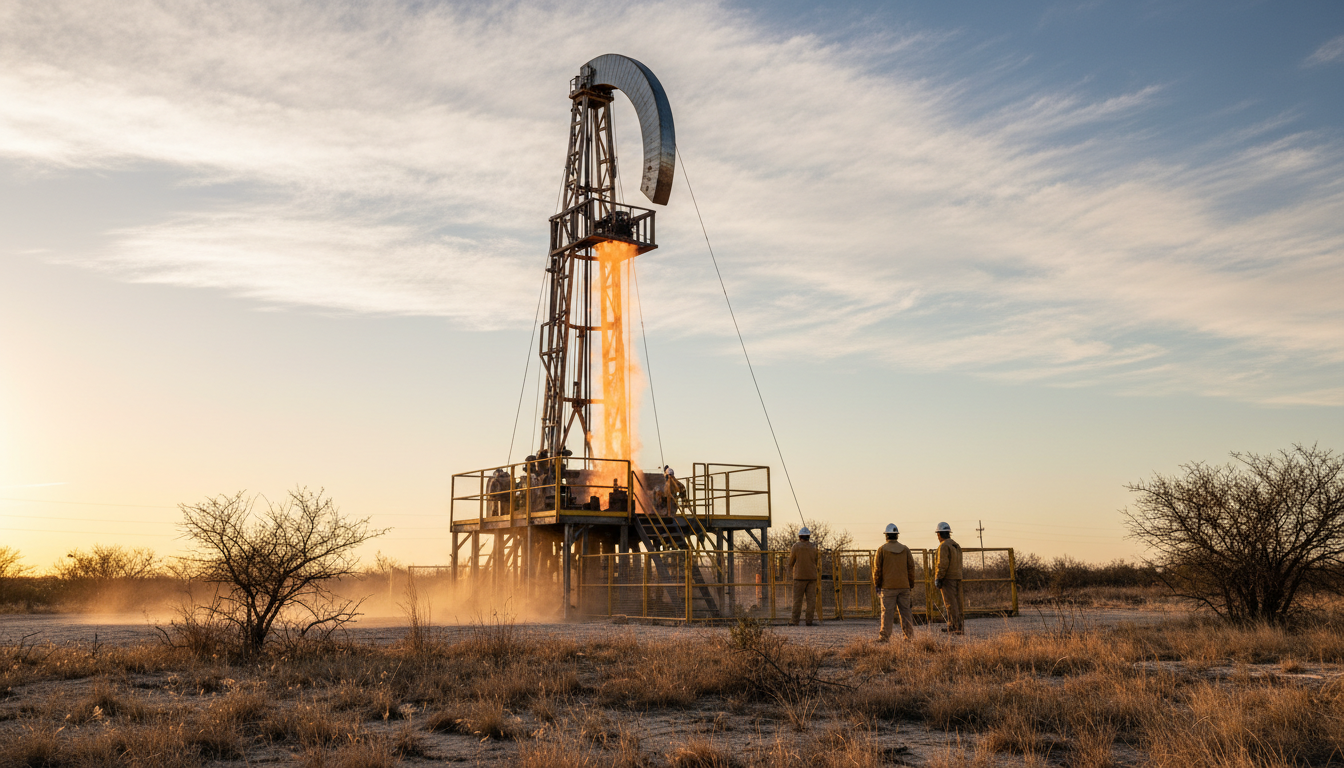


In the Nabors test field in Houston, the startup Quaise activates a 100 kW gyrotron that fires millimeter waves to vaporize granite and aims for wells 20 km deep, three times deeper than the Soviet Kola record, achieved in 22 years.
In Houston, Texas, the startup Quaise Energy brought an unprecedented piece of equipment to the oil and gas sector. The millimeter wave drill fires concentrated microwaves to vaporize rock.
According to the New Atlas portal in a report at the headquarters, the demonstration marked the transition from laboratory to full-scale probe. Before that, it operated only on a bench.
The method is simple in concept, complex in engineering. A 100 kW gyrotron emits millimeter waves guided by a metal tube called a waveguide, which conducts the energy to the bottom of the well.
-
OPEC+ Boosts Oil Supply by 188,000 Barrels per Day in July 2026, Leading to Price Drop from $112 to $89 per Barrel in Under Two Months

-
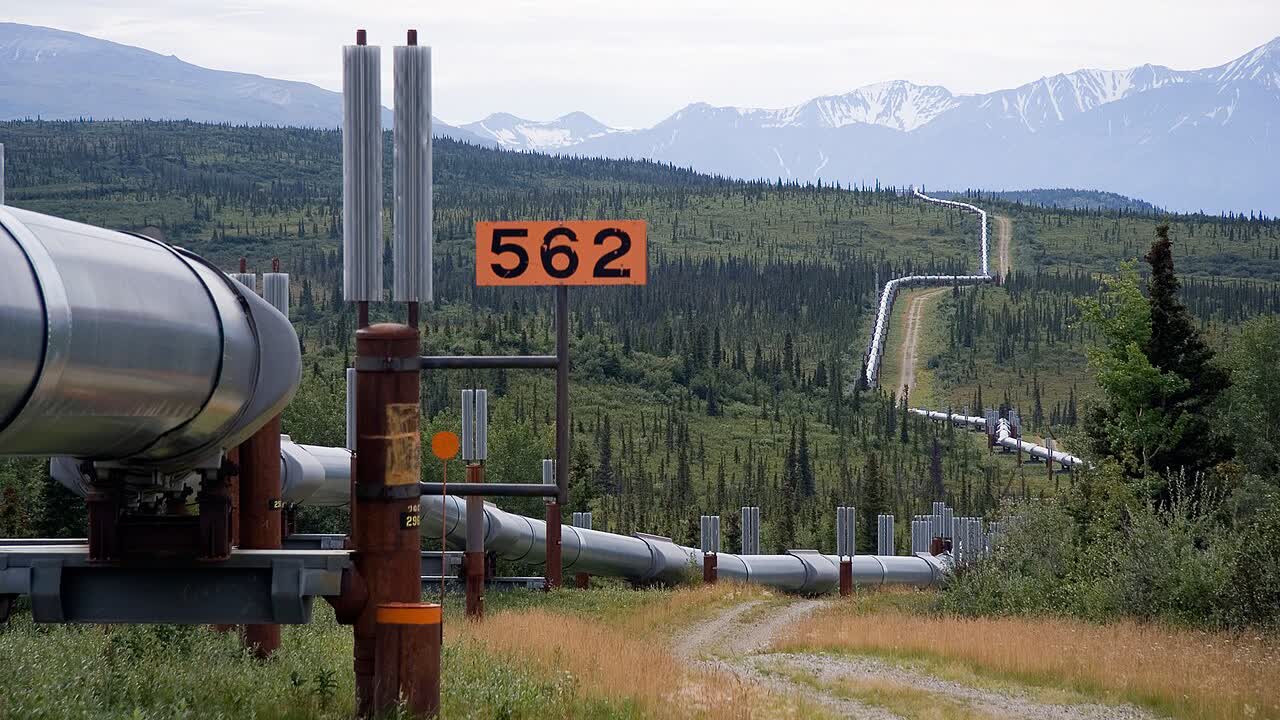
TotalEnergies Signs 20-Year Deal to Purchase 2 Million Tons of LNG from Alaska, Boosting Project Viability
-
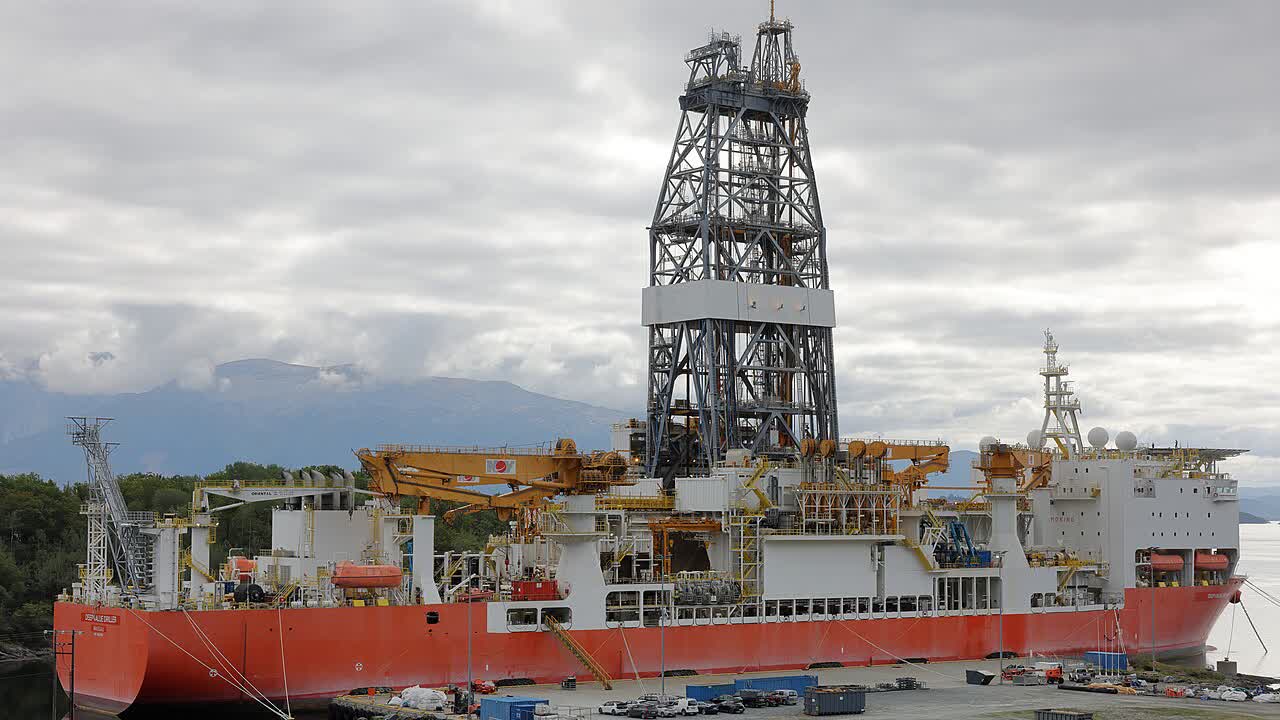
Turkey Deploys Çağrı Bey Drilling Ship to Explore New Oil Frontier Off Somalia’s Coast
-
Golden Pass LNG Ships First Liquefied Gas Cargo from the U.S., Completing $10 Billion QatarEnergy and ExxonMobil Investment

There, the beam heats the rock until it melts and vaporizes, instead of grinding it with conventional drills. The intended depth reaches 20 kilometers, more than any human drill has ever achieved.
For the oil and gas sector, the method could rewrite the economics of deep drilling. For the electricity sector, it paves the way for geothermal plants where they were previously unfeasible.
How the millimeter wave drill works

The gyrotron is a type of vacuum tube. It generates electromagnetic waves at very high frequencies, in the range of tens to hundreds of gigahertz.
Originally, it was developed to heat plasmas in experimental nuclear fusion reactors. According to the MIT Plasma Science and Fusion Center, the department led the adaptation for drilling use.
Quaise was created precisely as an MIT spin-off in 2018. Co-founder Paul Woskov, a research engineer at PSFC, discovered that millimeter waves can cut granite with high efficiency.
In practice, the waveguide is a thin-walled metal pipe. It conducts the wave like an optical fiber conducts light, but at a much lower frequency.
Therefore, there is no physical contact between the source and the rock. The result is a hole with smooth, vitrified walls, without fragments to be removed.
The milestone of the millimeter wave drill in 2025

In May 2025, Quaise brought the equipment to the test field in Houston. According to the Energy Global portal, the demonstration deepened a hole in a granite block in front of executives.
Subsequently, in the second half of 2025, the company moved the tests to Marble Falls, also in Texas. There, it reached 118 meters deep in granite.
According to Quaise, this was the world record for drilling exclusively with millimeter waves. As detailed on the company’s official page, the milestone paved the way for the next commercial step.
In parallel, the company closed a funding round in February 2026 focused on scaling the infrastructure. Subsequently, it announced a contract with a supplier of higher power gyrotrons.
In turn, investor SOSV highlighted that the field test was a prerequisite to unlocking next-phase capital. Similarly, Nabors saw potential in repurposing oil platforms.
The Project Obsidian in Oregon

On April 22, 2026, Quaise publicly linked its technology to a commercial project. The baptism is Project Obsidian, in an area near the Newberry volcano, in central Oregon.
According to the company on its official page, phase 1 should reach 50 MW of firm capacity. It is a base renewable generation, capable of operating 24 hours a day.
According to Daniel W. Dichter, senior engineer at Quaise, in a presentation at the Stanford Geothermal Workshop, phase 1 combines two well systems at 315 °C and 365 °C, at 5 km.
In comparison, most current commercial geothermal plants operate with rocks below 250 °C. The difference in temperature means much more useful energy per drilled well.
Therefore, according to the International Energy Agency in a March report, the so-called superhot rock geothermal can generate five to ten times more energy per well.
The ghost of the Kola record

The absolute human depth record belongs to the Kola Superdeep well. It was drilled by the Soviets in the northwest of the Soviet Union, over 22 years.
In 1989, the operation reached 12,262 meters, before stopping due to temperatures above 180 °C. The steel drills softened at the bottom of the well.
As already documented by Click Petróleo e Gás in coverage of mineral deposits in extinct supervolcanoes, deep geological environments hold significant energy resources. But getting there is the challenge.
Quaise aims for 20 kilometers in depth. This represents almost double the Soviet feat in just over a decade of testing.
In practice, the advantage of the millimeter wave drill comes from physics. As there is no mechanical contact, extreme heat does not corrode the drill tip.
In comparison, conventional drills with industrial diamonds stall above 200 °C. Tungsten ones give way even earlier.
The opportunity for Brazil
Brazil approved in February 2026 the creation of the National Geothermal Energy Program. The initiative paves the way for pioneering projects in regions with high thermal gradients.
Compared to Oregon, areas of Rondônia and Espírito Santo present initial potential. Despite this, most of the Brazilian territory has less hot rock than the Pacific Northwest.
On the other hand, Quaise mentions the use of decommissioned oil platforms. As documented by CPG in coverage of the Nile Delta, the O&G sector accumulates idle infrastructure.
Similarly, mature well posts in the pre-salt could serve as a test base. At that moment, supply chain decisions would determine where Quaise would install branches.
Technical and regulatory caveats
Despite the optimism, there are concrete caveats. As warned by the Geomechanics portal in May 2026, subsurface risks of superhot geothermal include induced seismicity.
Similarly, the integrity of the waveguide at extreme depths still needs to be proven. Compared to seismic cables, the durability of materials is less tested.
Therefore, experts interviewed by Euronews on May 11 highlighted that the 2030 schedule is ambitious. Even so, it is based on milestones published by the company.
Still, the American Congress discusses the Next Generation Geothermal Research and Development Act. The norm should include specific federal funding for superhot rock geothermal.
Next milestones
Next, Quaise should increase the power of the gyrotron used in the field. The goal is to go from 100 kW to 1 MW in the next generation of equipment.
Subsequently, it intends to open a drilling front in Oregon in 2027. At that moment, the schedule for electricity generation in 2030 ceases to be hypothetical.
For now, the company continues testing waveguides in Brazilian and Norwegian granite as part of the technical campaign. As reported by the Euronews portal, this is important to validate different types of rock.
- Current power of the Quaise gyrotron: 100 kW
- Record achieved in Marble Falls: 118 meters in granite
- Intended depth: up to 20 km
- Current human record (Kola, Russia): 12,262 meters in 22 years
- Project Obsidian, Oregon: 50 MW firm until 2030
- Origin: MIT spin-off in 2018
- Testing partner in Houston: Nabors Industries
Final caveats about the technology
According to researchers interviewed by MIT News in March, there are still uncertainties about the thermal regime at extreme depth. Despite this, numerical models suggest industrial viability.
According to the McKinsey report of 2026, geothermal is still a niche in the American matrix, with less than 0.5% of the mix. However, the sector can scale quickly if the cost per MW approaches solar.
Finally, the question remains: if the millimeter wave drill indeed delivers 20 km depth this decade, will Brazil be able to adapt the pre-salt to become a deep geothermal hub?