






 Portuguese
  Spanish


Philosophers And Scientists Have Debated For Centuries Whether Mathematics Is A Human Creation Or A Fundamental Structure Of The Universe.
Mathematics pervades the entirety of the exact and natural sciences, being instrumental in the formulation of physical models and in the engineering of complex systems.
Its applications range from understanding the structure of the universe to developing essential technologies for modern daily life.
However, its ontological nature remains an open question: is mathematics a human cognitive construction or an objective entity, independent of the mind?
-
IBM Breaks 1-Nanometer Barrier with 0.7 nm Chip Featuring Nearly 100 Billion Transistors and 3D Architecture, Promising AI Revolution

-
Apple Raises MacBook and iPad Prices as Memory Costs Surge by Up to 98%, Losing Edge Over Rivals and Highlighting AI Boom’s Impact on Consumers
-
China Establishes State Centers to Train Humanoid Robots, While the West Lags Behind with Makeshift Solutions
-
The Trap of Modern Technology: How Screen Overload and Digital Connections Can Impact Your Mental Health and Well-being




This query has been debated by mathematicians, philosophers, and scientists throughout the centuries, without a definitive conclusion.
Mathematics As Ontological Discovery
A school of thought argues that it has its own existence, being inherent to the fabric of reality.
From this perspective, structures of the exact sciences, such as the Fibonacci Sequence and prime numbers, are fundamental properties of the universe, manifesting spontaneously in nature, from the golden proportions found in living organisms to the underlying symmetry of particle physics.
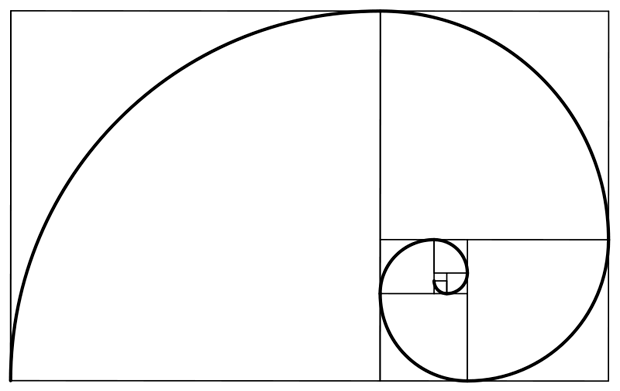
This viewpoint suggests that, regardless of civilization or era, the same mathematical truths would always be discovered, as they are already present in the essence of the cosmos.
Roger Penrose (1989), in his work The Emperor’s New Mind, argues that mathematics is an objective reality that exists independently of human thought.
He contends that the mathematical nature of the universe can be seen in quantum physics and general relativity, where equations predict phenomena even before they are experimentally observed. Eugene Wigner (1960), in his essay The Unreasonable Effectiveness of Mathematics in the Natural Sciences, questions why mathematics, an apparently abstract discipline, is so effective in describing the physical world.
To reinforce this argument, one can observe that various distinct cultures, separated geographically and temporally, achieved similar exact results, even though their notations and terminologies varied.
The Pythagorean Theorem, for example, was known to civilizations such as the Babylonians and the Chinese long before the Greek formulation.
This indicates that mathematics may be an objective structure of the universe, accessible to any society that investigates it deeply.
Another relevant point is the role of mathematics in formulating physical laws. Many of the fundamental equations of physics, such as Maxwell’s equations for electromagnetism and the Schrödinger equation in quantum mechanics, were derived based on mathematical principles even before being experimentally confirmed.
This suggests that mathematics may be an inherent language of nature, and not just a human contrivance.
Mathematics As A Cognitive Construction
In contrast, an epistemological approach argues that mathematics is an intellectual construct developed to systematize and interpret natural phenomena.
It is argued that concepts like complex numbers, abstract topologies, and non-Euclidean geometries are products of the human mind, crafted to meet the demands of scientific modeling and prediction.
Thus, mathematics would not exist independently of human thought, being a structured language designed to describe reality efficiently.
Ludwig Wittgenstein (1956), in Remarks on the Foundations of Mathematics, argues that mathematics is a constructed language, a set of rules established by convention. He suggests that mathematical truths are determined by social context and not by an objective reality.
Brian Rotman (1987), in Signifying Nothing: The Semiotics of Zero, emphasizes that mathematics is a cultural creation, shaped by human needs and not by pre-existing laws of the universe.
Proponents of this view highlight that many mathematical structures are built on cultural conventions and arbitrary decisions.
The decimal number system, for instance, arose from the historical preference for counting in groups of ten, but other systems, like binary and sexagesimal, are also viable and used in different contexts.
Furthermore, mathematical concepts can evolve over time, being refined or reformulated as new needs arise.
Another important argument is the fact that some mathematical discoveries are initially abstract and devoid of practical application, being developed purely out of intellectual curiosity.
Subsequently, they may find unexpected applications, as occurred with number theory, which spent centuries without concrete application until it was utilized in modern cryptography.
This suggests that mathematics is not intrinsically a reflection of physical reality, but rather a conceptual construction that may eventually be adjusted to describe real phenomena.








Olá pessoal, a matemática está em todos os momentos da nossa vida.
Acho quê a idéia de calcular, surgiu com o tempo. Sendo descoberto assim, essa maravilhosa ciência chamada matemática.
O homem em relação as ciências principalmente,nada pode ser colocado como invenção,e sim como descoberta, nós à partir do momento que nascemos, vamos descobrindo coisas,é assim desde crianças,os adultos ajudam as crianças porque aprenderam, más na ausência deles as crianças vão aprendendo,mexe aqui e ali, observando,e quando crescemos, fazendo uso da nossa inteligência vamos descobrindo coisas movidos pela curiosidade,vontade implacável de saber,como as coisas acontecem,o mistério,o segredo de tudo que existe,e vai por aí!
Muito interessante este debate. Pelo jeito vamos seguir sem uma conclusão a esse respeito. Eu fico com o grupo que acha que a Matemática é uma manifestação da natureza.