






 Portuguese
  Spanish
 3 min of reading
  0 comments


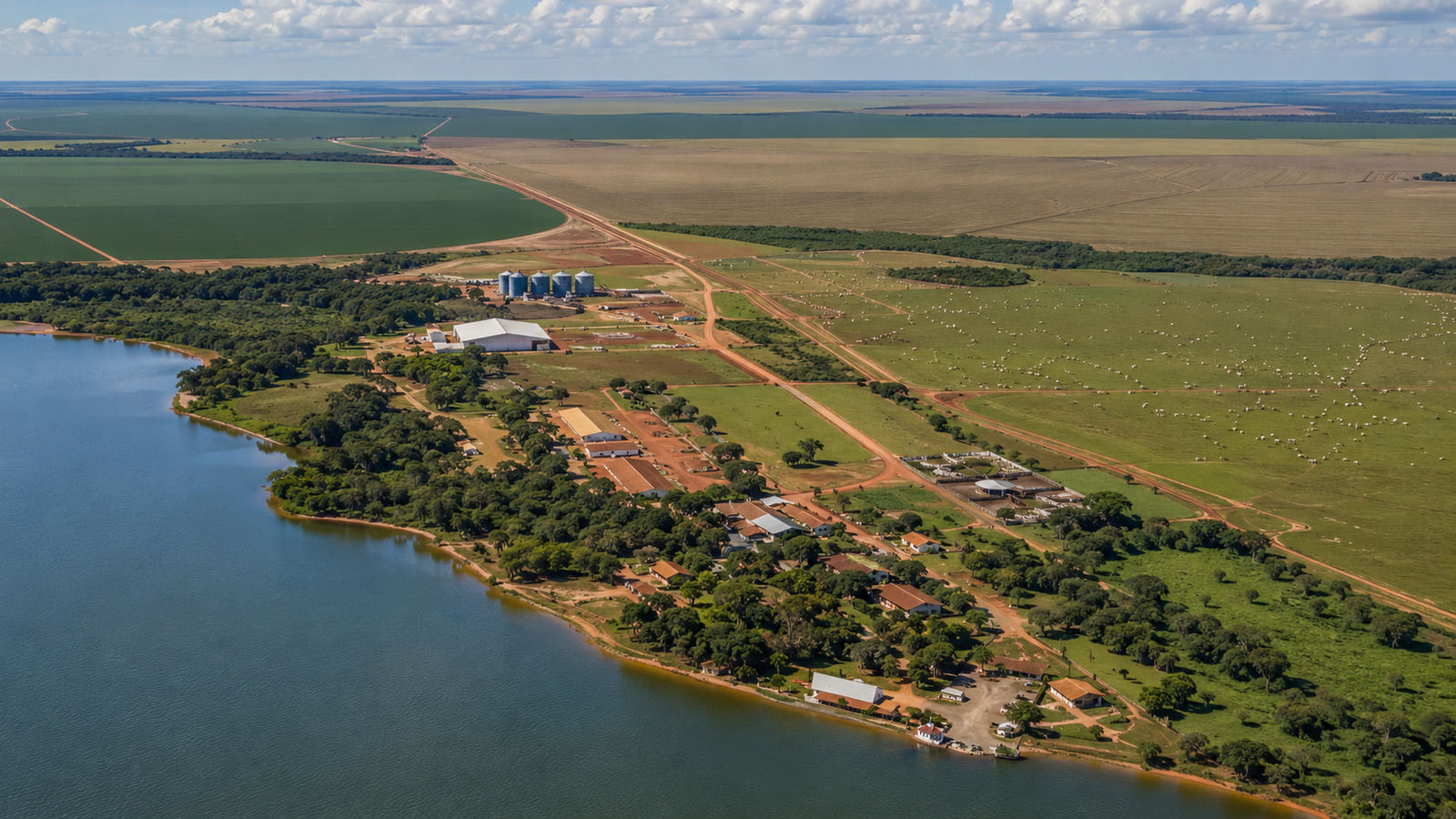
With 152 thousand hectares, 800 kilometers of internal roads, and integrated production of soy, corn, and meat, Fazenda Roncador shows how scale, technology, and environmental preservation have shaped agribusiness in Mato Grosso
Fazenda Roncador, in Querência, in the interior of Mato Grosso, encompasses 152 thousand hectares, more than 800 kilometers of internal roads, about a thousand residents, and industrial-scale agricultural production. The property, larger than the entire Metropolitan Region of São Paulo, combines soy, corn, meat, technology, and environmental preservation.


Fazenda Roncador functions like a city in the countryside
The structure of Fazenda Roncador goes beyond the farming and livestock areas. About a thousand people live there, with access to a school, supermarket, church, sports court, dental clinic, and sewage treatment plant.
The size of the property is also evident in its logistics. From the first to the last field, there is a distance of 120 kilometers.
-
In Matopiba, soybeans have replaced rice and beans, and traditional Cerrado communities that used to grow their own food now have to buy it, while pesticides from neighboring farms reach the springs.

-
Foreign tree planted to combat drought invades more than 1 million hectares of the Caatinga, encroaches on riparian forests, and turns an old solution for the semi-arid region into a silent threat to biodiversity.

-
Invasive weed that withstands extreme heat advances with climate change, threatens crops on several continents, and raises a global alert about a silent plant capable of dominating soils, suffocating native species, and reshaping entire ecosystems.
-
While other coffees escape the American tariff hike, Brazilian instant coffee is excluded, raising an alert in the sector and may become up to 37.5% more expensive in the United States.


From the center of Querência to the administrative headquarters, the route includes 64 kilometers of dirt road.
Manager Guilherme Alves da Silva compares the internal operation to a city hall. The farm maintains more than 800 kilometers of roads with its own machinery, and also has an airport, used to increase efficiency in transport and production flow.

Production combines farming and livestock in the same area
In 2019, Fazenda Roncador produced 5,200 tons of meat and more than 166 thousand tons of soy. The result comes from a crop-livestock integration model, which allows better use of the productive area.
In some parts of the property, the system enables up to three harvests per year: one of soy, another of corn, and another of meat.
The combination shows how the farm organizes production on a scale, without relying solely on one activity.
The property belongs to Grupo Roncador, founded in 1978 by civil engineer Pelerson Soares Penido.
The operation started with 24 thousand hectares dedicated to extensive livestock and reached the current 152 thousand hectares.

Technology became part of rural management
The expansion of Fazenda Roncador occurred alongside the professionalization of management. The property uses satellite monitoring and internet-connected tractors, resources that help monitor productive areas and improve equipment use.
The scale of the operation requires internal planning, its own logistics, and investment in efficiency. For manager Guilherme Alves da Silva, the path is not in opening new areas, but in acquiring better equipment and investing in business intelligence.

Preservation occupies almost half of the property
Almost half of Fazenda Roncador, 47%, is made up of native forest and permanent protection areas. The property also maintains a nursery focused on the production of native species.
Silva states that the farm has not cut down a tree in the last ten years and that, during this period, food production has increased.
Roncador was also the first farm in Brazil to receive funding from the European &Green fund.
The loan was US$ 10 million, with an annual rate of 2.95%, accompanied by a zero deforestation commitment. The resource is aimed at the protection of tropical forests.
This article was prepared based on information from the material provided about Fazenda Roncador, with data, numbers, and statements preserved according to the consulted material.




Be the first to react!