Portuguese
  Spanish


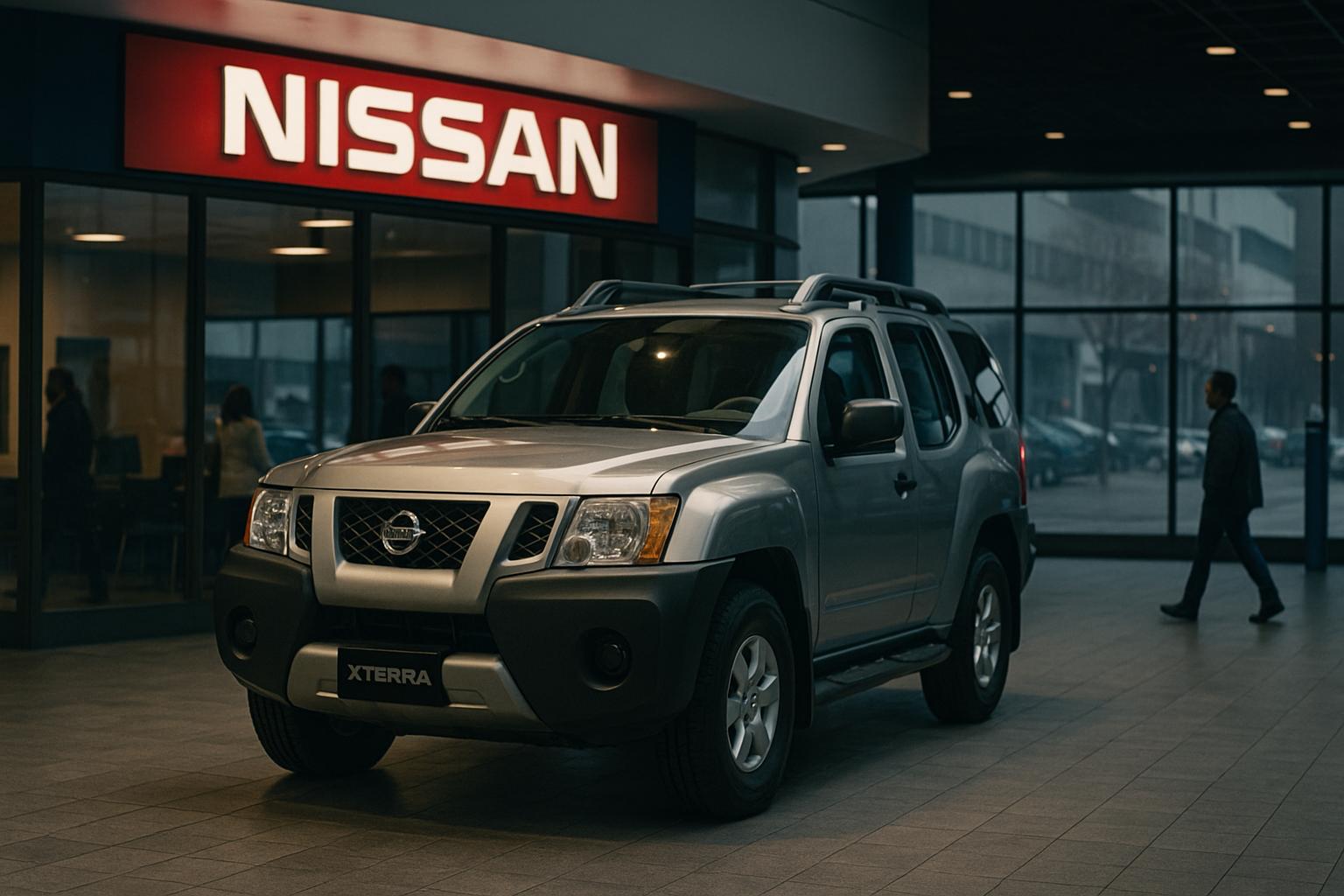


Nissan Xterra Failed in Brazil: Even Manufactured Here, It Never Exceeded 135 Sales per Month and Was Discontinued in 2008 Following Market Rejection.
The Nissan Xterra entered the Brazilian market in 2003 as one of the brand’s major bets. The mid-size SUV derived from the Frontier pickup was launched with much fanfare, national production, and the promise to win over consumers looking for robustness and an off-road spirit. However, the model’s trajectory revealed a commercial failure.
Despite the advertising and the heavyweight name, the Xterra never achieved significant numbers. Its peak occurred in 2005, when only 1,264 units were sold, an average monthly of 105 vehicles, below the symbolic barrier of 135 registrations per month.
Registrations Show a Decline Year After Year
The following numbers confirm the lack of acceptance by the Brazilian public. In 2006, sales plummeted to 586 units.
-
End of an era in Brazil: beloved sedan by Brazilians is discontinued despite having a 2.0 engine with 151 hp, CVT transmission, 466-liter trunk, and up to 650 km of range.

-
New Law Proposal in Brazil Could Heavily Penalize Drivers: Dangerous Overtaking May Become a Serious Offense with Fines Increased Tenfold and a 12-Month License Suspension; Update on 2026 Progress

-
Electric Revolution: Watts W125 Motorcycle Offers 160 km Range, 90 km/h Speed, and Affordable Price Starting at $3,000
-
General Motors Replaces Over a Thousand Workers with 50 Cobots at Electric Vehicle Plant, UAW Union Criticizes Move Amid Industry’s Automation Push



In 2007, they fell even further, with only 425 registrations, and in 2008, the result was disastrous: 176 units.


Adding these four years together, the Xterra accumulated 2,451 registered units, a very low performance for a car produced in national territory and positioned in a segment that was already growing in the country.
This history makes it clear that the SUV never managed to attract customers consistently. In a market that was beginning to be dominated by urban utility vehicles such as the Honda CR-V, Toyota RAV4, and subsequently, national models like the Ford EcoSport, the Xterra proved disconnected from the real demands of the Brazilian consumer.
Why Did the Nissan Xterra Fail in the National Market
There are several reasons for the Xterra’s failure in Brazil. The first is the product positioning: while rivals focused on urban SUVs, which were more comfortable and suitable for everyday use, the Xterra followed the off-road formula.
It was robust, with a powerful engine and a chassis derived from a pickup truck, but not very practical for those who simply wanted status and space in the traffic of large cities.
Another factor was the high price. Since it was assembled locally, the model was expected to be more competitive, but it ended up positioned at levels close to imported SUVs, which further reduced its audience. Additionally, the design, although imposing, was deemed unattractive by many consumers at the time, who sought more modern lines.
The result of this equation was simple: low demand at dealerships, an excess of unsold units, and a rapid discontinuation of production. The Xterra ceased production in 2007 and, the following year, disappeared from the Brazilian market.
Nissan’s Delayed Reaction and Changes in Direction
Nissan took a long time to respond to the criticism. The company only revamped its portfolio years later when it realized it needed more accessible models that were adapted to the profile of the Brazilian consumer.
Then came the March and the Versa, which gained traction in the entry-level segment, and later the Kicks, which became the brand’s flagship vehicle in the country.
These movements were vital for repositioning the manufacturer, but they came too late to save the Xterra. The SUV is remembered as one of Nissan’s greatest disappointments in Brazil, a product that had technical quality but failed to interpret the market correctly.
Xterra Became an Example of Sales Failure in Brazil
Today, the Nissan Xterra is remembered more as a case study than as a landmark of success. Its sales figures are often used as examples in analyses of strategic errors and how Brazilian consumer preferences can surprise even large manufacturers.
There are still enthusiasts who appreciate the model for its mechanical robustness and off-road vocation. In the used car market, some well-preserved examples attract interest precisely because they are rare.
However, the prevailing memory is that of an SUV that never managed to establish itself and demonstrated how risky it is to bet on narrow niches in such a competitive market as Brazil’s.
Lessons Learned from the Failure of the Nissan Xterra
The case of the Xterra reinforces the importance of understanding consumer behavior. Brazil is one of the most complex markets in the world for the automotive industry, and not always the recipe that works in other countries will work here.
The Brazilian public seeks competitive prices, accessible maintenance costs, and versatility to handle both city streets and travel.
By insisting on a model with a restricted appeal, Nissan wasted time and money. Only later, by focusing on higher volume cars and SUVs that were more aligned with local preferences, could it recover.
The Xterra serves as a lesson that a poorly calculated strategy can turn a promising product into one of the greatest commercial failures of the decade.