






 Portuguese
  Spanish
  6 min of reading
  0 comments


Method used in industrialized countries gains ground in Brazil by changing the logic of residential construction, with factory production, on-site assembly, and direct impact on budget, deadlines, and financing.
Industrialized residential construction is advancing in Brazil as an alternative to reduce waste, shorten deadlines, and increase financial predictability of projects.
In the system with precast concrete panels, part of the construction leaves the site and is done in a factory environment, where walls, slabs, and other components are produced before on-site assembly.
The change alters the traditional dynamics of construction.
-
To halt the advance of the Sahara, the 8,000 km Great Green Wall in the Sahel relies on reforestation to combat desertification, but by 2026 it remains far behind the goal of 100 million hectares.

-
Long before sustainable construction became a trend, China built earthen fortresses with multiple floors, a central courtyard, and the capacity to house up to 800 people living in a community.

-
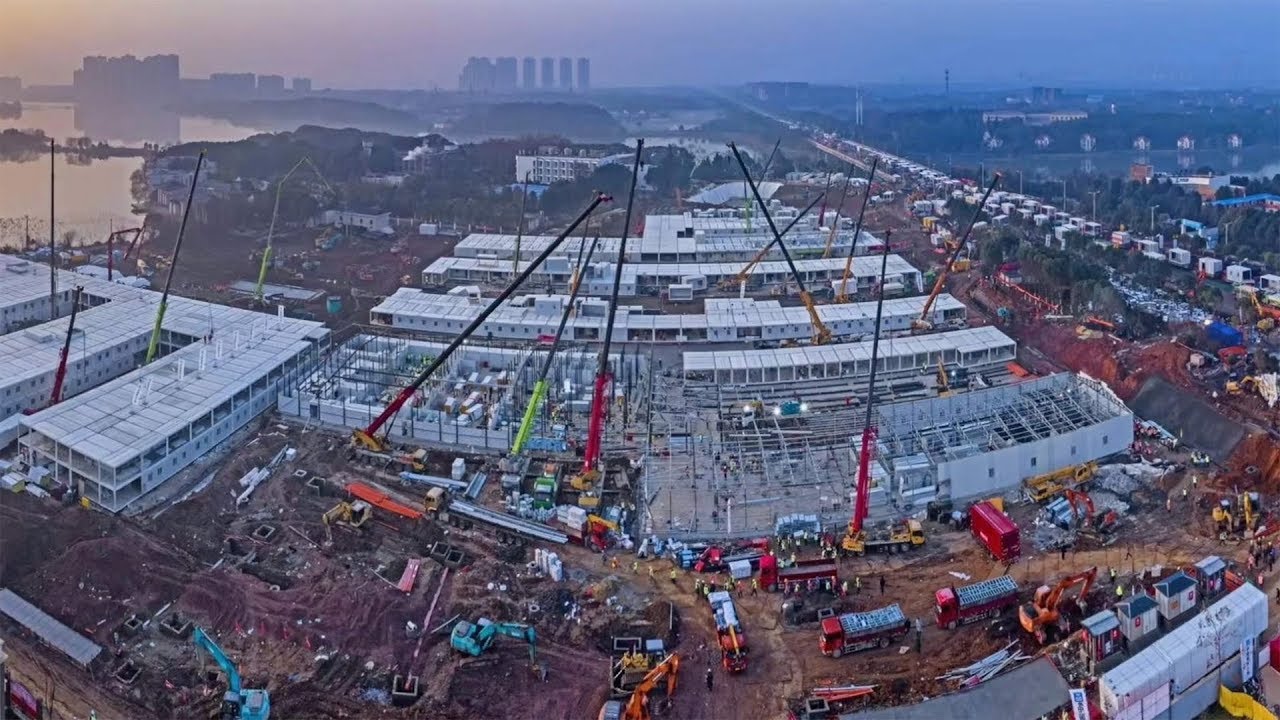
While in the rest of the world building a hospital takes years from design to inauguration, China erected the Huoshenshan Hospital from scratch in just 10 days, with 1,000 beds, foundation, structure, electrical installations, plumbing, and oxygen system ready to receive patients, mobilizing 7,000 workers.

-
Without mortar, grout, or traditional construction: the ClickBrick system assembles brick facades with ceramic pieces held by metal clips, eliminating the need for glue, speeding up installation, and even allowing everything to be dismantled later without turning the construction into expensive permanent debris.



Instead of concentrating all stages at the construction site, the process divides execution between factory and site.
Thus, activities that previously depended on a longer sequence can occur in parallel, provided the project, logistics, and site preparation are defined.
The method gained ground in countries like Singapore, China, Germany, and Sweden for being associated with productivity gains, waste reduction, and greater technical control.
According to studies and industry entities, construction industrialization allows standardizing stages, reducing improvisations, and decreasing the exposure of the project to delays caused by rework or execution failures.
In Brazil, the advancement occurs at a time when builders, developers, and suppliers are seeking more efficient processes.
A survey by FGV Ibre commissioned by the Modern Construction Show indicated that industrialized construction already appears in 64.5% of construction processes in the country.
Among companies adopting industrialized systems, 70.5% use prefabricated concrete structures, second only to electrical kits, mentioned by 82.1% of respondents.
How precast panels change residential construction
In the method with precast concrete panels, structural or sealing elements are produced off-site, in a factory.
The pieces can be made with defined measurements for doors, windows, and technical passages, always according to the approved executive project.
This factory stage allows walls and slabs to be molded with greater control of dimensions and finish.
After production, the components are transported to the site and installed on previously executed foundations.
Assembly requires planning, appropriate equipment, and a skilled team for hoisting, fitting, and fixing the pieces.
The difference from conventional masonry lies in the reduction of manual stages done directly on-site.
Instead of building walls block by block, the team installs larger components, manufactured in series and subjected to inspections during production.
This format tends to reduce execution variations, provided there is technical control at all stages.
The assembly time can be shorter in standardized projects with favorable logistics.
However, deadlines of a few days or weeks depend on the size of the residence, the distance between factory and site, site access, foundation, crane availability, and municipal requirements.
Therefore, very short estimates should be treated as specific cases, not as a general rule for any construction.
Budget for precast houses gains more predictability
The main change for the owner is in the predictability of the budget.
As part of the project is planned before manufacturing, the quantity of concrete, steel, forms, installations, and other inputs can be estimated with greater precision.
The system also reduces emergency purchases and limits losses associated with cuts, breaks, and rework.
In conventional construction, material waste and adjustments during execution can raise the final cost.
Studies on traditional projects in Brazil indicate that losses vary according to the type of service, management level, workforce, and inventory control.
Industrialization seeks to reduce this problem by transferring stages to a more controlled environment.
Even so, the idea of “absolute budget control” needs to be understood as greater contractual predictability, not as a total absence of variation.
Costs of earthmoving, foundation, transportation, hoisting, water, energy and sewage connections, public fees, project changes, and finishing choices can alter the final value.
To avoid distortions, industry experts recommend that the contract detail what is included in the industrialized system and what will be outside the scope.
This separation is relevant because the pre-molded slab can represent an important part of the residence but does not replace all the necessary steps to deliver the property ready for use.
Key delivery depends on project, land, and credit
The reduction in construction time is one of the factors that explain the interest in pre-molded systems.
When the production of parts occurs simultaneously with the preparation of the land, the schedule can be shortened compared to the traditional model.
However, the time savings depend on the integration between project, factory, transportation, and assembly team.
A shorter deadline can also reduce indirect expenses, such as rent during the wait, site management, security, and provisional consumption of water and energy.
These expenses vary according to the city, property standard, construction duration, and contract conditions.
For this reason, there is no single savings value applicable to all cases.
Financing is still a relevant point for the expansion of the model.
Caixa Econômica Federal offers lines for construction on own land and for the acquisition of land with construction, with release conditioned to credit analysis, documentation, project, guarantees, and operation framework.
In industrialized systems, the way of proving construction stages and guarantees may require specific analysis by the financial institution.
Pre-fabricated and modular houses may face additional requirements in banking practice, especially when financing depends on the physical progress of the construction or the evaluation of the property as collateral.
Companies in the sector have sought partnerships to expand access to credit, but the offer still does not have the same reach as the lines traditionally associated with masonry.
Modular construction in Singapore, China, Germany, and Sweden
Sweden is one of the references in industrialized residential construction.
A report from the Terner Center, University of California at Berkeley, points out that off-site techniques account for more than 80% of new single-family homes in the country.
The data is used in studies on productivity, standardization, and reduction of manual steps in housing.
In Singapore, public policies encouraged prefabrication as a strategy to increase construction productivity.
The Building and Construction Authority began promoting buildability programs since the 1990s, encouraging the use of industrialized components, especially in larger-scale projects and the public sector.
China has also come to be cited in debates about modular construction because of developments built with a high degree of industrialization.
One of the most well-known cases is the Mini Sky City, in Changsha, a 57-story building constructed by Broad Sustainable Building in 19 days of work, according to international technical records and reports published at the time.

Despite the repercussion, this type of construction should not be directly compared to a common residence.
Large-scale projects, with modular structure and specific planning, operate under different technical, regulatory, and logistical conditions than those found in individual houses.
What still limits pre-molded construction in Brazil
The presence of industrialized systems in Brazilian constructions shows that the technology is already part of the market.
Large-scale growth, however, depends on factors such as project standardization, proximity between factories and sites, transportation costs, availability of trained labor, access to credit, and consumer acceptance.
The distance between the factory and the site can affect the final cost, especially in small projects or those located far from supplier centers.
There are also limitations related to truck and crane access, soil condition, and the need for early planning of plumbing, electrical, and sanitary installations.
Another point mentioned by companies in the sector is cultural adaptation.
Conventional masonry remains predominant in many regions, partly due to the familiarity of consumers, bricklayers, engineers, financial agents, and local authorities.
Quality evaluation, in this context, depends less on the method alone and more on the project, execution, technical supervision, and compliance with Brazilian standards.
With more construction companies using prefabricated concrete structures and the pursuit of productivity in the sector, the method tends to be considered in new residential projects, especially when there is repetition, scale, and financial planning from the initial phases.



-

1 person reacted to this.