






 Portuguese
  Spanish


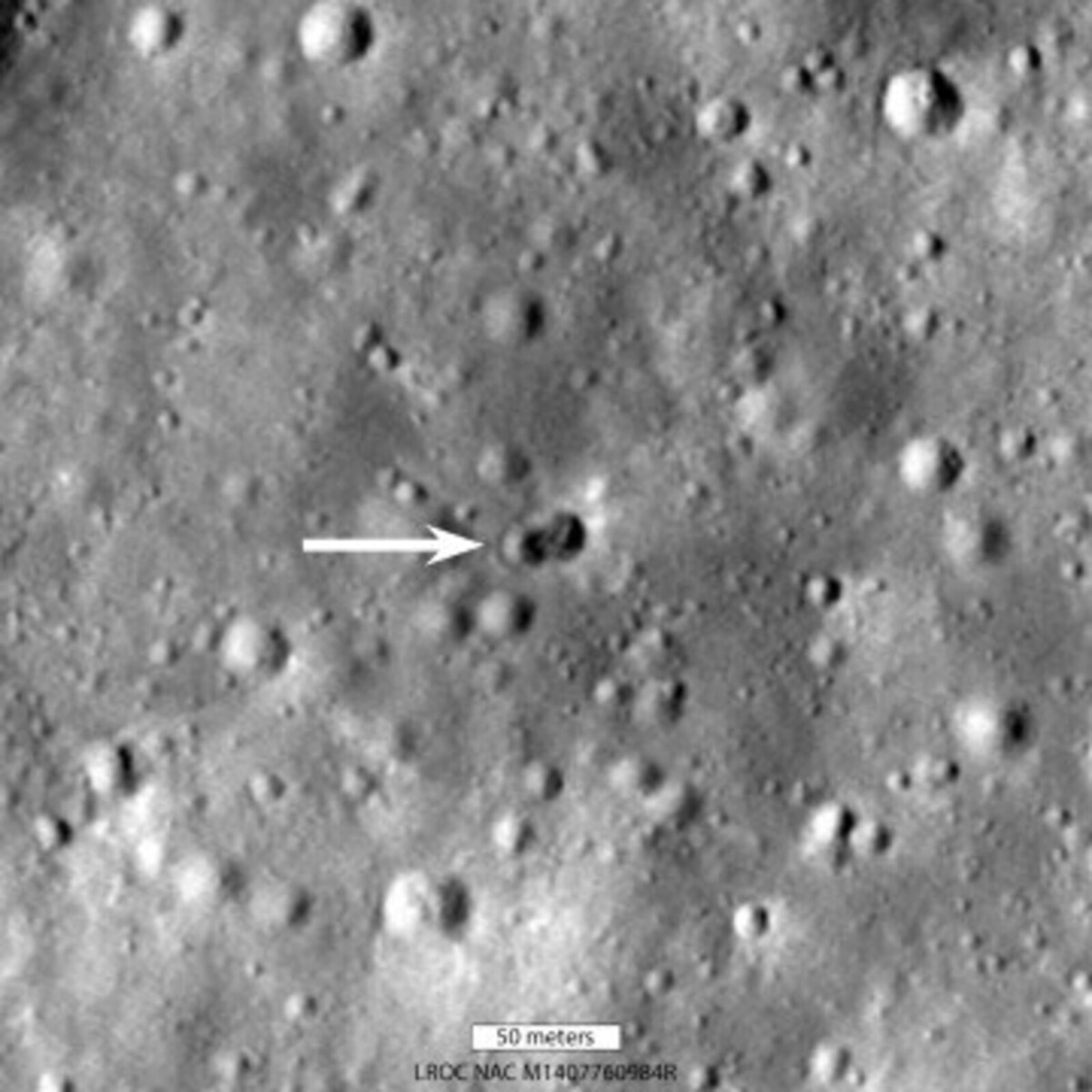

Impact recorded on March 4, 2022 created a double crater of 29 meters and ended initial suspicions against SpaceX
On March 4, 2022, an object previously linked to SpaceX hit the far side of the Moon, opened a double crater of 29 meters, and sparked debate, which was later resolved by a study that attributed the impact to a Chinese rocket.
Impact on the Moon opened an unprecedented crater
The collision occurred on the western edge of the far side of the Moon. The impact generated a double crater, something that astronomers had never observed before.
Initially, it was believed that the object was the second stage of the Falcon 9 used in the launch of the DSCOVR mission in 2015. The suspicion arose because the stage had followed an unusual trajectory.
-
China Develops Custom 140-Ton Electric Mining Truck with 770 kWh Swappable Battery, Deploys 290 Units in Xinjiang’s Largest Zinc Mine

-
Meta to Launch Arena, a New Prediction App Targeting 3.56 Billion Users, Competing with Polymarket and Kalshi

-
Scientist Challenges Famous Human Evolution Theory, Argues Homo Sapiens Evolved Gradually Over Thousands of Years
-
15-Year-Old American Builds Ocean Generator with PVC Pipe and 3D-Printed Propeller for $12, Wins National Prize, Presents at White House, and Makes Forbes 30 Under 30 List




The DSCOVR was SpaceX’s first interplanetary mission. Launched on February 11, 2015, it carried a climate observatory operated by NOAA to the L1 Lagrange point, over a million kilometers from Earth.
To ensure this insertion, the second stage of the Falcon 9 needed to reach a record altitude. Therefore, it ran out of fuel to return to the atmosphere and lacked enough energy to escape the gravity of the Earth-Moon system.
Prediction got the day right but missed the origin
In the following years, the object followed an erratic trajectory. This led astronomers to predict a collision with the Moon, although the identification of the observed stage was still not finalized.
In January 2022, Bill Gray and Jonathan McDowell stated that the second stage of the Falcon 9 would hit the Moon on March 4. The calculation got the date right but not which rocket would be responsible.
Review pointed to the Chang’e 5-T1 mission
In February 2022, Jon Giorgini from NASA’s Jet Propulsion Laboratory informed Bill Gray that the Falcon 9 from the DSCOVR mission had been located and was not heading towards the Moon.
Gray then reviewed launches prior to March 2015 until he found a compatible candidate. The name that began to fit was that of the Chinese mission Chang’e 5-T1.
The Chang’e 5-T1 was launched on October 23, 2014, to test a reentry capsule. It preceded Chang’e 5, from 2020, which brought lunar soil samples back to Earth.
The object that hit the Moon on March 4 was likely 2014-065B, the third stage of a Chinese Long March 3 rocket, launched seven years earlier.
Study confirmed the Chinese rocket
Jonathan McDowell compared the orbital elements of the object with those of a cubesat that had followed the same trajectory. The coincidences were very close and reinforced the identification.
There was still room for doubt. Upper stages can change orbit and behave unpredictably when they still have remnants of fuel, which made the case less straightforward.
At the end of last year, the Planetary Science Journal published a study led by the University of Arizona. The research analyzed the composition and trajectory of the object and concluded that it had characteristics of a Chinese rocket.
The researchers observed how light reflected off the surface of the object during its movement. The analysis showed that it was a stage of the Chang’e 5-T1, and not a second stage of the Falcon 9.
Shape explained the double crater
According to the study, the object had a shape similar to a dumbbell, with two masses at each end. This structure would have caused the double crater recorded on impact with the Moon.
One of these masses corresponded to two engines weighing 1,090 kilograms without fuel. The other end was made up of a support structure or additional instrument, which provided stability in the trajectory.
It was the first time that astronomers observed this mark after an impact. The episode showed that the collision on the Moon occurred as predicted, but was not initially caused by SpaceX.
With information from Xataka.





