






 Portuguese
  Spanish


The nuclear aircraft carrier USS Nimitz, the oldest still in operation in the world, is crossing the coast of Brazil during the Southern Seas 2026 operation. Commissioned in 1975, the ship conducted joint exercises with the Brazilian Navy off the coast of Rio de Janeiro between May 11 and 14. According to information from the Naval portal, two C-2A Greyhound logistic support planes landed in Salvador on the 17th and proceeded to Fortaleza the following morning, accompanying the aircraft carrier’s movement northward. The passage through Brazil is one of the final stages of the Nimitz’s operational career.
The oldest nuclear aircraft carrier still in service in the United States Navy is sailing along the Brazilian coast on one of the last missions of its 51-year career. The USS Nimitz, designation CVN-68, arrived in Rio de Janeiro in early May to participate in the Brazilian phase of the Southern Seas 2026 operation, a naval cooperation exercise that involved joint training with the Brazilian Navy. Two C-2A Greyhound planes from the American Navy made a stopover in Salvador on the afternoon of May 17 and proceeded to Fortaleza the following morning, fulfilling the logistical function of transporting personnel, parts, and priority cargo between land bases and the aircraft carrier at sea.
The movement of the aircraft carrier along the Brazilian coast marks one of the last operational stages of a ship that is gradually being replaced by the Gerald R. Ford-class carriers. The Nimitz was commissioned in 1975 and has been in operation for over five decades, having participated in conflicts, humanitarian operations, and exercises in all the oceans of the planet. The passage through Brazil is part of a broader journey through South America before the ship’s final retirement.
What the USS Nimitz Aircraft Carrier Did in Rio de Janeiro

Between May 11 and 14, the aircraft carrier’s naval group conducted joint exercises with the Brazilian Navy off the coast of Rio de Janeiro. The United States Embassy reported that the objective of the activities was to strengthen interoperability and bilateral maritime cooperation between the two navies, testing communications, coordinated maneuvers, and operational procedures in simulated scenarios.
-
Two-Armed Robot Uses AI to Reassemble Destroyed Pompeii Frescoes, Solving an “Impossible” Puzzle

-
New Law in Brazil Requires Breaks for Type 1 Diabetes Management at Work, School, and Public Exams

-
Scientists Confirm “Greening” of Antarctica: Ice on the World’s Coldest Continent Turns Green as Mosses Multiply Over Tenfold in Four Decades

-
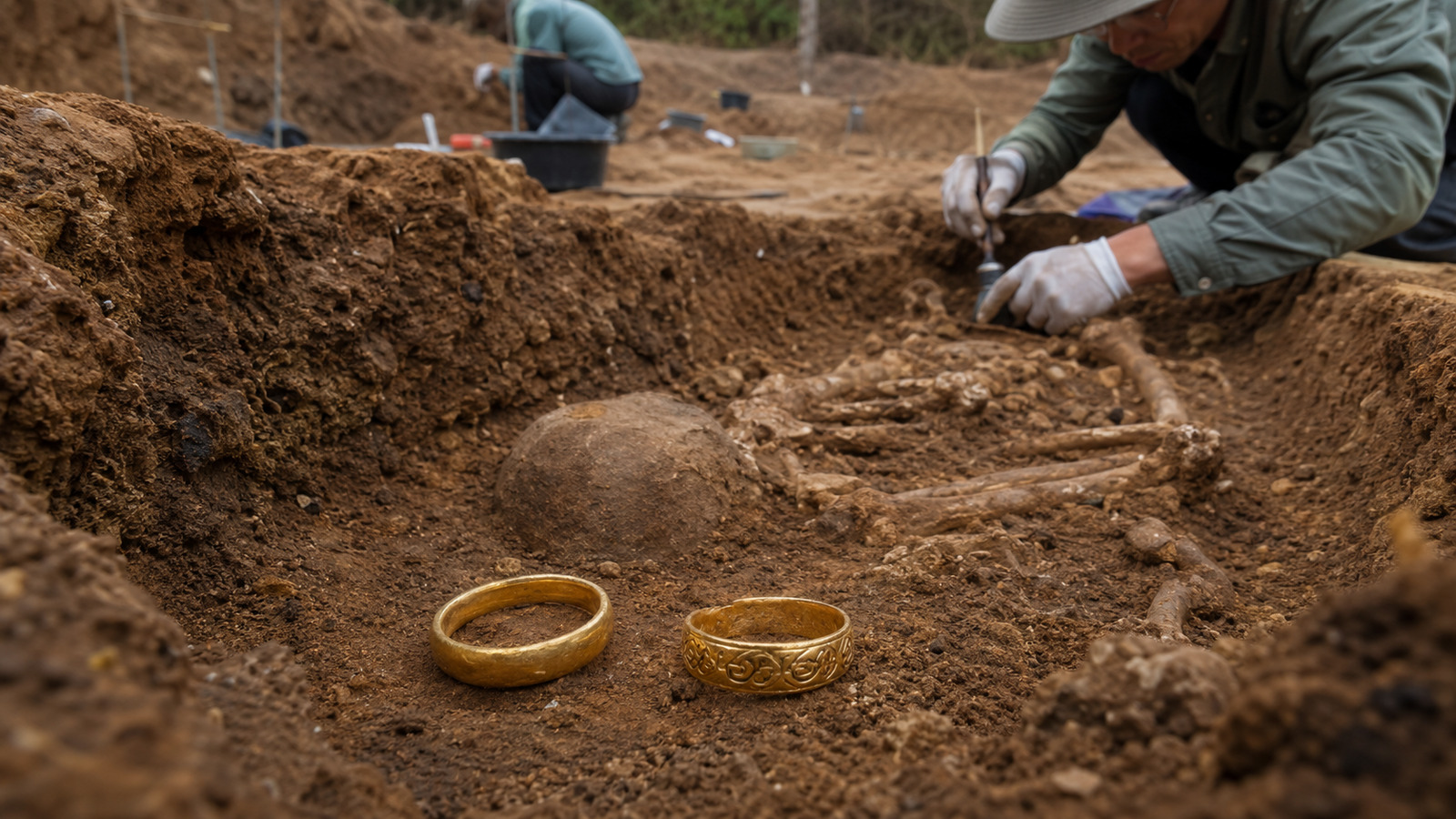
2,000-Year-Old Gold Rings Found with Human Bones in Thailand Reveal Rare Burial and Feature Ancient Indian Inscription


The Nimitz aircraft carrier did not arrive alone: it leads a strike group that includes cruisers, destroyers, submarines, and logistical support vessels. The presence of a naval group of this magnitude on the Brazilian coast is rare and reflects the importance that the United States places on its partnership with Brazil in the South Atlantic. After activities in Rio, the aircraft carrier headed north, accompanied by support planes that landed in Salvador and Fortaleza.
The C-2A Greyhound planes that landed in Salvador and Fortaleza
The two planes that made stops at Brazilian airports are C-2A Greyhound, twin-engine turboprop aircraft manufactured by Northrop Grumman and specifically designed to operate from aircraft carriers. The function of the Greyhound is known as COD, which stands for Carrier Onboard Delivery: they transport personnel, spare parts, mail, priority cargo, and urgent items between land bases and the ship at sea.
The planes landed in Salvador on the afternoon of May 17, coming from Rio de Janeiro, and proceeded to Fortaleza on the morning of the 18th. The movement accompanies the aircraft carrier’s journey along the coast and ensures that essential components reach the ship without relying solely on maritime support. The C-2A is derived from the E-2 Hawkeye, an airborne surveillance aircraft, and is capable of landing and taking off from the aircraft carrier’s deck using catapults and arresting cables.
The history of the world’s oldest aircraft carrier in operation
The USS Nimitz was the first aircraft carrier of the class that bears its name, a series of ten nuclear ships that formed the backbone of the United States Navy during the Cold War and the following decades. Commissioned on May 3, 1975, the aircraft carrier is 332 meters long, displaces 100,000 tons, and carries more than 60 combat aircraft, including F/A-18 Super Hornet fighters, helicopters, and surveillance aircraft.
Over 51 years of service, the aircraft carrier participated in operations in the Persian Gulf, the Indian Ocean, the Pacific, and the Atlantic. The ship is powered by two nuclear reactors that provide it with virtually unlimited autonomy, needing to refuel only the planes and the supplies for the crew of over 5,000 people. The Nimitz’s career ends amid the entry into operation of the Gerald R. Ford-class aircraft carriers, which represent the new generation of American warships.
What the aircraft carrier’s passage means for Brazil
The visit of the aircraft carrier to Brazil is not just a diplomatic gesture: it is a demonstration of military capability and strategic reach. The Southern Seas operation is conducted annually by the United States Southern Command and aims to strengthen partnerships with navies throughout South and Central America, and the inclusion of the Nimitz in the 2026 edition elevates the profile of the operation as it is the latest deployment of the most iconic ship in the American fleet.
For the Brazilian Navy, joint exercises with a carrier strike group represent an opportunity to train interoperability procedures that are not possible in isolated exercises. The level of operational complexity of a nuclear aircraft carrier, with dozens of aircraft, anti-aircraft defense systems, and command and control capability, requires coordination that no simulator can reproduce. The passage of the Nimitz through Salvador and Fortaleza may have been silent for most Brazilians, but for the navies of the two countries, it was an operation of high strategic value.
Did you know that the world’s oldest nuclear aircraft carrier is sailing along the coast of Brazil? What impresses you most: the 51 years of service, the size of 332 meters, or the fact that two American military planes landed in Salvador and Fortaleza? Tell us in the comments.


