






 Portuguese
  Spanish


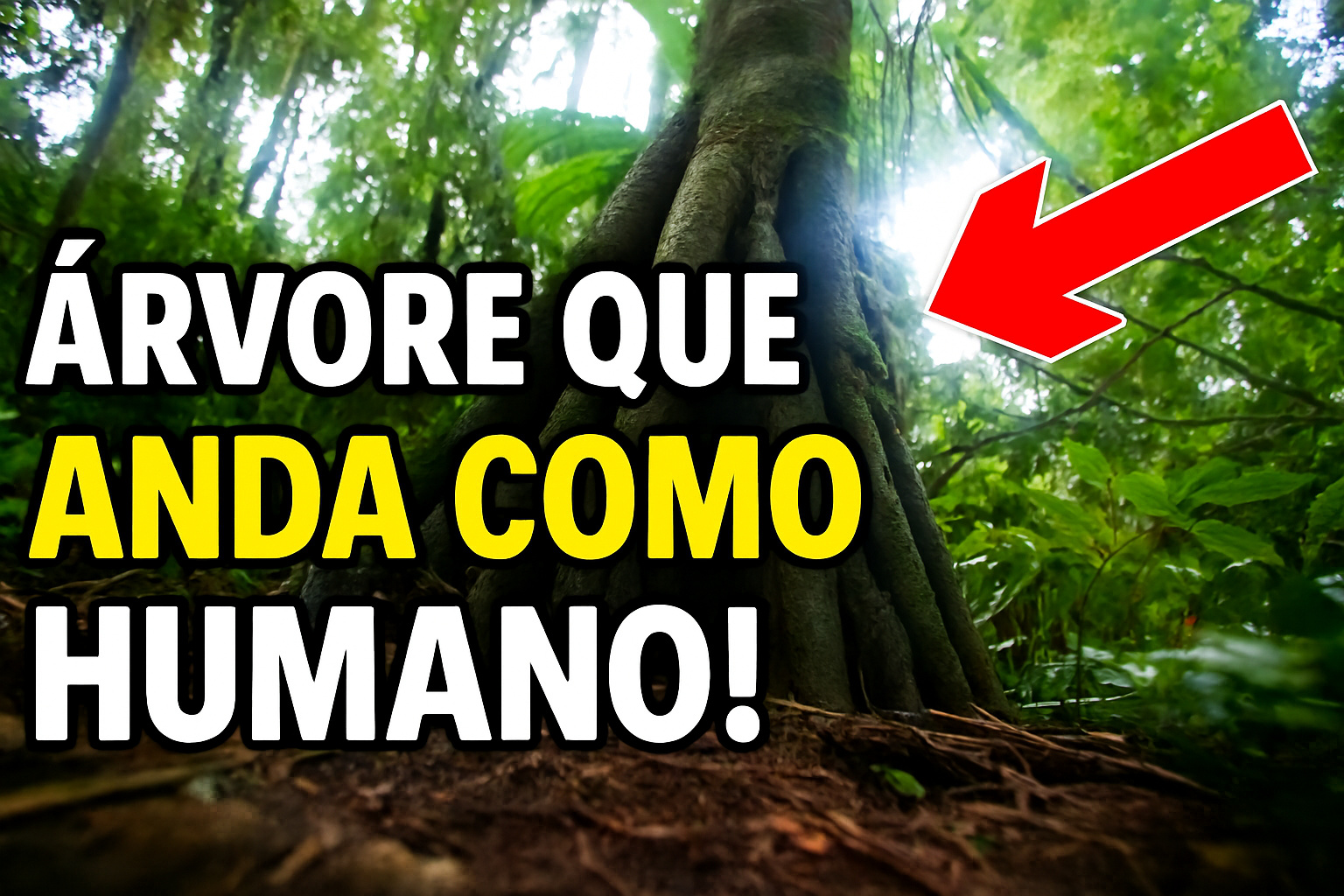


Walking Palm Changes Roots to Reach Light, Advances Centimeters Per Year, and Challenges Botanists with Its Plant Locomotion Mechanism.
Few people know, but there is a plant in the Amazon that seems to defy one of the most basic principles of botany: the fact that trees do not move. The Socratea exorrhiza, commonly known as the walking palm, has become a symbol of this natural curiosity. It has no legs, does not drag its trunk, and does not change location like an animal, but adopts a strategy of “structural relocation” that results in the trunk ending up a few centimeters ahead of the original point over months or years, creating the illusion of movement.
Although it is not a literal walk, this phenomenon intrigues botanists, ecologists, and tropical researchers, mainly because it touches on a fundamental point: how do plants respond to the environment without the ability to move like an animal?
Uncommon Structure: The “Aerial” Roots that Support the Trick
What makes the Socratea exorrhiza unique is its system of stilt roots. Instead of a trunk that rises directly from the ground, what you see is a set of inclined roots that form a high and open base. These roots can reach up to 1.5 meters in height and serve as pillars.
-
14-Year-Old Australian Entrepreneur Goes Viral After Y Combinator Rejection, Runs Two Startups Including an AI Company After Sock Business Failure

-
100-Year-Old Brazilian Sets World Record by Swimming 50 Meters in 1 Minute and 9 Seconds, Inspired by Tarzan Films
-
Brazil Introduces New Digital ID with Home Delivery, Linked to Unique Tax Number, Amidst Nationwide Notification Campaign.
-
World’s Stinkiest Flower: At 111 cm Wide and Up to 11 kg, It Emits a Rotten Meat Odor and Remains Hidden for Years.


As the plant grows, some of these old roots may die or lose firm contact with the soil, while new roots develop in the opposite direction, usually oriented toward areas with greater light incidence.
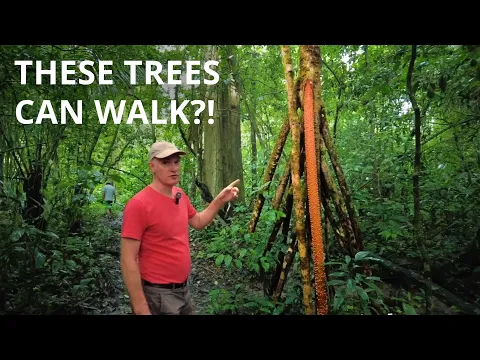

Over time, the trunk becomes supported by the new roots, which are a few centimeters ahead. The result is a real change in position in space, slow but measurable.
There is no consensus on the speed of this process, as it varies depending on light, soil, and competition. Some researchers estimate that the palm may move up to 20 cm per year, while others are more skeptical and suggest smaller movements or merely postural adjustments.
Why Would a Plant “Walk”? Light, Competition, and Survival
The Amazon rainforest is a highly competitive environment. Trees compete for every centimeter of light, and many seedlings die in the shade before reaching the canopy. In this scenario, any structural advantage that allows escape from the shadow makes a difference.
The walking palm seems to use its stilt roots as a strategy to:
- Seek light in areas with clearings and openings in the canopy.
- Avoid unstable soils, as it can “abandon” roots in waterlogged or eroded areas.
- Maintain stability on sloped terrains.

From an evolutionary perspective, this flexibility may have been advantageous in humid forests, where tree falls create temporary windows of light. A seedling that can slowly adjust its base in that direction has a greater chance of surviving to adulthood.
What Science Says: Proven Fact or Amazonian Myth?
The idea of a palm that “walks” has circulated among local populations for a long time and gained strength among naturalists in the 20th century. However, the scientific debate is much more cautious. There are three main positions among researchers:
Position 1: Real Displacement
Argues that there is a true horizontal displacement, based on root substitution and abandonment of part of the previous base.
Position 2: Postural Adjustment Without Significant Displacement
Argues that the roots merely adjust posture, keeping the trunk stable without “walking.”
Position 3: Variable Phenomenon
Suggests that the behavior depends on local conditions, possibly occurring in some contexts but not in all.
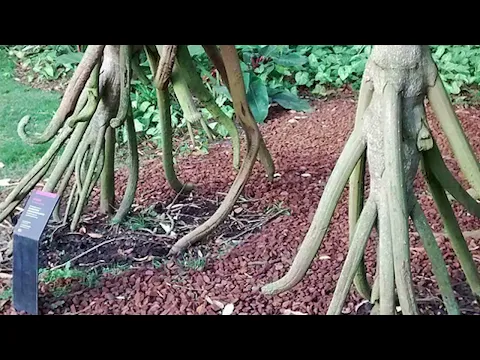
Field studies in Costa Rica and Peru have recorded measurable changes in trunk position over months, but the results do not yet form a broad statistical consensus. What is not in debate is the mechanism: the sequential formation of new stilt roots is real, observable, and functional.
Myth vs. Reality: Where Science Ends and Narrative Begins?
Part of the fascination surrounding the walking palm comes from the way Amazonian communities tell its story. In some accounts, the plant “escapes” from waterlogged soils or “follows” the sun in the forest. These metaphors help convey a deep ecological understanding simply and visually.
Science, in turn, imposes conceptual brakes: there is no nervous system, no intentionality, and no rapid movements. What exists are physiological responses to environmental stimuli with cumulative effects in space.
Even so, the boundary between myth and biology does not diminish the impact of the discovery. On the contrary: it shows how seemingly static organisms develop solutions to complex survival problems.
The Palm in the Context of the Forest: Ecology and Interactions
Besides the displacement mechanism, the Socratea exorrhiza plays important roles in the ecosystem:
- its stilt roots create microhabitats for small animals and insects;
- its fruits serve as food for mammals and birds;
- its lightweight wood can accumulate water in internal tissues;
- its structure facilitates soil ventilation, reducing fungi.
This combination of functions makes it a relevant species for understanding how complex forests organize.
When a Plant Challenges Our Categories
The walking palm draws attention because it disrupts a simple idea: plants do not move. When a species bypasses this rule, even if slowly, the fascination is inevitable.
More than just a curious biological trick, it shows that evolution is not rigid, but rather creative within physical limits. It also demonstrates that the tropical forest is a living laboratory, where light, competition, moisture, and time shape unexpected forms of life.
The question remains: if a palm can “walk,” how many other mechanisms in the forest are we still underestimating simply because they grow too slowly for our gaze?


