






 Portuguese
  Spanish
  3 min of reading
  0 comments


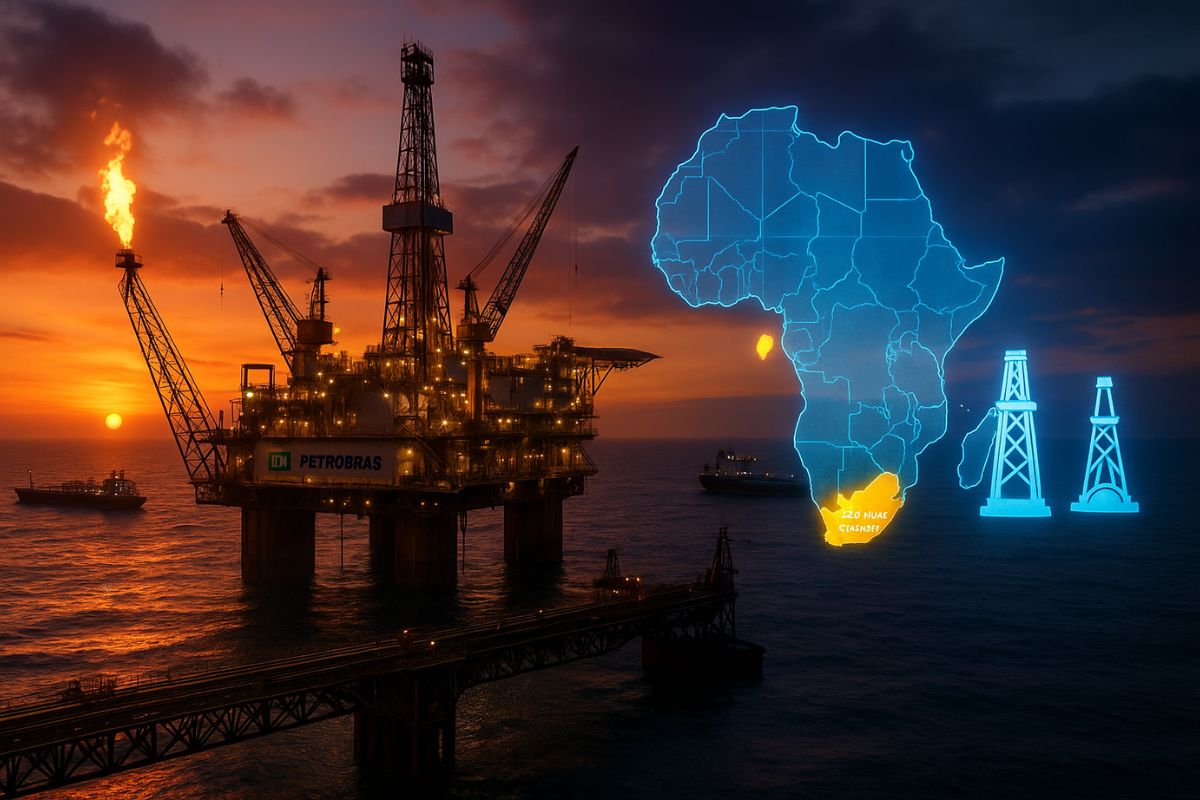
According to CNN, Petrobras has already obtained stakes in four exploratory blocks in São Tomé and Príncipe, consolidating its presence in the Gulf of Guinea alongside giants like Shell and Galp.
Petrobras announced on September 12, 2025, the acquisition of 27.5% of the stake in block 4 of São Tomé and Príncipe, an island nation located in the strategic Gulf of Guinea. This move consolidates the presence of the Brazilian state-owned company in Africa and marks a shift in posture compared to the recent past when the company prioritized international divestments.
According to the company, the operation is part of a portfolio diversification strategy and aims to position Petrobras in high exploratory potential areas, especially in deep waters, where the state company has accumulated globally recognized technical experience.
Four Blocks in Less Than Two Years
The entry into São Tomé and Príncipe did not begin now. In February 2024, Petrobras acquired 45% of the stake in blocks 10 and 13, in addition to 25% in block 11.
-
Oil production grows in Rio, but reserve replacement raises a warning sign

-
Petrobras is expected to complete the drilling of the Morpho well in the Foz do Amazonas in August 2026, the first well in the Equatorial Margin, an oil frontier that the ANP estimates at more than 30 billion barrels and could redraw the map of Brazil.

-
Oil returns to the center of concerns with tension between the US and Iran

-
IEA reduces forecast for global oil demand in 2026 after impacts of the Middle East crisis


With the most recent acquisition, the state-owned company now has stakes in four different blocks in just a year and a half, consolidating its presence in the African country.
This advancement positions the company in a region considered emerging for oil and gas exploration, near major producers like Nigeria, Gabon, and Angola.
For experts, this is a medium- to long-term strategy that aims to complement Brazilian pre-salt production and expand Petrobras’s influence in the global energy landscape.
Partnership with Global Giants
The consortium for block 4 has significant geopolitical weight. In addition to Petrobras, it includes Shell, the Portuguese Galp Energia, and the state-owned ANP-STP, responsible for regulation in the country.
This composition strengthens the project by combining capital, technology, and political influence.
In practice, this means that investment and operational risks are shared, while simultaneously enhancing the group’s technical capacity to develop future exploratory campaigns.
For Petrobras, being alongside global oil companies increases its bargaining power and technological learning.
Strategic Importance of São Tomé and Príncipe
The choice of São Tomé and Príncipe is not by chance. Located in the Gulf of Guinea, the country is close to vital maritime routes and producing areas that already attract large international companies.
The region is seen as one of the next hubs for hydrocarbon exploration in Africa, with potential reserves still little mapped.
For Brazil, this presence can generate diplomatic and commercial benefits.
Petrobras strengthens its position as an international player, while the Brazilian government expands its geopolitical projection in a strategically important area for global energy security.
Risks and Challenges of the Project
Despite the opportunities, Petrobras’s advance in Africa involves risks. The region still faces political and regulatory instabilities, in addition to environmental challenges related to offshore exploration.
Another point is the high cost of investments, which require seismic campaigns, drilling, and complex infrastructure.
For now, the state-owned company has not released a detailed drilling schedule or start of production for block 4.
This indicates that the movement has primarily strategic and portfolio positioning intentions, preparing the ground for future exploration phases.
With the acquisition in block 4 and the stakes established in 2024, Petrobras has already established itself as one of the main players in São Tomé and Príncipe, operating in four different blocks alongside global giants in the sector.
This movement reinforces the change in the state-owned company’s strategy, which returns to investing in international expansion to diversify risks and increase its geopolitical relevance.
And you, do you believe that Petrobras’s presence in Africa strengthens Brazil’s position in the global energy market? Or do you consider this diversification in unstable regions to be risky? Share your opinion in the comments — we want to hear from those closely following the impact of the oil and gas sector.







-

1 person reacted to this.