Portuguese
  Spanish


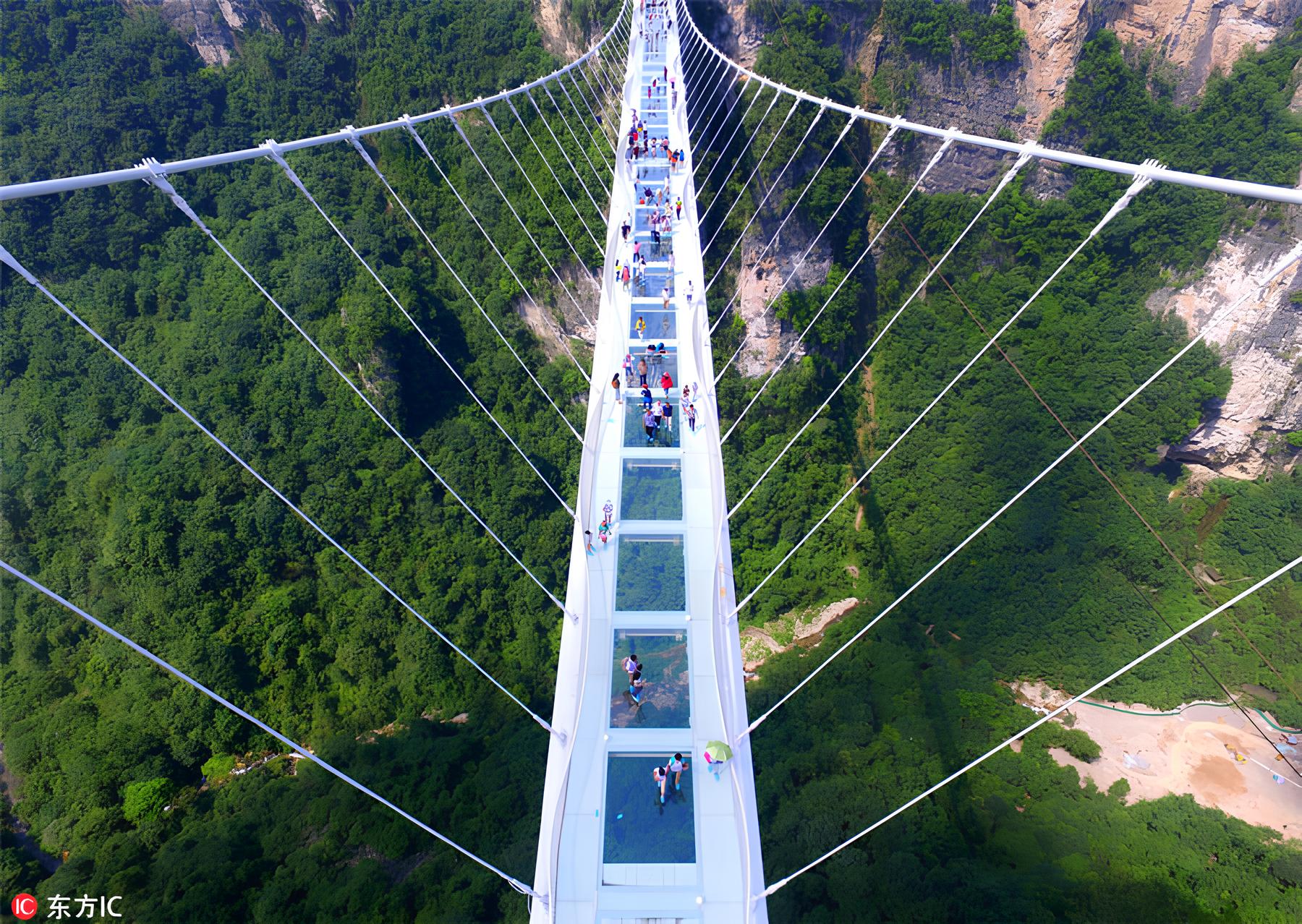


The Zhangjiajie Glass Bridge Is Over 300 Meters High, Has a Completely Transparent Floor, and Provokes Panic Scenes in Tourists from Around the World.
In the heart of the mountains of Hunan province, a structure draws attention not only for its size but for the extreme sensation it causes in those who dare to cross it: the Zhangjiajie Glass Bridge, the glass bridge suspended over a canyon more than 300 meters deep. Since its opening, the site has become a global phenomenon, attracting gigantic lines of curious tourists as well as recurring scenes of people frozen in fear in the middle of the crossing.
The bridge connects two cliffs of the Zhangjiajie National Park, a region that was already famous for its vertical rock formations that inspired the scenery of the movie Avatar. But it was the transparent walkway that definitively transformed the place into one of the planet’s most viral destinations.
A Completely Transparent Floor Over a Hundreds-of-Meters Deep Abyss
The great shock of the Zhangjiajie Glass Bridge lies in the floor. All that separates visitors from the void is a series of high-strength laminated glass panels. When looking down, tourists see only the canyon, the river far below, and the vertical rock walls.
-
U.S. City Builds Tiny Home Village on Water Company Land to House 136 Homeless People: Inside the Social Housing Units

-
Woman Turns Shipping Container into Home, Embraces Rural Life to Cut Monthly Expenses to Just Over $330
-
France Revamps 530 Social Housing Units with Large Balconies and Glass Facades Without Demolishing Existing Buildings

-
Facing high rent, couple transforms parents’ garage into a fully functional apartment, creating a complete home at a fraction of the market cost.




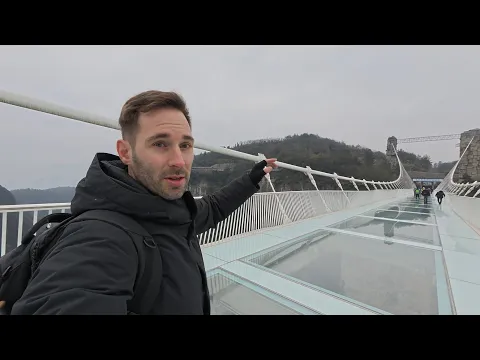

Even knowing that the structure was designed to withstand heavy loads, the brain reacts as if there is nothing there. It is common to see people:
- walking sideways against the side,
- sitting in the middle of the bridge to catch their breath,
- crawling on all fours because they can’t continue standing,
- completely freezing and needing help from staff.
Videos of these reactions spread around the world and turned the bridge into one of the greatest symbols of adrenaline tourism in Asia.
The Size of the Bridge Impresses as Much as the Height
In addition to being over 300 meters high, the bridge also draws attention for its dimensions. It is about 430 meters long and wide enough to allow comfortable passage for pedestrians in both directions.
At its peak, it received tens of thousands of visitors per day, which forced local authorities to establish strict access controls, with a maximum number of people allowed on the structure at the same time.
Even so, the sensation of floating over the void does not diminish. The more people cross it, the more the floor transmits small vibrations — something completely anticipated in the design, but which further increases the psychological tension of those who are up there.
Why Do So Many People Panic Even Knowing the Bridge Is Safe?
The fear does not come only from the height. Psychologists explain that the problem lies in the combination of three factors:
- Total Transparency of the Floor, which eliminates any visual reference of safety.
- Extreme Height, which generates an immediate sense of vulnerability.
- Open Field of Vision, where the brain perceives the movement of the background and interprets it as a constant risk.

Even people who claim to have no fear of heights report symptoms such as dizziness, shaking, and intense sweating during the crossing.
A Project Born to Be the Most Radical in the World
The Zhangjiajie Glass Bridge was designed with the clear intention of being the boldest glass bridge ever built. The architect responsible for the concept was Israeli Haim Dotan, known for his futuristic projects.
From the beginning, the idea was to create a structure that combined:
- extreme visual impact,
- psychological challenge sensation,
- total integration with the natural landscape.
The result was a work that not only became a tourist spot but also an icon of experience architecture, a type of construction made to provoke emotion, not just serve as a passage.
Incidents That Increased the Myth of the Bridge Even More
Shortly after its inauguration, the bridge gained even more fame when videos circulated showing the glass “cracking” during a promotional experiment.
An employee walked on the floor while dropping heavy objects to demonstrate the material’s resistance. The marks on the glass scared tourists, and many people abandoned the crossing in a panic.
Despite the scare, it was just a superficial protective layer designed specifically to absorb impact without compromising the main structure. No serious accidents were recorded involving structural failure, but the episode solidified the bridge as one of the most tense places to visit in the world.
The Site Became One of the Greatest Symbols of Adrenaline Tourism in China
Today, crossing the Zhangjiajie Glass Bridge is almost a rite for those seeking radical experiences. It appears in:
- international TV programs,
- documentaries about extreme constructions,
- viral videos on TikTok, YouTube, and Instagram,
- lists of “places that are scary just to look at.”
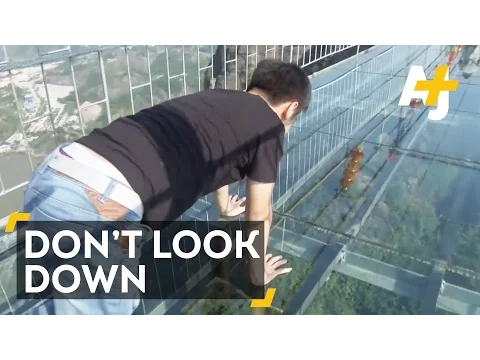
For many, it’s not just about crossing a bridge, but about facing a personal psychological limit in front of hundreds of meters of emptiness.
The Bridge That Transformed a Canyon into a Stage for Fear and Global Curiosity
The Zhangjiajie Glass Bridge is not just a tourist attraction. It represents a new type of construction: structures made to provoke extreme sensations, generate viral images and transform natural landscapes into deep emotional experiences.
Suspended over one of China’s most impressive sceneries, with a completely transparent floor and height capable of paralyzing even the bravest, the bridge has solidified as one of the most terrifying and fascinating constructions on the planet, a place where engineering, tourism, and psychology meet at the limit of fear.