






 Portuguese
  Spanish
  3 min of reading
  0 comments


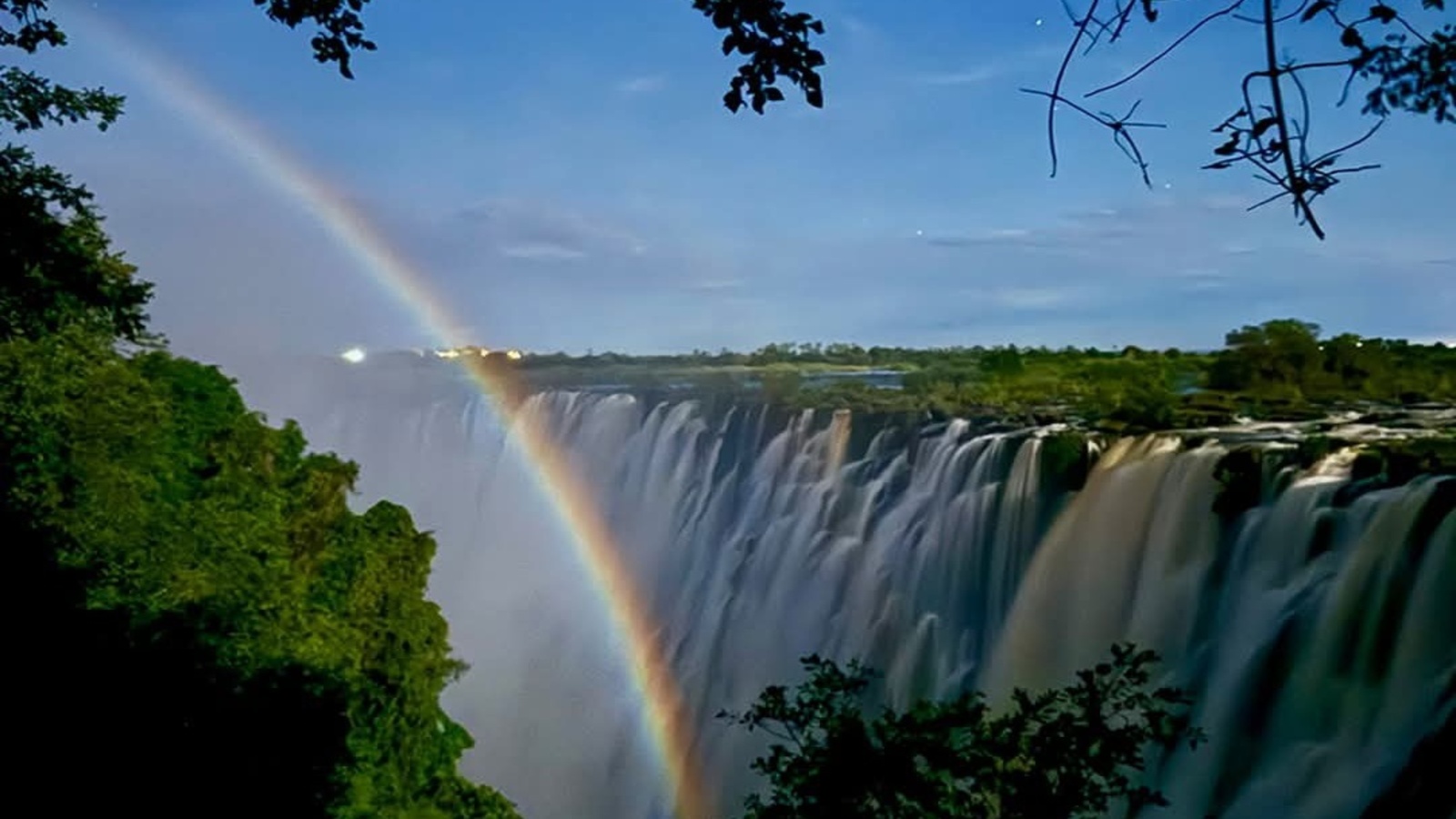
Rare phenomenon depends on the full moon, water droplets, and little artificial light to appear at night, with Yosemite being one of the most favorable settings for observation and long-exposure photography
The lunar rainbow, also called a moonbow, appears at night when the light of the full moon passes through water droplets suspended in the air. In Yosemite National Park, California, waterfalls, mist, and dark skies create favorable conditions to observe this rare optical phenomenon.


Lunar rainbow depends on moonlight and suspended water
The moonbow forms through a process similar to that of a common rainbow. The main difference lies in the light source. While the rainbow seen during the day depends on the sun, the lunar rainbow uses the light reflected by the Moon.
When this light passes through small water droplets in the air, it refracts, reflects inside the droplets, and exits decomposed into colors. This path of light is what allows the formation of the night arc.
-
Survivor of 1966 SS Daniel J. Morrell Shipwreck in Lake Huron Recounts 38-Hour Ordeal in Extreme Cold

-
The Greatest Hoax in World Cup History? The Film That Denied Brazil’s 1958 Victory and Exposed How Fake Evidence Can Seem Convincing on TV
-
Fake South Korean Online Stores Offer Shopping Thrill Without Spending Money or Receiving Products
-
The War of Jenkins’ Ear: How a Severed Ear Sparked One of the 18th Century’s Most Unusual Conflicts


The phenomenon is usually associated with places with high humidity, heavy rains, or large waterfalls. In these situations, millions of droplets are suspended in the air and act as small surfaces capable of scattering moonlight.

Yosemite gathers favorable conditions for the moonbow
Yosemite National Park has become one of the most well-known places to observe the lunar rainbow.
On certain nights in spring and early summer, the volume of the waterfalls and the presence of the full moon create an especially favorable setting.
The park’s environment combines large waterfalls, deep valleys, humid air, dark skies, high altitude, and snowmelt in spring.
These elements help form the mist necessary for the Moon’s light to interact with the water in the air.
Low light pollution also contributes to the observation. Since the phenomenon depends on weak light, any excess artificial lighting can hinder visibility.

Why the lunar rainbow appears white to the eyes
Despite containing real colors, the lunar rainbow usually appears whitish or silvery to the naked eye. This happens because, at night, human vision works differently.
In low light, the eyes mainly use cells called rods. They help detect light but do not distinguish colors as efficiently.
Therefore, tones like red, green, and violet may be present but go almost unnoticed.
In long exposure photographs, the result is often different. Cameras can capture more light over time and reveal colors that the human eye hardly perceives at the moment of observation.

Photography and forecasting helped document
For a long time, lunar bows were considered difficult phenomena to capture, precisely because they depend on a specific combination of full moon, suspended water, and darkness.
Digital photography changed this perception by allowing more detailed records. With long exposures, it became possible to show colors, shapes, and intensity of the moonbow more clearly.
Forecast models also began to assist observers and photographers. They allow estimating the position of the Moon, the angle of the arc, the appearance times, and the best spots to observe the phenomenon.
This article was prepared based on information from the provided source material, with data, numbers, and explanations preserved as per the consulted content.
With information from Tempo.com.





Be the first to react!