






 Portuguese
  Spanish


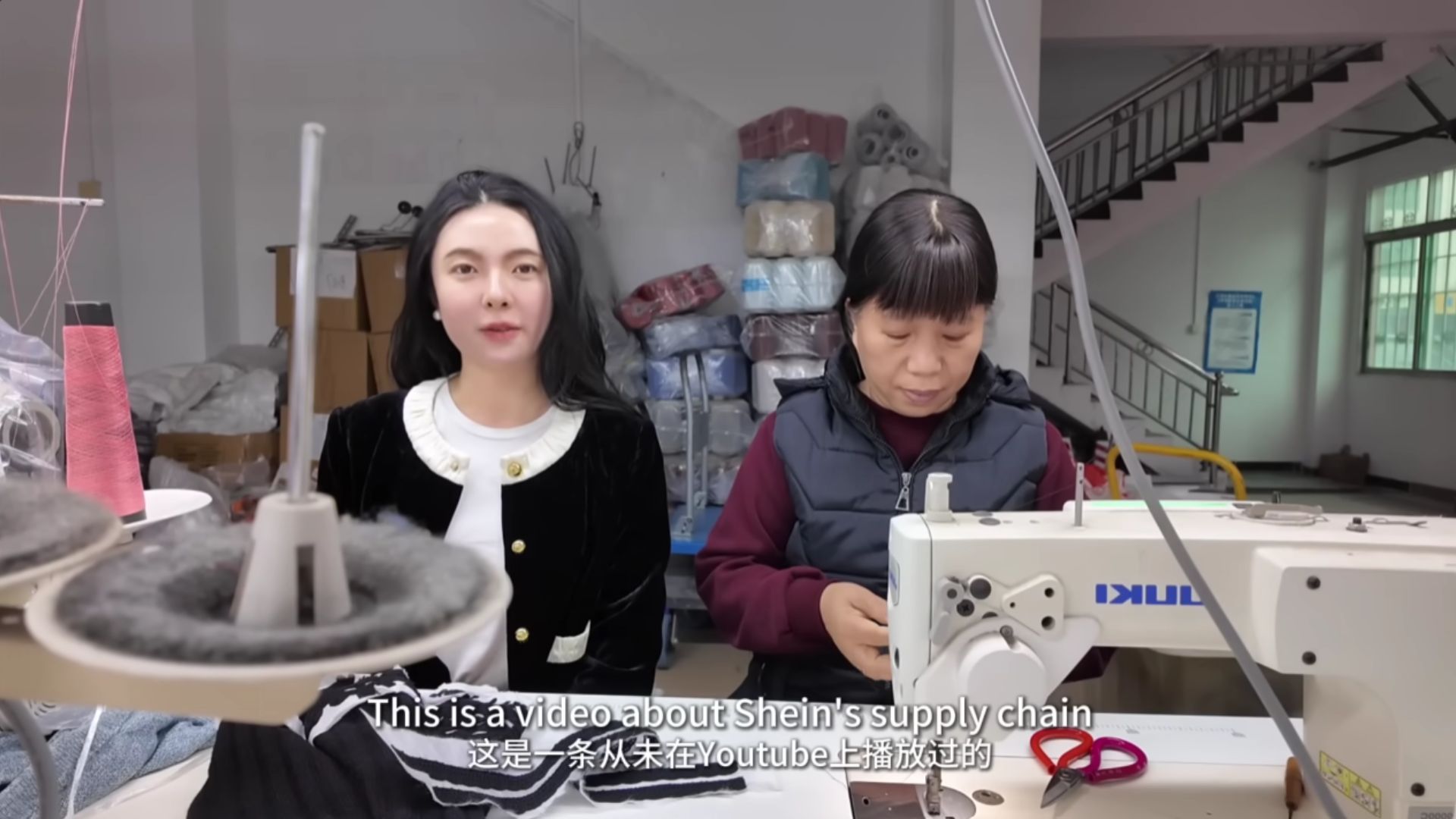

Cinthia Lin is a resident of Guangzhou and a YouTuber. Without being a journalist or working for Shein, she and her brother entered the village of Nanyin, in the Panyu district, where more than 500 suppliers of the brand are located, and documented what no camera had shown before.
The official name is Nanyin, in the Panyu district, in Guangzhou, southern China. But those who live in the region call it by another name: Shein Village. It is there that more than 500 manufacturers, large and small, are concentrated, forming the supply chain of the fast fashion giant. Guangzhou resident Cinthia Lin decided to enter this village with her brother and a camera, disguised as a job applicant, to see for herself what external reports describe from afar.
The motivation came from comments she read on the Chinese platform Red, where workers and suppliers described unpleasant experiences within Shein’s chain. Later, she found a Wall Street Journal report on labor exploitation at the brand’s suppliers. Instead of just reading, she went to check it out. The visit resulted in a video that showed what rarely appears: the day-to-day life of the factories that transform a design into clothing in a few hours.
500 suppliers, small batches and a process that can take hours
The model of Shein’s supply chain is what explains the company’s speed. From design and fabric selection to production and packaging, the entire process can be completed in a few hours. This is possible because the more than 500 manufacturers in the village are physically close to each other and to all the necessary inputs. When an order arrives, the mechanism is already set up around it.
-
Rural Worker Spotted “Flying” on a Drone in Brazil

-
Turkish Cave Suggests Neanderthals and Homo Sapiens Shared Cultural Traditions for Millennia; Discovery Unveils Similar Tools, Hunting Techniques, and Shells at a Major Prehistoric Site
-
Burkina Faso Bans NGOs from Photographing Vulnerable People Without Consent and Outlaws Fundraising Campaigns Exploiting Suffering
-
El Niño Threatens Brazilian Food Production, Economists Predict Rising Prices for Coffee, Corn, and Rice





This model of production in small batches and on demand eliminates stock and reduces waste. It is also what allows Shein to launch thousands of new products per day and abandon those that do not sell before producing them on a large scale. For suppliers, the required agility comes at a price: constant response speed, tight deadlines, and pressure to accept the values the brand proposes.
Job boards, disguised interviews and what salaries reveal
Walking through the village, Cinthia found job boards filled with opportunities in the garment production area. She analyzed the ads, observed candidates presenting themselves, and talked to industry professionals about the practiced values. A specialist pointed out that actual salaries might be lower than advertised, a common gap between what appears on the boards and what ends up in the account at the end of the month.
To go beyond the ads, she posed as a job candidate and managed to talk directly with workers. One of them reported that the shift runs from 8 am to 10 pm, with breaks for lunch and dinner. This schedule, according to Cinthia, seems to be the village standard. To earn more than 10,000 yuan per month, a worker said it’s necessary to work more than ten hours daily. The pay is per piece produced, not per hour. Mandatory overtime on urgent orders does not generate extra pay, just more pieces delivered.
The factory owner who was contacted by Shein and talked about the prices
To understand the suppliers’ perspective, Cinthia interviewed the owner of a factory in Dongguan, a personal contact who had previously been approached by Shein. What he described confirmed what she observed in the village: Shein seeks the lowest possible prices in each negotiation to maintain its competitive edge. Suppliers have little room to refuse.
The logic is simple and harsh: competition among manufacturers in the region is intense. Those who do not accept the proposed price can be replaced by a neighbor who does. This structure puts factory owners in a position where yielding to Shein’s conditions is not a voluntary choice; it is a condition for survival in the market. The result is a chain that operates with impressive efficiency for the brand and tight margins for those who produce.
Factories open at night and the ambiguity that Cinthia could not resolve


Returning to the village at night, after a quick dinner, Cinthia and her brother found many factories still operating, both small and large. The lights on, the machines running, and the workers inside were the visual record of what Shein’s production numbers demand in real time. No public relations camera would show this. She did.
But it was there that the conflict she describes became clearer. The workers and factory owners are grateful for the orders. They depend on this work to support their families in a competitive urban economy. Many have no better alternatives. Shein offers income where other opportunities do not exist. And at the same time, the brand’s scale and bargaining power are exactly what compress wages and extend shifts. The two facts coexist without one canceling the other.
What the Guangzhou resident concluded after seeing all this
Cinthia did not leave the village with a simple verdict. She concluded that the remuneration in Shein’s supply chain is approximately at the industry average, not significantly above. To earn above average, the worker needs overtime and sometimes high pressure. The physical conditions of the factories vary but reflect the standard of the garment industry in China, not a negative exception within it.
What she identified as structural is the combination of three reinforcing forces: global consumer demand for cheap and fast fashion, Shein’s need to maintain an advantage in the supply chain, and the pressure from local governments for economic growth. These three forces create the environment in which 14-hour shifts and piece prices that do not rise persist. The Guangzhou resident who entered the village as a job candidate left without knowing who to hold accountable. But she recorded who pays the price.
In 2022, Shein was questioned about labor violations and promised to invest 15 million dollars over three to four years to modernize its supply chain. The video is from Cinthia Lin’s YouTube channel.
Do you continue shopping at Shein knowing how the production chain works, or did you change your habits after seeing reports like this? Leave in the comments what you think.





我是一名shein公司总部内的中国员工,看了这个新闻觉得很客观,我在总部的工作时常也是早晨9点到晚上9点,有些人是早晨10点到晚上11点,几乎每个人每天都要工作11–12个小时左右。其实也不仅shein公司如此,中国很多的互联网公司都这样。是国家的悲哀,病态。