Portuguese
  Spanish


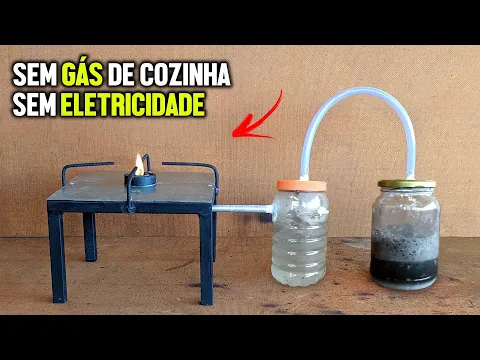
A New Technology Promises Zero Emissions in the Kitchen, But Cost, Safety, and an Unexpected Competitor May Prevent Its Arrival in Brazilian Homes.
The promise of a stove that runs on green hydrogen (H2V) and emits only water vapor sparks curiosity. Marketed as a solution to achieve zero carbon emissions in households, this technology, however, faces significant obstacles. A deep analysis reveals that the path to replacing the traditional gas cylinder is more complex than it appears.
What Is Green Hydrogen and How Does the Technology Work?
The discussion about green hydrogen starts with understanding its origin. Unlike gray hydrogen, produced from fossil fuels, the green type is obtained cleanly.
The Colors of Hydrogen: Understanding the Difference. Hydrogen is classified by colors that indicate its production method. “Green Hydrogen” (H2V) comes from the electrolysis of water, a process that uses electricity from 100% renewable sources, such as solar and wind. “Gray” hydrogen, the more common form, uses natural gas and releases significant CO2. There is also “blue” hydrogen, which captures some of the emitted carbon.
-
Ancient Ritual Circle, Hidden for 5,000 Years, Discovered in Scotland’s Machrie Moor Using Sensors, Revealing a “Phantom Stonehenge”

-
Engineers Develop Fridge-Sized Machine to Produce 95-Octane Synthetic Fuel from Air and Water, Aiming to Sustain Combustion Engines Without Oil
-
Two-Armed Robot Uses AI to Reassemble Destroyed Pompeii Frescoes, Solving an “Impossible” Puzzle
-
New Law in Brazil Requires Breaks for Type 1 Diabetes Management at Work, School, and Public Exams


From Electrolysis to Flame: The Science Behind the Stove. The technology of the hydrogen stove operates in two phases. First, electrolysis uses renewable energy to separate water (H₂O) into hydrogen (H₂) and oxygen (O₂). Then, in the stove, hydrogen reacts with the oxygen in the air. The combustion generates only heat and water vapor (2H₂ + O2 → 2H₂O), without soot or CO2 at the point of use.
Zero Emission? An Analysis of the Life Cycle. The claim of “zero emission” is true only in the kitchen. A comprehensive life cycle analysis considers the emissions in manufacturing infrastructure, such as solar panels and electrolyzers. The transportation and storage of hydrogen also consume energy. Therefore, the total carbon footprint, while low, is not zero.
Global Potential vs. Domestic Reality
Brazil has unique advantages to lead the green hydrogen economy. However, the focus of the national strategy is not on domestic kitchens.
Natural Advantages: The Edge of Solar and Wind Energy. Our energy matrix, with over 80% from renewable sources, is a differentiator. The solar and wind potential could allow Brazil to produce the cheapest green hydrogen in the world, with cost projections below US$ 1.45 per kilogram by 2030.
Focus on Industry: Major Projects and Export. The country’s strategy concentrates on large industrial hubs, such as the ports of Pecém (CE), Açu (RJ), and Suape (PE). The goal is to produce H2V at scale to decarbonize industries and, primarily, for export, attracting giants like Shell, Siemens, and Engie.
Pioneering Innovation: The Brazilian Prototype from IATI. Despite the industrial focus, there are notable initiatives. The Advanced Institute of Technology and Innovation (IATI) developed Brazil’s first renewable hydrogen stove prototype. The project is an important proof of concept, but it still seems far from commercial-scale production.
The Cost Battle with LPG and Induction
The viability of any new technology for homes depends on affordability. Here, the hydrogen stove faces strong competitors.
The High Cost of H2V and the Hope for Decrease. Currently, the production cost of H2V in Brazil is high. The optimism is that it will drop to around US$ 2 to US$ 4 per kilogram. However, distribution costs can even triple the final price for consumers.
The Direct Competition: Induction Stove, the Electric Rival. The main competing technology for decarbonizing kitchens is electric, with the induction stove. It is nearly twice as efficient, converting up to 90% of the energy into heat for food, compared to 40% to 55% of gas (or hydrogen) stoves.
Comparative Analysis: Which Technology Is More Cost-Effective? Even in an optimistic scenario for hydrogen, when factoring in the prohibitive distribution costs, the scales decisively tip towards induction, which uses the already existing electrical grid.
The Challenges of an Invisible and Odorless Gas
The introduction of a new technology and fuel requires a complete reassessment of household safety. Hydrogen has characteristics that demand attention.
The Specific Risks of Hydrogen. Being the smallest molecule in the universe, hydrogen is prone to leaks. It is extremely flammable, requires little energy for ignition, and its flame is practically invisible in daylight. Being very light, it dissipates quickly in open spaces but can accumulate in confined areas.
LPG vs. H2V: Comparing Home Hazards. The danger of LPG is familiar: its smell alerts for leaks. Hydrogen is the opposite: odorless, it requires electronic sensors for detection. The lack of a “safety culture” with H2V is a massive social challenge.
The Need for New Standards and Sensors. Mass adoption would require a revolution in safety regulations. Mandatory installation of gas and flame sensors in millions of homes would be essential, along with training for emergency services.
Is the Hydrogen Stove the Future of the Brazilian Kitchen?
Considering all factors, the scenario for the hydrogen stove as a replacement for the gas cylinder becomes clearer.
The Path of Electrification Seems More Likely. The true revolution in the Brazilian kitchen, aiming for decarbonization, tends to be electric. Brazil’s clean energy matrix makes the direct use of electricity in efficient appliances, such as induction stoves, a quicker, cheaper, and safer solution.
A Valuable Resource for Other Sectors. Green hydrogen is a premium resource. Its highest value lies in decarbonizing sectors where electrification is unfeasible, such as steel production, cement, and fuels for aviation and heavy transport.
An Interesting Technology, But Niche. The notion that H2V stoves will signal “the end of the gas cylinder” is a powerful narrative, but it does not hold up against current barriers. This fascinating technology is a testament to innovation, but its likely fate is to be a niche solution, rather than the headline in the story of the energy transition for Brazilian households.