






 Portuguese
  Spanish
  3 min of reading
  0 comments


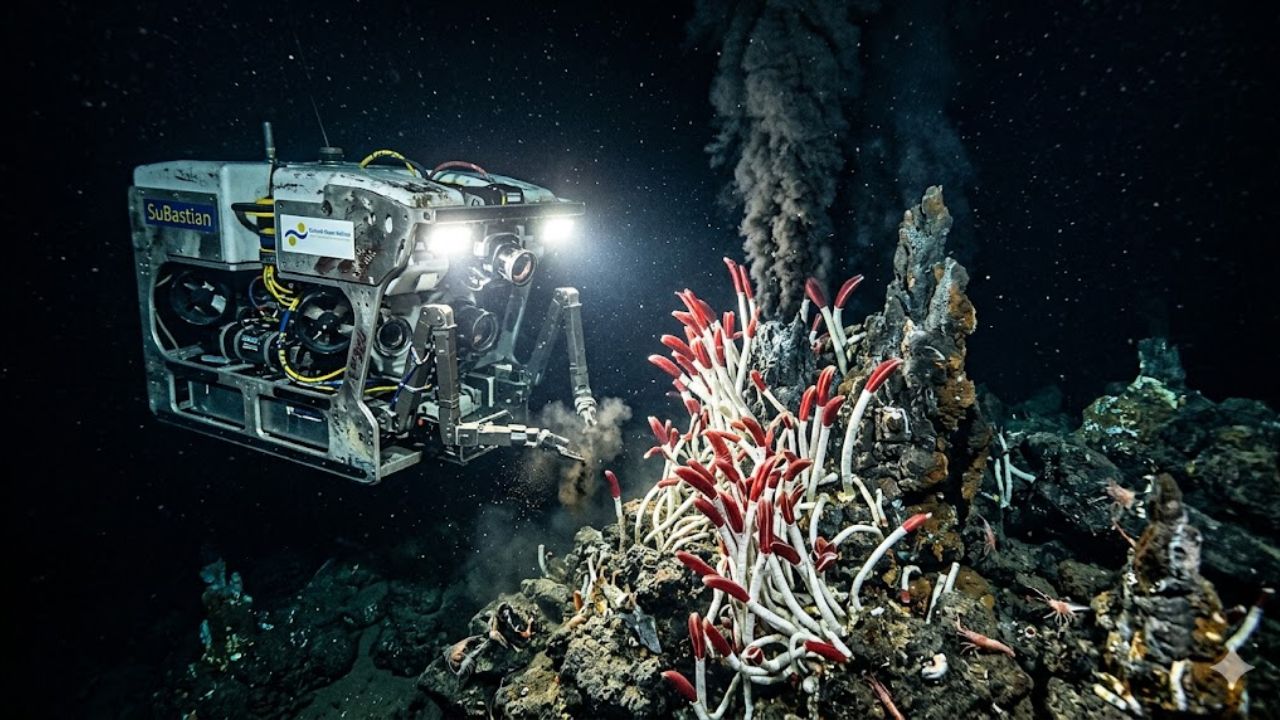
The SuBastian robot discovered a hidden living ecosystem beneath the oceanic crust at a depth of 2,500 m, challenging decades of scientific knowledge about marine life.
An underwater robot named ROV SuBastian has just transformed what science believed to know about life in the oceans. During an expedition 2,500 meters deep in the Pacific Ocean, researchers from the VentUnderworld project — aboard the research vessel Falkor — lifted fragments of the oceanic crust near hydrothermal vents and found something no one expected: a complete and living ecosystem, hidden beneath the seabed.
How did the SuBastian robot reach the seabed?
ROV SuBastian is a remotely operated vehicle, designed to explore the deepest layers of the oceans.
As part of the VentUnderworld expedition, it was the central instrument to perform a task rarely attempted in submarine research: physically removing pieces of the oceanic crust around the so-called hydrothermal vents — volcanic openings that expel water at extremely high temperatures.
-
Waze finally releases a feature that drivers have been requesting for a long time after months of testing; the new feature arrives without an app update and has already started appearing for some users.

-
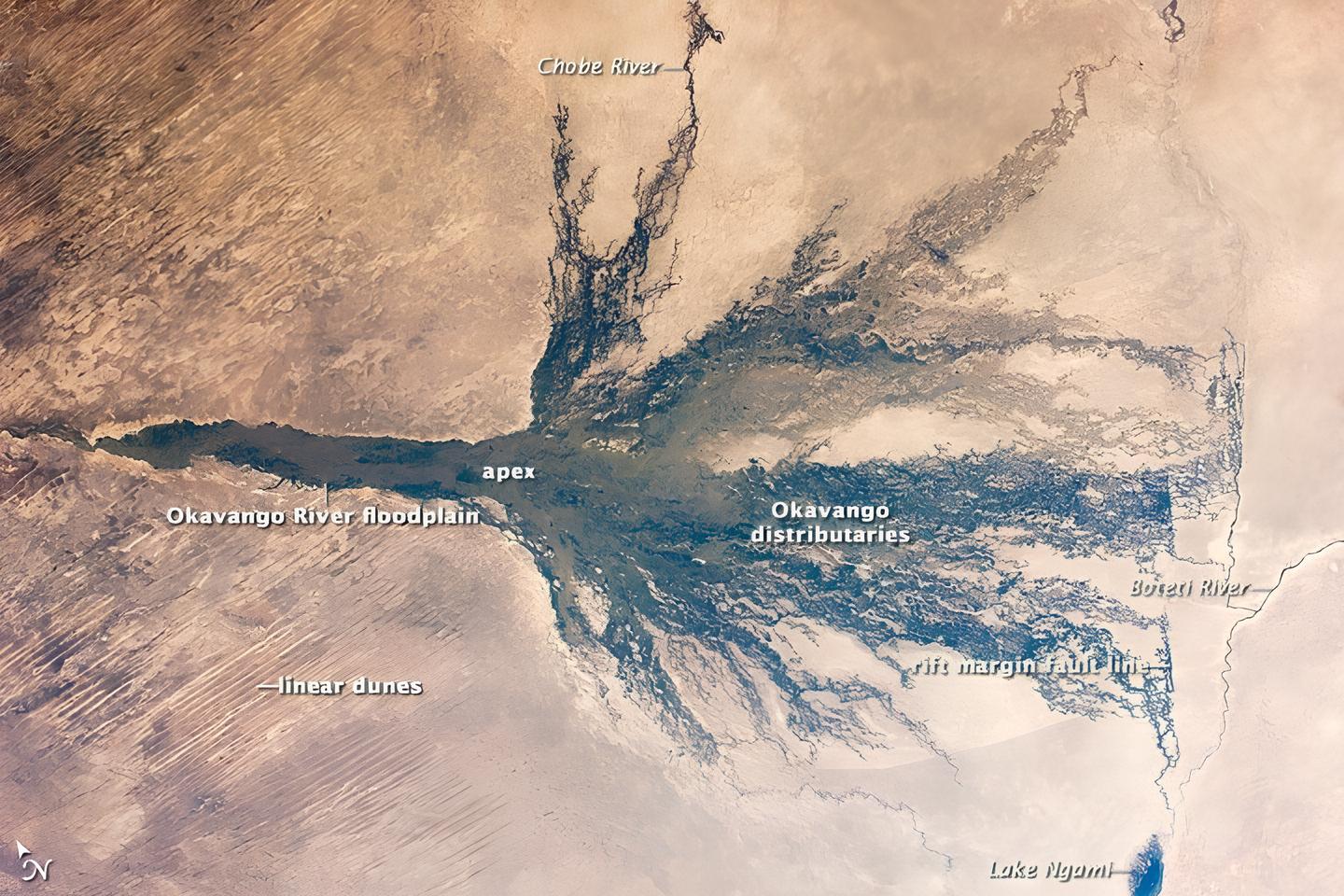
Described by astronauts as one of the most unlikely natural phenomena on Earth, the Okavango Delta spreads over up to 15,000 square kilometers in the middle of the desert and transforms Botswana into a living labyrinth of channels, islands, and flooded areas.

-
Fragment of the Moon found in Africa holds a mark of a giant impact from 3.5 billion years ago and may reveal what the solar system was like when life was beginning to emerge on Earth.

-
Alexa+ arrives in Brazil with generative AI in the ChatGPT style, promises to understand even the Brazilian way, costs R$ 99.90 outside of Prime, and can transform Amazon’s old assistant into a smart hub for conversations, tasks, connected home, emails, and even Uber requests.



Until then, scientists believed that animals at these depths lived only in the contact layer between the seabed and the water. What SuBastian recorded in images and samples challenged this premise.
What was found beneath the crust?
Upon lifting the crust fragments, researchers encountered subterranean cavities inhabited by living organisms. Among them, Riftia pachyptila, a giant tube worm that can reach over two meters in length, stood out.
Riftia pachyptila has neither a mouth nor a stomach. Its survival depends entirely on chemosynthetic bacteria that process compounds from the hydrothermal environment into energy.

In addition to tube worms, the expedition identified snails and a diverse network of invertebrates, forming a complex macroscopic ecosystem — all living protected under layers of volcanic rock.
Why this discovery is important for science
One of the greatest mysteries in marine biology was understanding how tube worms managed to colonize new hydrothermal vents so quickly after volcanic eruptions, considering the hostile temperatures of the ocean floor surface.
The study indicates that there is a direct connection between surface and subsurface ecosystems: the larvae of these animals move through fissures in the crust, propelled by hydrothermal fluids, colonizing new regions from bottom to top. In other words, the interior of the crust functions as a true subterranean biological highway.
Main revelations of the VentUnderworld project
- Marine life is not limited to the surface of the ocean floor — it also exists beneath the underwater Earth’s crust.
- The SuBastian robot collected samples and images at a depth of 2,500 meters in the Pacific Ocean.
- Tube worms of the species Riftia pachyptila, over 2 meters long, live in subterranean cavities without sunlight.
- The larvae of these animals move through fissures in the crust using hydrothermal flows as a dispersal pathway.
- The oceanic subsurface can function as a refuge and colonization corridor for deep-sea species.
- If these ecosystems exist in the East Pacific Rise, there is a high probability that they will be repeated in other submarine mountain ranges worldwide.
Scientists emphasize that if these subterranean environments are confirmed in the East Pacific Rise, it is highly probable that similar ecosystems extend across extensive submarine volcanic chains around the planet — structures that run for thousands of kilometers under the oceans.
Therefore, what the ROV SuBastian revealed is not just a curiosity. It is a new dimension of Earth’s biosphere — invisible, deep, and surprisingly rich in life.


With information from Xataka







-

-

3 people reacted to this.