Portuguese
  Spanish


Kummakivi, in Finland, is a huge rock block left by the Ice Age that remains balanced on a small contact area for about 11,500 years.
In a forest in the municipality of Ruokolahti, in southeastern Finland, there is a geological formation that often amazes even geologists. Known as Kummakivi, a Finnish expression meaning “strange stone”, it consists of a huge rock block that seems about to fall, but remains firmly balanced on a small surface of another rock for approximately 11,500 years. According to the Saimaa UNESCO Global Geopark, it is one of the most impressive examples of preserved glacial erratic blocks in the country.
At first glance, many visitors believe the stone was positioned by human intervention or that it can be moved easily. However, its stability is the result of natural processes that occurred at the end of the last Ice Age.
A gigantic stone touches the base in only about half a square meter
What makes Kummakivi so unusual is the extremely small contact area between the two rocks. According to information from Visit Finland and the Saimaa UNESCO Global Geopark, the upper block measures approximately 7 meters in length, 4 meters in width, and 5 meters in height, but rests on a contact area of only about 0.5 square meters.
-
12-year-old girl develops a virtual receptionist with artificial intelligence for small businesses and demonstrates how the combination of creativity, programming, and automation can boost productivity, reduce repetitive tasks, and expand access to digital transformation.

-
At 76 years old, a retired man reveals a subterranean labyrinth he dug by hand for 30 years under his own garden, descending 6 meters into sand dunes, erecting 1.5-meter concrete walls with calculations from his mathematician wife, and transforming a “crazy” idea into a hidden cave with a bridge and waterfall.

-
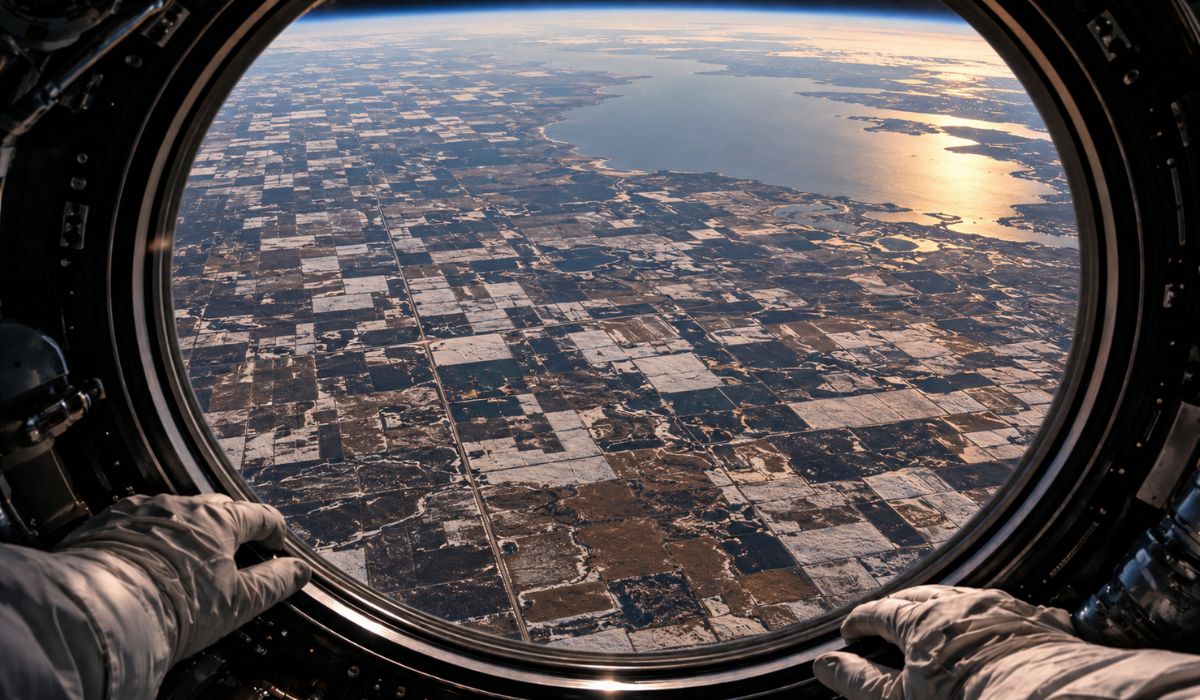
Seen from space, an astronaut captures in Canada a geometric carpet of crops drawn over the backdrop of a ghost lake that disappeared 12,000 years ago, was once larger than all the Great Lakes combined, and left a scar of fertile mud that still sustains agriculture.
-
Billionaire says the most valuable skill will help overcome job elimination caused by AI, following Bill Gates’ fears



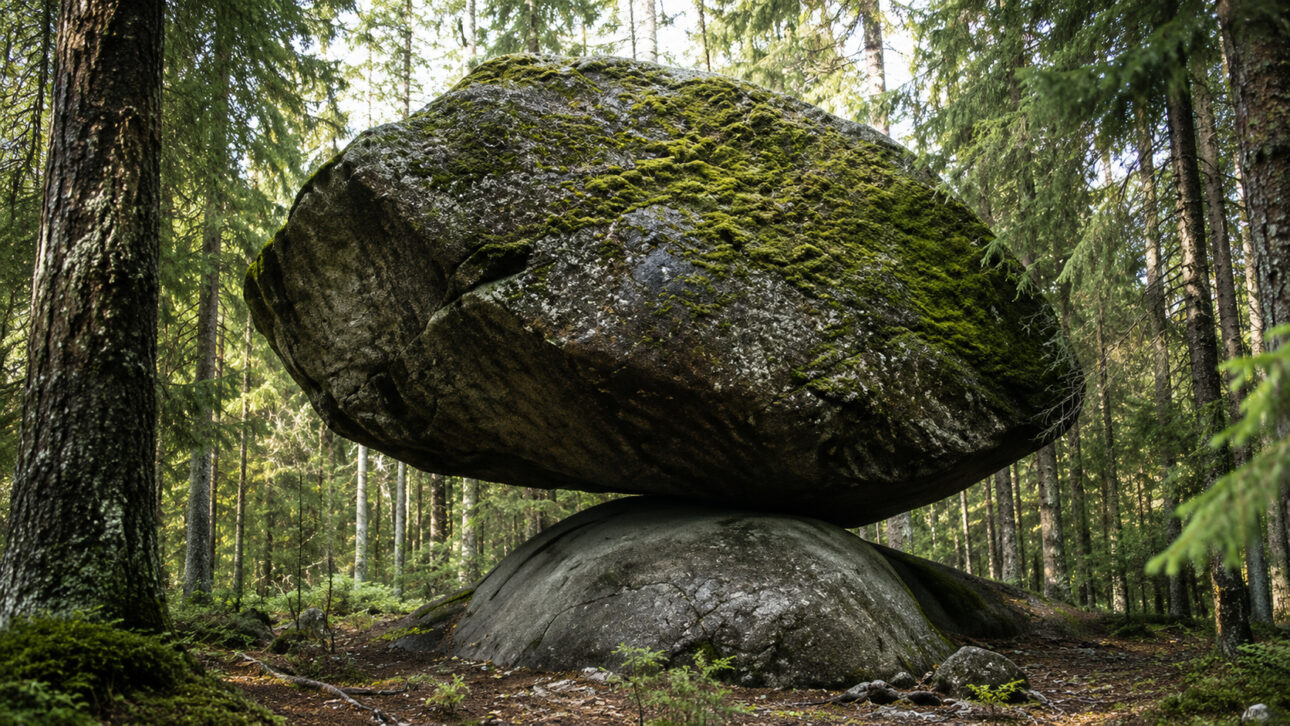
This detail creates the impression that any small push would be enough to knock it over, although this does not happen. The formation is protected by Finnish environmental legislation as a natural monument.
The stone was transported by a glacier during the last Ice Age
Despite its mysterious appearance, the origin of the phenomenon is well known in geology. According to the Saimaa UNESCO Global Geopark, Kummakivi is a glacial erratic block, meaning a rock plucked from another location and transported by a gigantic ice sheet during the last glaciation.
When the glaciers began to retreat approximately 11,500 years ago, the enormous block ended up being deposited exactly on a rounded rocky surface known by geologists as roche moutonnée, a formation sculpted by the movement of ice. The marks of glacial abrasion can still be observed on the rocks in the region.
The position seems impossible, but it is totally stable
Although the balance seems extremely fragile, the stone remains immobile. This occurs because the center of gravity of the block remains within the support area and because the enormous weight of the rock generates enough friction to prevent any displacement caused by human force.


Over thousands of years, Kummakivi has withstood the seasons, annual freezing and thawing, and the climatic conditions of southern Finland without losing its original position.
According to Visit Finland, the formation has remained practically unchanged since it was left by the glacier.
The site has become one of Finland’s most famous geological curiosities
Today, Kummakivi is part of the Saimaa UNESCO Global Geopark, recognized by UNESCO for its geological heritage.
A trail of approximately 2.2 kilometers leads visitors to the formation. Along the way, it is also possible to observe marks left by glaciation and typical ecosystems of the forests and lakes of southern Finland.
According to Visit Finland, the monument can be visited year-round and is among the most photographed natural attractions in the Saimaa region.
The formation also inspired popular legends
Long before geology explained its origin, the local population created stories to justify the existence of the stone.
According to Finnish folklore traditions recorded by the Saimaa UNESCO Global Geopark, erratic blocks like Kummakivi were said to have been thrown or carried by giants and supernatural creatures in ancient times.
These narratives survived for centuries until studies on the last glaciation demonstrated that the position of the stone is a consequence of the displacement caused by enormous continental glaciers.
One of the most impressive examples of the work of glaciers
Kummakivi is considered one of the most curious geological formations in Europe precisely because it combines an improbable appearance with a solid scientific explanation.

The enormous block is not held by cement, metal clamps, or any artificial structure. Its balance is solely the result of the action of glaciers that covered northern Europe during the last Ice Age.
More than eleven thousand years later, the “strange stone” continues to arouse the curiosity of visitors and researchers, showing how natural processes can produce landscapes that seem to defy the laws of physics.