Portuguese
  Spanish


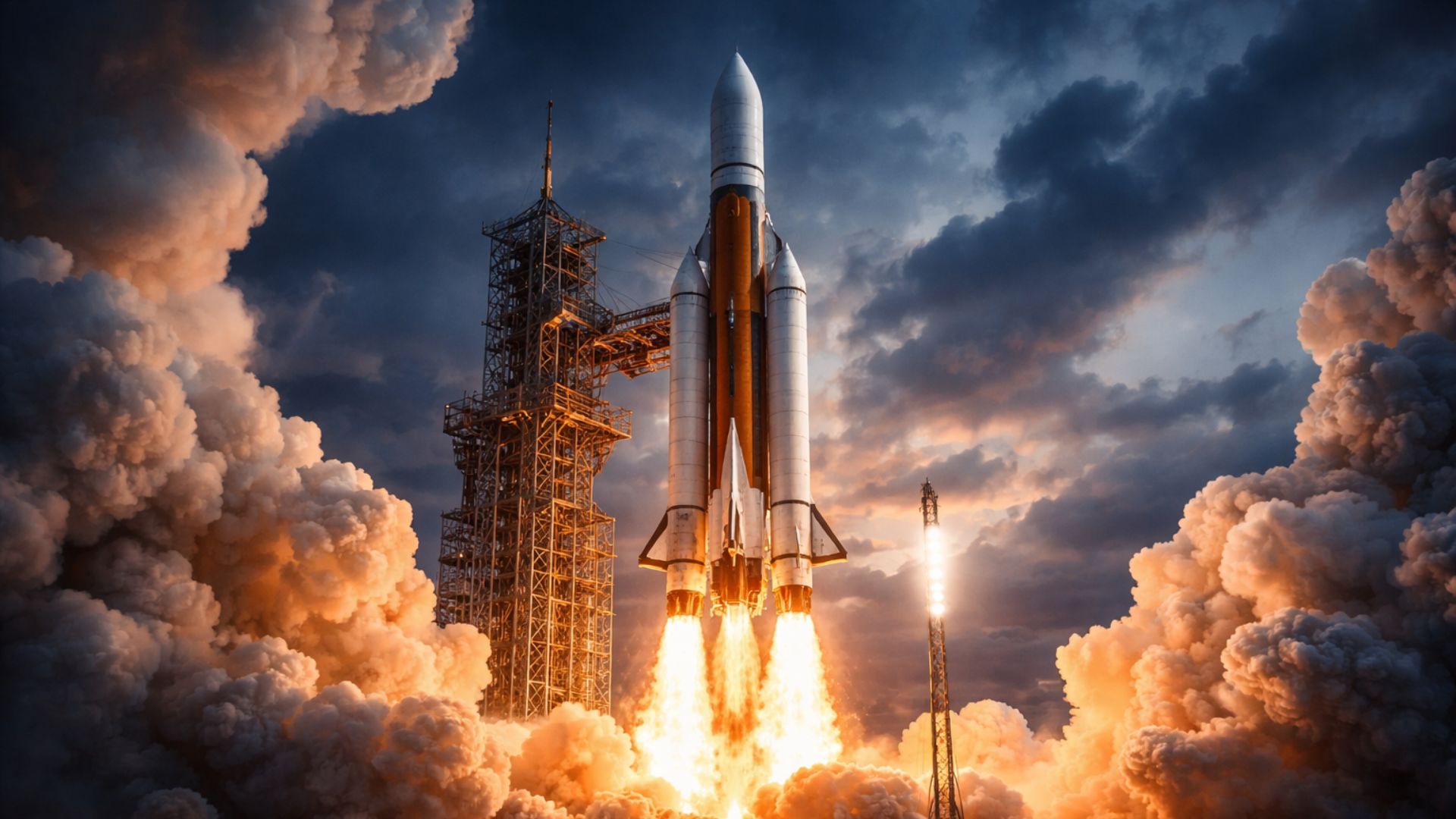

Kennedy promised the Moon. Nixon changed course. And for more than 50 years, NASA never returned. Understand how political decisions and budget cuts paused the greatest adventure of human space technology.
On December 19, 1972, astronaut Eugene A. Cernan climbed the ladder of the lunar module and left behind the last human footprints on the surface of the Moon. No one imagined that this would mark the end of an era — and that more than half a century would pass before humanity attempted to return. The reason, according to experts, has nothing to do with the limits of technology.
The conclusion is from Domenico Vicinanza, an assistant professor of intelligent systems and data science at Anglia Ruskin University in the UK, published in an article on the scientific portal The Conversation. According to him, what interrupted space travel to the Moon was a combination of political decisions, budget cuts, and changes in priorities — not a technical barrier. This distinction is crucial to understanding why lunar exploration was stalled for decades and what is at stake now with the planned return.
The NASA mission that no one knew would be the last
The Apollo Program was one of the greatest achievements in the history of space exploration. Between 1969 and 1972, NASA conducted six successful missions to the lunar surface, bringing a total of 12 astronauts to walk on the Moon. Apollo 11 fulfilled the promise made by President John F. Kennedy in 1961 — to put a man on the Moon before the end of the decade. Apollo 17 closed the cycle.
-
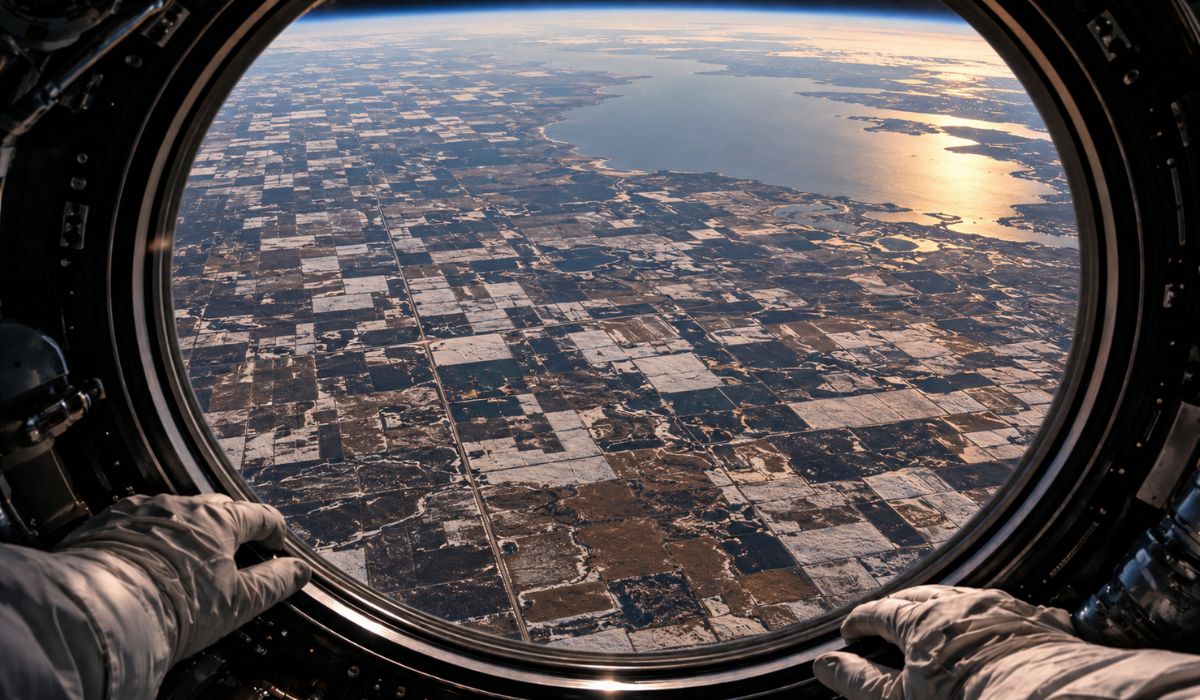
Seen from space, an astronaut captures in Canada a geometric carpet of crops drawn over the backdrop of a ghost lake that disappeared 12,000 years ago, was once larger than all the Great Lakes combined, and left a scar of fertile mud that still sustains agriculture.

-
Billionaire says the most valuable skill will help overcome job elimination caused by AI, following Bill Gates’ fears

-
A Dutchman created a ‘box’ that makes trees grow in the desert almost without water and without irrigation: the invention has already brought seedlings to dozens of countries and achieves up to 90% survival where common planting did not exceed 10%.

-
Abandoned warehouse hid a giant collection of rare computers, with over 2,000 artifacts from the 1930s to the 1980s.



What few realized at the time was that the program was deactivated not due to technical limitations, but because the political objective had already been achieved. Winning the space race against the Soviet Union was the real goal. Once achieved, institutional interest in the program began to dissipate rapidly — and the budget followed the same path.


When money dictated the course of space travel
The reduction of resources was not an accident. It was a deliberate choice of national priorities, made well before the last astronaut left the Moon.
Vicinanza points out that NASA’s budget reached its historic peak in 1966 — even before the first lunar landing — and entered a constant decline in the following years. With the escalation of the Vietnam War, military and social spending began to compete for space with the space agency. NASA, which had consumed nearly 4.5% of the U.S. federal budget in 1966, saw its share progressively shrink throughout the decade.
In 1972, President Richard Nixon made the decision that would redefine the agency’s direction for decades: he directed NASA to develop the Space Shuttle Program. The focus shifted from deep space exploration to low Earth orbit operations, with more frequent and lower-cost individual missions. It made sense within a short-term logic — but the collateral effect was the freezing of lunar ambitions for generations.

A line of NASA projects canceled by politics
In the following decades, a return to the Moon was promised more than once. And systematically discarded. The main programs that never got off the ground include:
- Space Exploration Initiative (1989): announced by George H. W. Bush with plans for a return to the Moon and a mission to Mars, the project did not receive enough funding to advance.
- Constellation Program (2004): launched by George W. Bush with the goal of landing on the Moon by 2020, it was canceled in 2010 by Barack Obama, who cited high costs and lack of budgetary feasibility.
The pattern repeated itself regularly: ambitious announcement, political resistance, cancellation. Vicinanza highlights that these projects did not die due to technical impossibility — they died due to lack of sustained political support. It is a direct contrast to the 1960s, when the space race had a clear geopolitical justification and almost unlimited resources to sustain it.

The ISS concentrated resources that could have gone to the Moon
During the 1990s and 2000s, the International Space Station became NASA’s major project. Built in partnership with Russia, Europe, Japan, and Canada, the ISS generated concrete advances in medicine, physics, and biology over decades of continuous operation.
But the project also consumed a significant portion of the agency’s resources for a long period. With the budget focused on the maintenance and operation of the station, deep space missions lost financial and political traction. The ISS did not replace lunar exploration — it simply occupied the space that, in another scenario, could have been allocated to develop it.

The data that transforms the perception of space technology
There’s a little-mentioned detail that reveals the true dimension of the gap: the technology needed to return to the Moon already existed in 1972. Not just in theory — it had been tested, validated, and successfully used six consecutive times.
This means humanity spent over 50 years without repeating something it already knew how to do. It wasn’t a technical barrier. It was a matter of political decision and resource allocation. To understand the scale of what was left behind, one only needs to observe what NASA achieved in the same period while keeping the lunar budget at zero:
- Launch of the Hubble Space Telescope (1990), which transformed modern astronomy.
- Sending probes to distant planets, including the Voyager, Pioneer, and New Horizons missions.
- Continuous operation of the ISS since November 2000.
Technical capability was never in question. What was lacking was sustained political will.
Artemis II and the Restart of an Unfinished Story
The resumption of crewed lunar missions is underway with the Artemis Program. On April 1, 2026, the Artemis II mission performed a lunar flyby with astronauts aboard the Orion capsule, setting a new record for the greatest distance traveled from Earth with a human crew. The mission did not land on the surface but marked the first crewed flight around the Moon since Apollo 17, more than five decades ago.
The geopolitical context has re-emerged. China and the United States are engaged in a new struggle for influence in space, with Beijing announcing plans for a permanent lunar base within this decade. The parallel with the 1960s is inevitable — and suggests that political motivation has once again consistently aligned with space exploration.
Half a century is enough time for an entire generation to be born, grow up, and grow old without having seen a human set foot on the Moon. What Vicinanza’s analysis reveals is that this gap was not inevitable — it was built by choices. And that the next pages of lunar history will depend, once again, less on available technology than on political will and the resources allocated to sustain it.