Portuguese
  Spanish


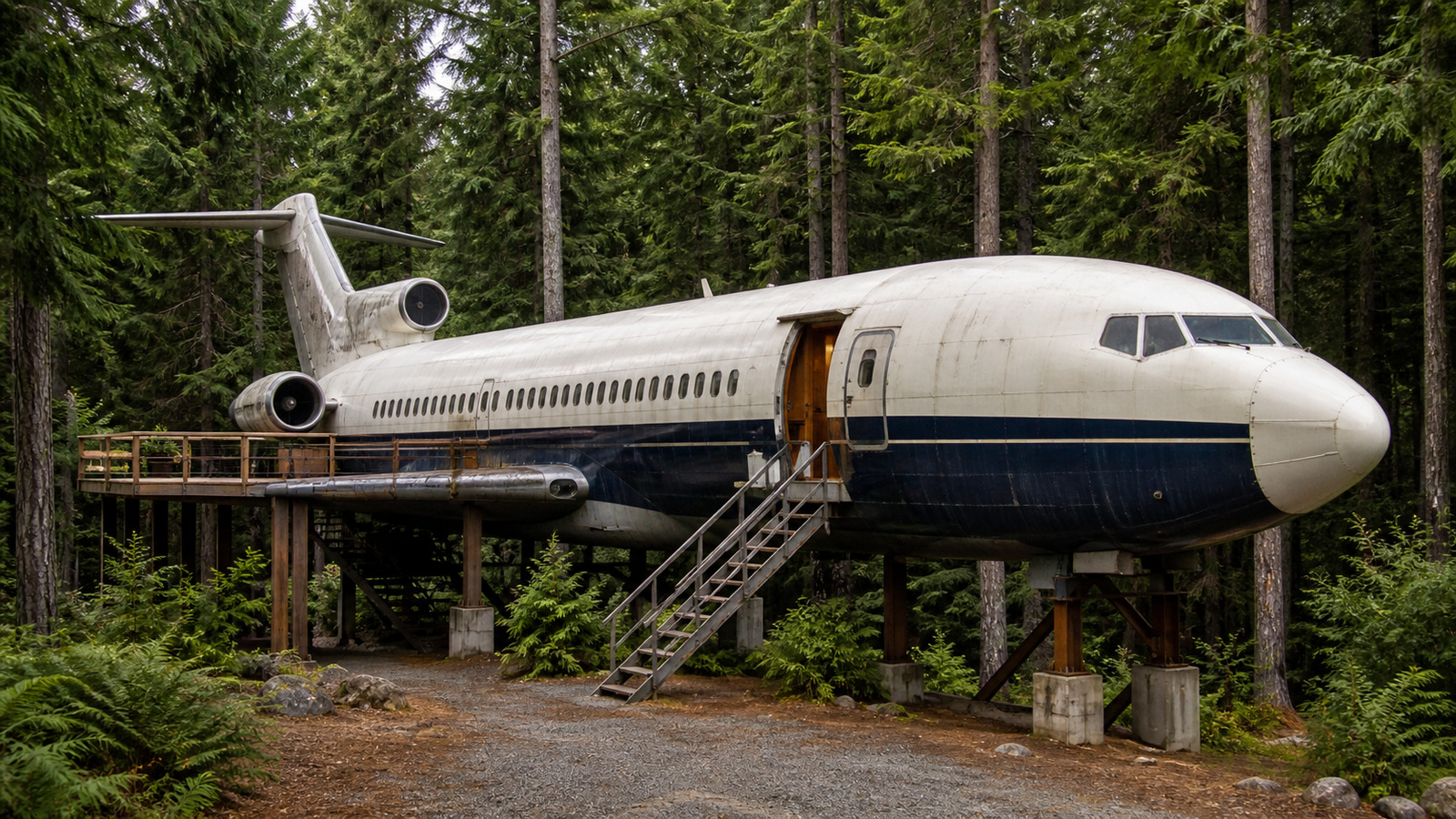


Retired Boeing 727 transformed into a home in an Oregon forest, combining industrial repurposing, commercial aviation technical solutions, and an alternative housing proposal outside the traditional real estate standard
A Boeing 727 became an airplane home in Oregon, installed by a former electrical engineer who sought to repurpose the fuselage, avoid long debts, and create housing outside the standard.


Project born from the repurposing of a retired airplane
The idea arose from discomfort with the common fate of out-of-service aircraft, usually dismantled and sent to scrap.
Instead of following this path, the owner decided to transform the jet into a residence, keeping the fuselage as the main base.
-
How to Prevent Brown Recluse Spider Bites: Common Hiding Spots and Free Tips to Reduce Risks

-
Natto: The Unusual Japanese Superfood Gaining Popularity on Social Media and Driving Record Exports
-
Brazilian Mayor Goes Undercover as Homeless for 24 Hours to Assess Public Services

-
15-Year-Old Entrepreneur Malu Lira Publishes 20 Children’s Books on Financial Education, Earns $500,000, and Expands Her Project to the Amazon Rainforest




Before the purchase, there was saving, research, and logistical planning. The land was acquired outright to avoid mortgages, while the project progressed with studies on ground transport, material resistance, and adaptation.
The move required partial disassembly, transport in a special convoy, and reinstallation on calculated supports. This stage cost close to the price paid for the airplane, showing the complexity of bringing the structure to the forest.
Airplane home leverages fuselage strength
The fuselage of a Boeing 727 was designed to withstand pressure variations, sudden temperature changes, and intense winds.
This resistance made the aircraft a robust base, with protection against humidity, insects, and animals.
As there are almost no gaps in direct contact with the ground, the metallic structure reduces exposure to pests and infiltrations. The cabin also offers a usable area similar to that of a small apartment.
Inside, ducts and technical passages facilitated the installation of water, sewage, and electricity. The project also made space for visual solutions, such as an acrylic floor revealing the lower cargo compartment.
Interior preserves marks of the old jet
The adaptation sought to maintain part of the aircraft’s original identity. Windows, light fixtures, luggage compartments, and sections of seats were preserved as a memory of the old commercial jet, without hindering daily use.
The space received a refrigerator, a simple stove, a folding bed, a laundry area, and adequate lighting. The organization uses the cabin to separate functions in sequence.
Safety was also considered. The airplane rests on resistant supports, with provision for small movements in case of seismic tremors.
The original wheels remain supported, and chains with shock absorbers help control oscillations.
The original retractable staircase functions as the main entrance. When retracted, it also acts as a physical barrier, reinforcing access control and maintaining the airplane’s characteristic.
Repurposing broadens debate on alternative housing
Beyond the visual impact, the project demonstrates technical benefits of aircraft repurposing. The airplane home uses commercial aviation solutions to form a functional, safe, and simple-to-maintain dwelling.
Among the advantages are high mechanical resistance, a closed aerodynamic shape, reduced wind and rain entry, existing technical infrastructure, and the possibility of creating a bathroom, kitchen, workspace, and bedroom.
The case of the Boeing 727 in Oregon reinforces the discussion about new uses for retired airplanes. Instead of remaining in dismantling yards, fuselages can become homes, shelters, temporary schools, or community spaces.
By transforming an aircraft into a dwelling, the project reduces material waste and presents a creative answer for those seeking to live away from conventional construction.
The experience shows how an airplane home can combine engineering, sustainability, and a lifestyle outside the real estate standard.
At the center of this transformation is a structure created to fly, now used as a fixed home.
With information from O Antagonista.