Portuguese
  Spanish


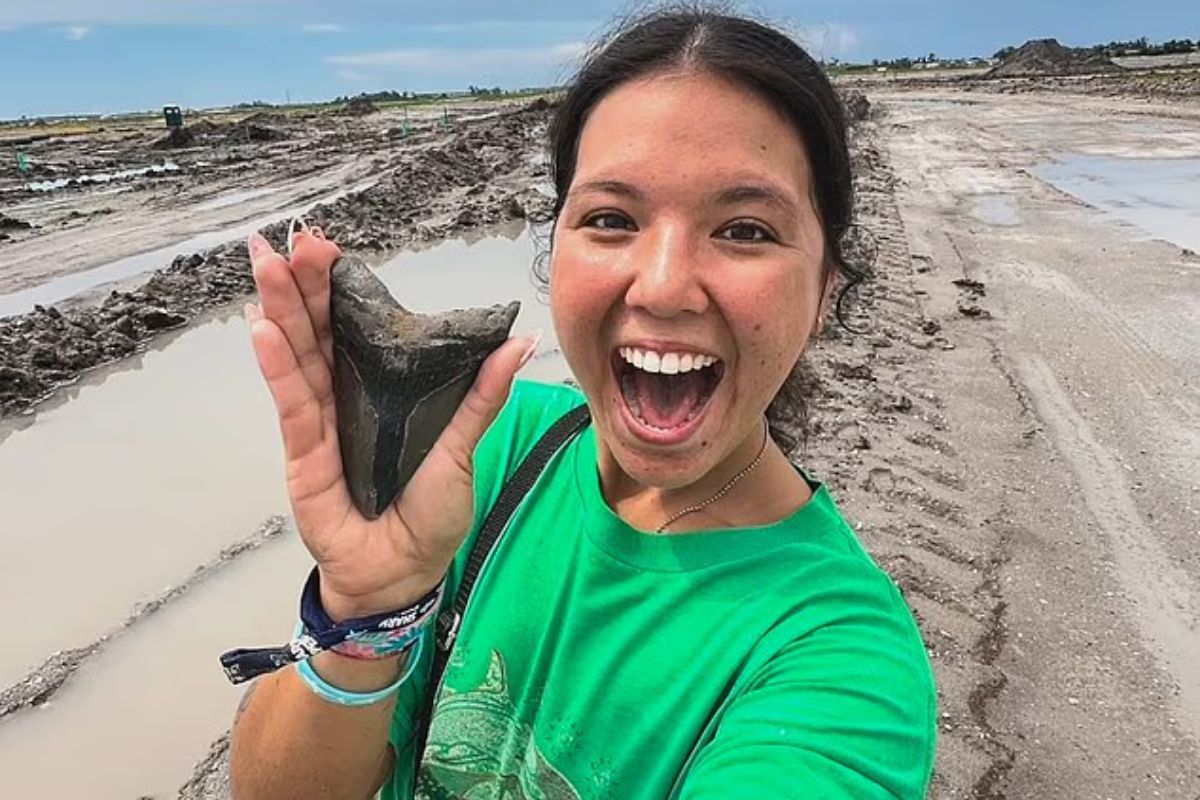

The Rare Fossil, With Serrated Edges and Triangular Shape, May Have Belonged to a Fearsome Megalodon, a Giant Shark That Lived Millions of Years Ago
A woman unearthed a huge tooth from a prehistoric creature during a casual walk on a beach in Florida, United States. The find went viral on social media and caught the attention of scientists and fossil hunters around the world.
The discovery was made by Nichole Mercuri, 26, who found the fossil partially buried in the sand. The object was identified as a probable tooth from a Megalodon prehistoric shark that inhabited the oceans between 23 and 3.6 million years ago. The video of the moment has already surpassed 900,000 likes on Instagram.
A Piece of the Past Buried in the Sand
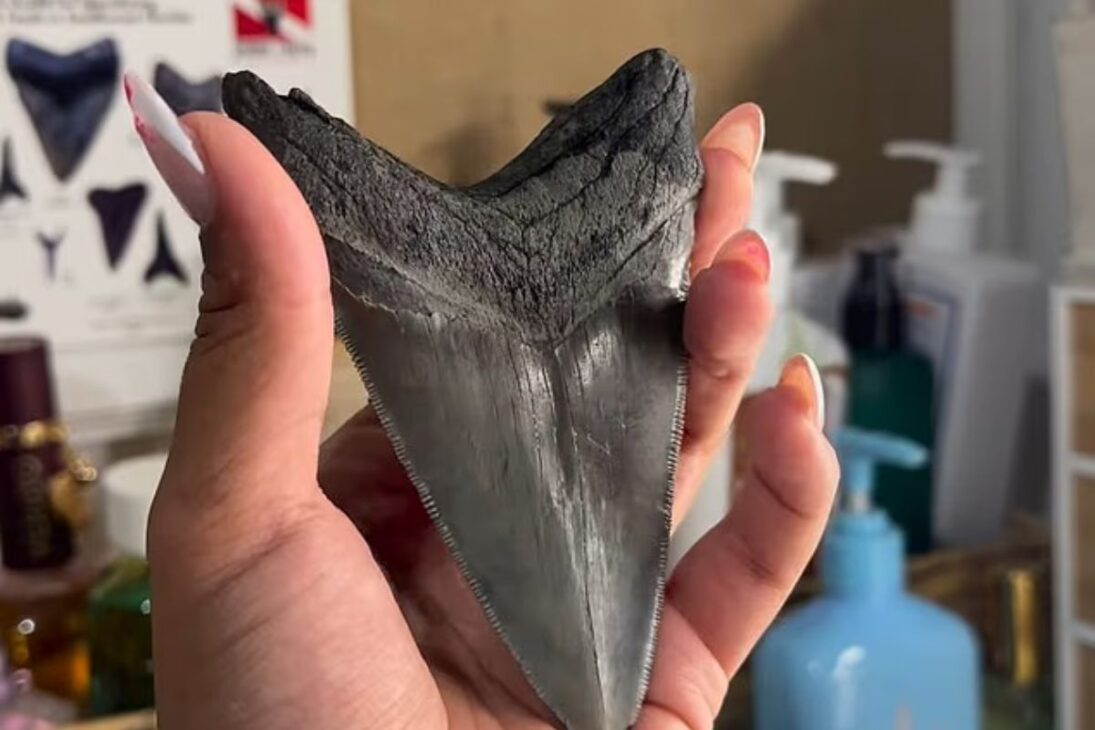
The episode occurred at the beginning of summer on the west coast of Florida. According to Mercuri, the giant tooth caught attention because of its triangular shape and serrated edges, features typical of fossilized Megalodon teeth. She documented the find on video and shared her reaction on social media.
-
6-Year-Old Finds Ancient Neanderthal Axe on English Beach, Discovers Its Significance Three Years Later

-
Over 500,000 Wild Boars Culled in Eight Months, but Industry Estimates 1.25 Million, Raising Concerns About Crop Damage, Threatened Livestock, and Health Risks in Rural Brazil

-
Chinese Spacecraft Releases Mysterious Object in Orbit, Sparking Global Debate on Space Technology and Earth Monitoring

-
Retired Builder Constructs House Using Over 4,000 Milk Cartons in Brazil, Engineer Estimates Structure Could Last 100 Years



According to the Florida Museum of Natural History, Megalodon teeth can measure up to 18 centimeters and typically appear after storms or erosion that unearth ancient seabeds. Experts confirm that intact fossils of this type are extremely rare.
A Creature That Dominated the Seas
The Megalodon was a predator up to 18 meters long, with a bite force capable of crushing a car. With hundreds of sharp teeth in rows, it hunted whales, smaller sharks, and other large marine animals. Fossilized teeth are the most common remains left by the species, as enamel survives better over time than bones.
The fossil found by Mercuri reignited public fascination for these creatures and sparked debates about how many prehistoric treasures remain buried along the Florida coast.
Fossil Hunting: Luck, Skill, and Persistence
Mercuri claims that the discovery was the result of years of practice and observation, but it also involved a bit of luck. She participates in fossil-specialized groups on Facebook and often seeks locations with favorable geological conditions, such as Peace River and Venice Beach, known for revealing fossils after storms.
Even without formal training in paleontology, the young woman has collected more than 100 shark teeth, along with shells and fossils from different eras. She says what motivates her is the thrill of touching something that hasn’t seen the light of day in millions of years.
A Rare Find That Became Inspiration
Although she has found other large teeth before, Mercuri rates the new fossil as one of the most exciting of her life. The dark, well-preserved material stands out for its size and perfect shape. According to her, anyone can start this search — all it takes is dedication, patience, and keen eyes.
The Florida Museum reinforces that the state’s coastline is one of the most fertile in the country for paleontological finds. Still, finding a complete Megalodon tooth remains an exceptional occurrence.
Would you dare to hunt fossils on remote beaches? Did Mercuri’s discovery surprise you? Comment on what you think!