






 Portuguese
  Spanish


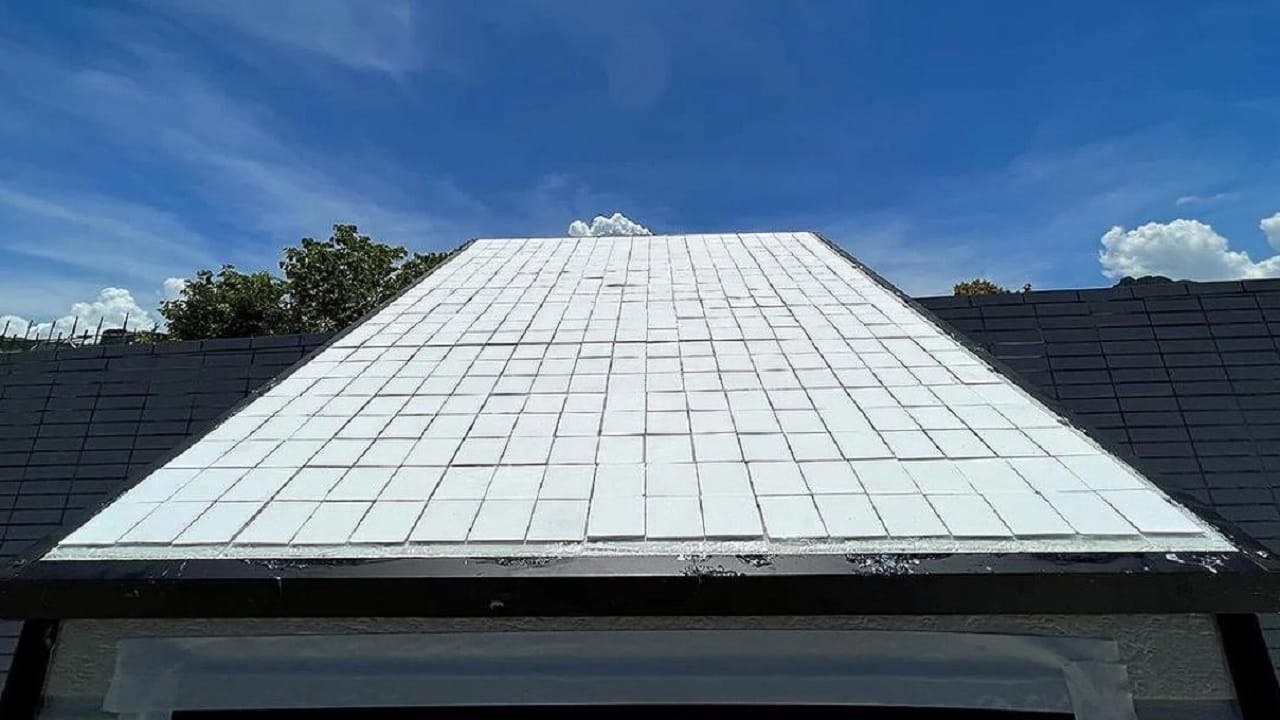

Scientists Develop Material That Will Make Air Conditioning An Obsolete Product. It Is A New Ceramic That Cools Areas Passively.
Scientists from Hong Kong have achieved a remarkable milestone by developing a new ceramic capable of cooling areas, representing a significant advancement in the field of passive radiative cooling, also known as passive refrigeration. This approach directs heat to cold space without the need for energy consumption. The innovative material, dubbed “cooling ceramic”, promises to revolutionize the traditional concept of air conditioning.
New Ceramic That Cools Areas Can Be Up To 20% More Efficient
The material achieved high-performance optical properties by reflecting heat at frequencies for which the Earth’s atmosphere is transparent. This enables lowering the temperature of areas without using air conditioning or other energy-consuming methods, making the material a promising alternative to traditional methods.
More than just a laboratory demonstration, the cost-effectiveness, durability, and versatility of the ceramic make it practically ready for sale, for use not only in construction but also in various other applications.
-
China Develops Custom 140-Ton Electric Mining Truck with 770 kWh Swappable Battery, Deploys 290 Units in Xinjiang’s Largest Zinc Mine

-
Meta to Launch Arena, a New Prediction App Targeting 3.56 Billion Users, Competing with Polymarket and Kalshi

-
Scientist Challenges Famous Human Evolution Theory, Argues Homo Sapiens Evolved Gradually Over Thousands of Years
-
15-Year-Old American Builds Ocean Generator with PVC Pipe and 3D-Printed Propeller for $12, Wins National Prize, Presents at White House, and Makes Forbes 30 Under 30 List




[Image: City University of Hong Kong]
According to Professor Chi Yan Tso from the University of Hong Kong, the experiment showed that applying the new ceramic that cools areas on the roof of a house can yield more than 20% savings in electricity for cooling areas, confirming its great potential in reducing people’s dependence on active cooling methods, and providing a sustainable solution to avoid grid overload, greenhouse gas emissions, and urban heat islands.
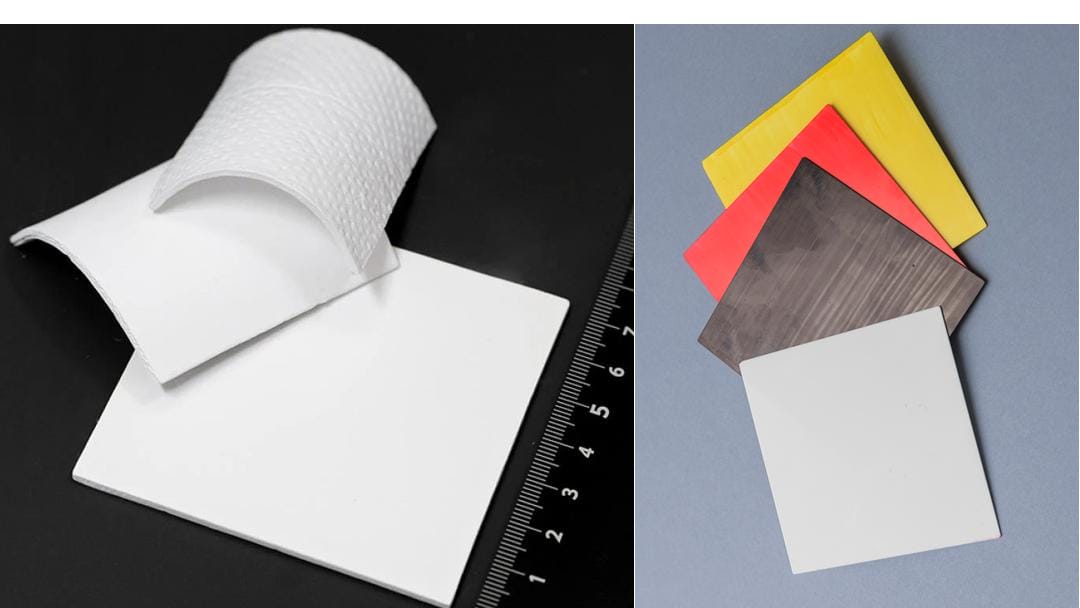
The extraordinary uniqueness of the cooling ceramic, which eliminates the use of air conditioning, lies in its hierarchically porous structure inspired by the shell of the scarab beetle, which has particularly bright white scales covering its entire exoskeleton. These white scales contain sclerotin, a modified form of the chitin polymer, and are whiter than any artificial material produced so far.
Ceramic That Cools Areas And Eliminates Air Conditioning Is Produced With Affordable Materials
The ceramic that cools areas and eliminates air conditioning was produced using affordable materials, such as alumina, through a simple two-step process involving phase inversion and sintering, making production scalable and economically viable.
The ceramic scores on the two optical properties that determine the cooling performance of passive refrigeration materials, typically described over two wavelength ranges: The Solar Range and the Mid-Infrared Range. Efficient passive cooling requires high reflectivity in the first range to reduce solar heat gain, and high emissivity in the second range to maximize radiative heat dissipation.
Alumina, the primary raw material of the new ceramic, ensures that it maintains minimal solar absorption. The cooling ceramic is made of alumina, which generates the desired degradation of resistance to UV rays, which is a typical concern of many passive radiative cooling designs based on polymers.
The model also shows excellent fire resistance, withstanding temperatures above 1,000º C, exceeding the capabilities of most passive radiative cooling materials based on polymers or metals.
Material Achieves Excellent Performance in Tests
In addition to its excellent optical performance, during field tests, the cooling ceramic that will make air conditioning obsolete showed great weather resistance, chemical stability, and mechanical strength, making it ready for long-term outdoor applications.
At extremely high temperatures, the cooling ceramic exhibits superhydrophobicity, allowing immediate spreading of droplets due to its interconnected porous structure. This characteristic inhibits the Leidenfrost effect, which prevents evaporation, commonly found in traditional building coating materials, and allows for efficient evaporative cooling. The Leidenfrost effect is a phenomenon that occurs when a liquid comes into contact with a surface significantly hotter than its boiling point.






