Portuguese
  Spanish


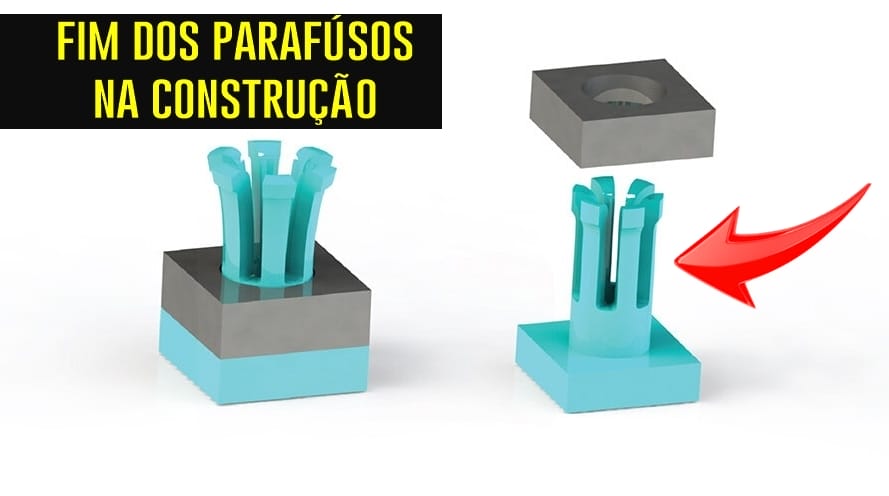

Connected Metasurfaces Are The Future Of Structural Connections, Providing Stronger And More Efficient Links Than Traditional Bolts.
In the field of construction and engineering, a new technology is emerging to replace traditional bolts and adhesives. In an innovative collaboration between Texas A&M University and Sandi National Laboratories, researchers are developing interconnected metasurfaces (ILMs).
This revolutionary technology promises stronger, more stable, and flexible connections, utilizing shape memory alloys (SMAs), materials that regain their original shape after deformation.
ILMs can transform the way structures are assembled and disassembled, particularly in sectors such as aerospace, robotics, and biomedicine, offering a much more advanced alternative compared to traditional methods such as bolts.
-
She spent 73 years breathing inside an iron lung, survived the aftereffects of polio, and became the last woman in the United States dependent on the equipment before dying at 78 years old.

-
Brazilian students created a $1 filter using pine bark, cotton, and 3D-printed parts to clean cassava wastewater, reduce the toxicity of a hazardous waste, and transform contaminated water into biofertilizer.

-
Astronaut from Artemis II steps down after mission to the Moon and decision surprises after a record of 406,771 km, a historic 10-day journey, and an unprecedented achievement for Canada.

-
A fossil kept for years in a small museum in Montreal concealed 450-million-year-old soft tissue, a discovery that has only happened once before in history.


What Are ILMs And How Do They Surpass Bolts In Engineering?
Materials and Design (2024)
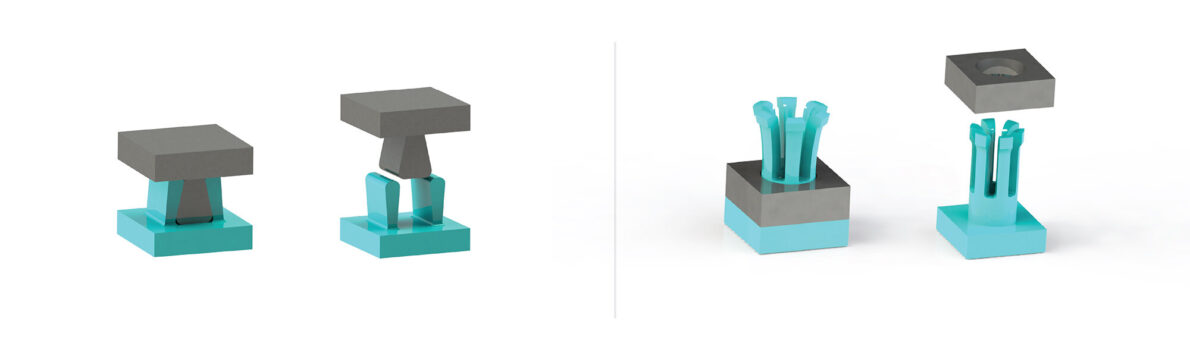
Connected metasurfaces (ILMs) are an innovative solution in the world of engineering and construction. They allow the joining of two surfaces more efficiently, similar to how Legos or Velcro work, but with advantages that conventional bolts and adhesives cannot offer.
The joining occurs in a controlled manner, with the capacity to engage and disengage on demand, utilizing the shape memory effect of SMAs.
This technology represents a significant advancement compared to traditional connection methods, such as bolts, which rely on the application of force and constant wear to maintain the integrity of the structure.
By integrating shape memory alloys, ILMs offer a connection that can be adjusted through temperature variations, something impossible for the bolts used in traditional construction.
This ensures not only greater stability but also the potential to create smart and adaptable structures, which can be disassembled and assembled multiple times without loss of strength.
For engineering, this opens new possibilities, especially in projects that require precision, flexibility, and durability, where bolts can become a weak point over time.
Advantages Of ILMs In Construction And Engineering
Materials and Design (2024)
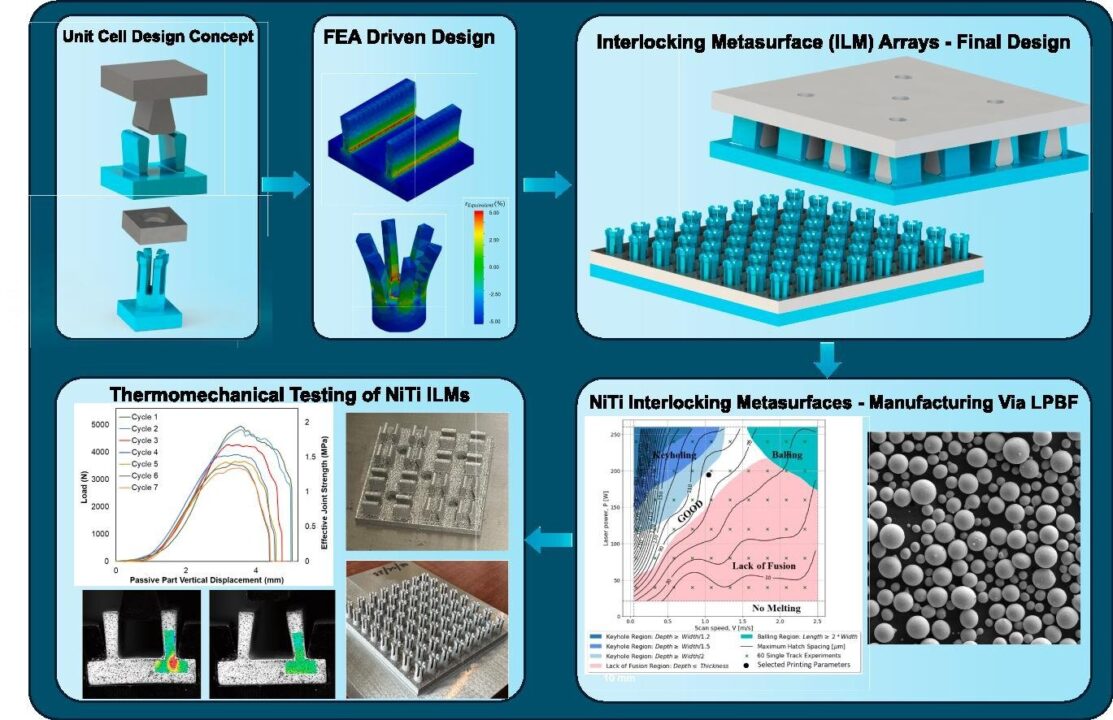
The use of ILMs in construction promises to radically transform how we connect components in various industries.
In aerospace engineering, for example, parts that currently use bolts could be assembled and disassembled repeatedly without compromising structural integrity.
For robotics, ILMs offer adaptable and flexible joints, which adjust to movement more precisely than any bolt could offer.
In biomedical construction, devices like prosthetics and implants could adapt to the human body with greater accuracy, responding to changes in temperature and movement.
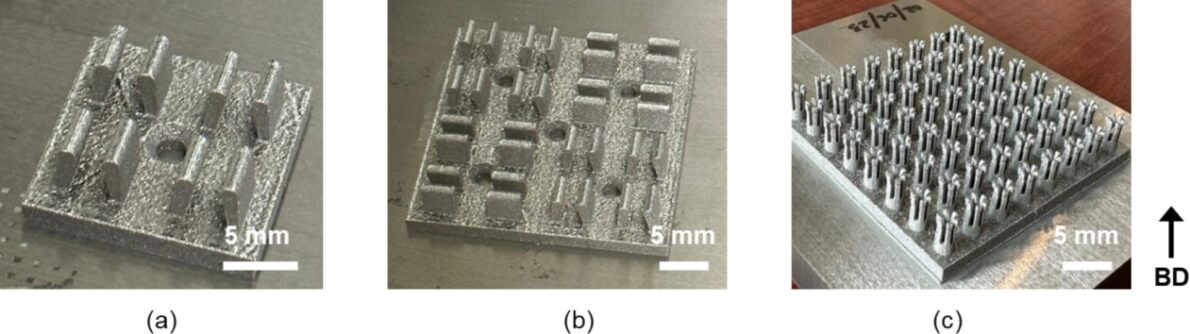
This flexibility far surpasses bolts and other traditional methods, offering more advanced and comfortable solutions for patients.
Although bolts continue to be widely used, the potential of ILMs to replace these connection methods is undeniable.
The ability to control the joining of surfaces through external stimuli, such as heat, allows for a much more dynamic and efficient approach in engineering and construction. This represents a significant advancement in how we design and build complex structures.
Challenges And Future Perspectives
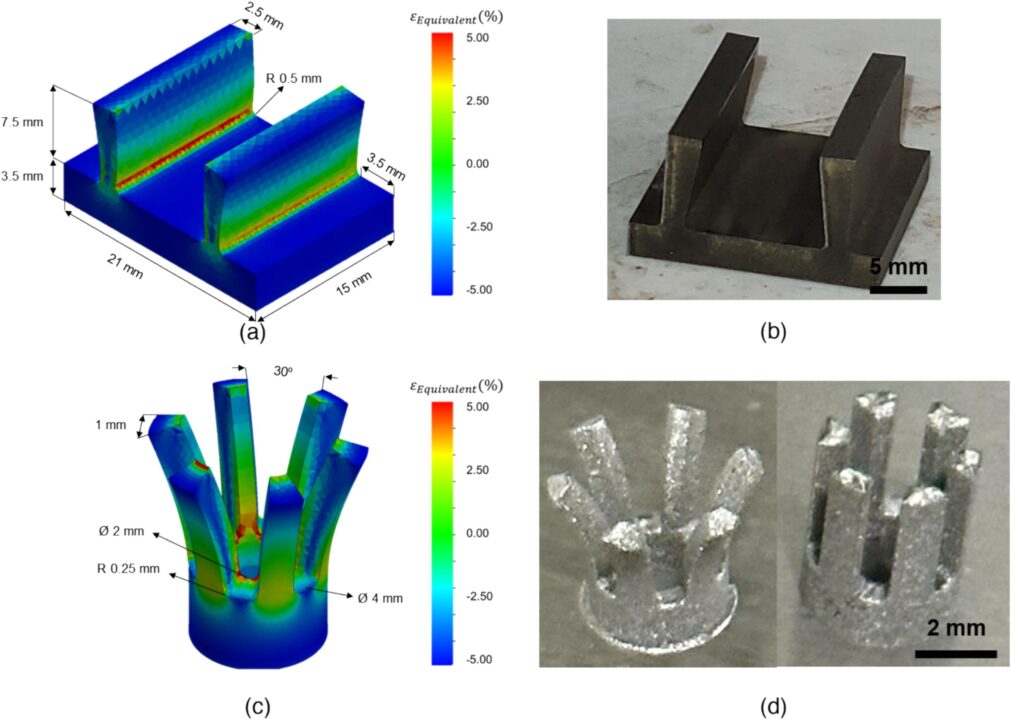
Materials and Design (2024)
Despite the clear advantages of ILMs compared to bolts, there are still challenges to overcome. Researchers are working to refine the technology, utilizing the superelasticity effect of SMAs, so that metasurfaces can withstand large deformations and recover instantly, even under extreme conditions.
This advancement will enable the construction of complex structures in challenging environments, such as in space or under adverse conditions on Earth, to be carried out more efficiently and safely than with bolts.
As this technology advances, its application is expected to expand to a variety of sectors within construction and engineering.
The ability to assemble and disassemble structures with high precision and strength, something traditional bolts cannot offer, promises to revolutionize how we handle the creation of devices and structures.
Whether in aerospace, robotics, or biomedical projects, ILMs offer a new era of intelligent and adaptable connections, far beyond what bolts can achieve.
With the development of interconnected metasurfaces (ILMs), the future of construction and engineering is moving away from traditional bolts.
These active surfaces provide a more advanced alternative, allowing for stronger and more adaptable connections, as well as greater flexibility compared to conventional methods.
In sectors that require high precision, such as aerospace engineering and biomedical construction, ILMs represent the next step in the evolution of structural connections, providing safety, innovation, and efficiency where traditional bolts can no longer meet the demands of modernity.