






 Portuguese
  Spanish


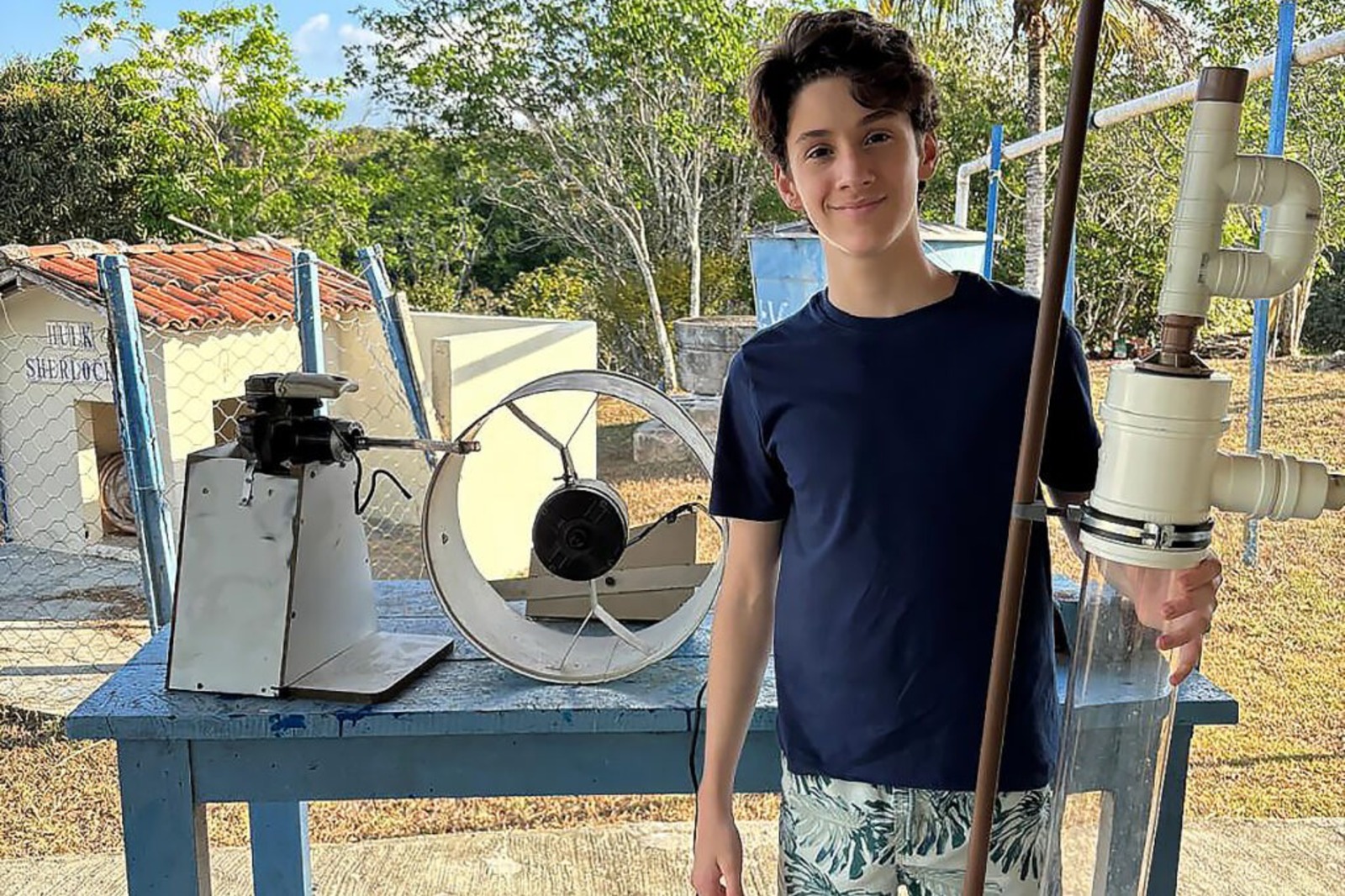


Solution Developed by 14-Year-Old Student in Recife Uses Wind Energy and Reused Materials to Pump Water, Reducing Costs, Physical Effort and Dependence on Electricity in Rural Areas
Access to drinking water remains a global challenge in the 21st century, especially in rural and peripheral areas, where families travel long distances daily, a scenario that drives sustainable solutions, such as a low-cost wind-powered water pump developed in Recife by a 14-year-old student.
Context of the Water Challenge in Isolated Communities
In many regions with limited infrastructure, the absence of supply networks forces residents to collect water manually, compromising time, health, and productivity, especially among family farmers and low-income populations.
These difficulties exacerbate social inequalities and reinforce the need for simple, accessible, and adaptable technologies capable of functioning without electricity or fuels, utilizing locally available natural resources.
-
Resident left tap running to prevent freezing, but woke up to ice in the sink after -1.8°C cold snap in Brazil’s Serra Gaúcha region.

-
Man Inherits Old House in France and Discovers 100 kg of Hidden Gold Throughout the Property
-
Pyramid-Shaped Apartment Building in China Stands Out with 18 Floors, 45-Degree Inclined Facade, and Terraced Design Inspired by Traditional Rice Paddies

-
When Do Brazil and Japan Face Off in the World Cup?





What Is the Low-Cost Wind Water Pump
The wind water pump operates based on wind power, which moves blades connected to a mechanical shaft responsible for driving the water pumping.
This system allows water to be drawn from wells, cisterns, or nearby reservoirs, raising the liquid to water tanks or other storage points without external energy consumption.
Unlike conventional pumps, the equipment eliminates the need for electric motors or combustion, reducing operational costs and dependence on energy infrastructure that is non-existent in remote areas.

Use of Recyclable Materials and Construction Simplicity
Accessible versions of the wind pump can be assembled using PET bottles, PVC pipes, scrap metal, and reused parts from old appliances, reducing expenses and facilitating maintenance.
The choice of these materials also favors local repairs, as components can be replaced without the need for complex industrial parts or specialized technical assistance.
This approach makes the technology appealing to small producers, rural settlements, and remote villages, where conventional solutions are economically unfeasible.
Development of the Project by Lucas Figueiredo
The project was developed by Lucas Figueiredo, 14 years old, a student at Colégio Santa Maria in Recife, motivated by the reality of communities without regular access to water.
Lucas created a wind-powered water pump using recyclable materials, such as PET bottles, scrap metal, and reused components from old equipment.
The prototype was designed for assembly with simple tools, allowing rural residents to replicate the system with minimal technical support, expanding its practical application.
Social Research and Scientific Recognition
Beyond technical aspects, Lucas investigated the social impact of the solution, engaging with teachers, family farmers, and community leaders during the project’s development.
Initially presented at school science fairs, the work gained visibility by participating in national and international scientific competitions focused on sustainability and low cost.
This journey transformed the student into a reference among young innovators interested in social technology and the use of renewable energies in Brazil.
Functioning of the System and Practical Applications
The wind water pump operates through blades that spin with moderate winds, transmitting mechanical energy through shafts, gears, or pulleys to the pumping mechanism.
The movement activates pistons or rotors that raise the water to higher levels, supplying household or agricultural reservoirs without the need for electricity.
The system was adapted for common winds in rural areas, using resilient structures, reused parts, and a simple yet functional experimental design.
Supervised tests included measurements of flow rate and height achieved, proving the system’s ability to lift water from shallow wells for daily use.
Social, Economic, and Environmental Benefits
The wind-powered water pump reduces the physical effort of families who depend on buckets or carts, improving quality of life in vulnerable communities.
Economically, it decreases expenses with electricity and fuels, a relevant factor for family farmers and small producers with tight financial margins.
From an environmental perspective, there are no direct emissions of polluting gases, aligning the solution with strategies for energy transition and conscious use of natural resources.
The reuse of materials reduces waste and encourages local manufacturing, strengthening community economies and promoting practical environmental education.
Educational Impact and Trajectory of the Young Inventor
The journey of Lucas Figueiredo demonstrates the educational potential of the initiative, which also stimulates school projects, science fairs, and interest in applied engineering.
His project won an international award in Abu Dhabi, standing out among global proposals for clean energy and low-cost social solutions.
Prior to this, the young man had accumulated medals in national scientific competitions, reinforcing the technical consistency and social relevance of the developed proposal.
The recognition opened doors for lectures, scientific exhibitions, and meetings with other young inventors, expanding the reach of the idea.
In presentations, Lucas emphasizes the importance of combining curiosity, study, and social sensitivity, showing that students can create real solutions to basic challenges.
With information from O Antagonista.



Parabéns
Passa o projeto para todos nós!!!
YouTube