






 Portuguese
  Spanish
  4 min of reading
  0 comments


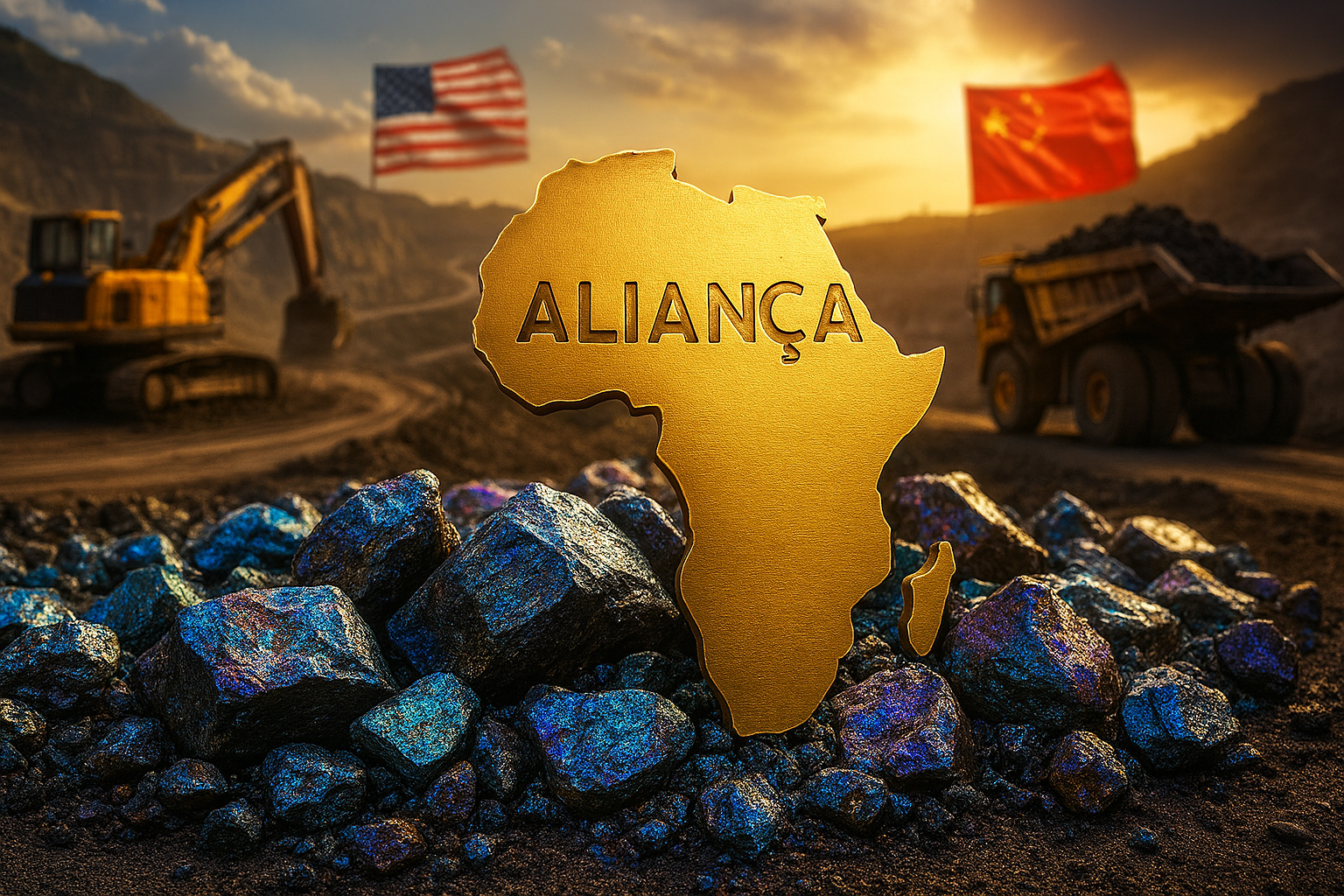
The African Union Launches Unprecedented Coalition to Control Strategic Minerals Like Cobalt and Lithium, Seeking Local Industrialization, Greater Global Bargaining Power and Reducing Dependency on China’s and the United States’ Dominance.
A silent yet decisive change is underway in how Africa perceives its immense mineral wealth. The African Union (AU) announced during a regional climate summit in Addis Ababa plans to form a coalition of producing countries for strategic minerals, aiming to strengthen the continent’s bargaining power in the global market.
The initiative has been dubbed the Africa Green Minerals Strategy and seeks to ensure that essential resources for the energy transition — such as cobalt, lithium, coltan, and rare earth elements — are not exported in raw form but are processed and industrialized locally.
Global Context: The Race for Green Minerals
The pressure for strategic minerals is increasing as the world accelerates its decarbonization efforts. A report by the International Energy Agency (IEA) projected that global demand for essential minerals could quadruple by 2040, driven by batteries, wind turbines, and electric vehicles.
-
Brazilian Joins Homeownership Consortium, Faces Decade of Dual Payments Totaling $141,000, Surpassing Traditional Mortgage

-
Land Rover to Halt Production in July, Putting 371 Jobs at Risk, as Chinese Automaker Negotiates to Convert Factory to 100,000 Vehicles Annually by 2027

-
Mexican Pest Threatens U.S. Cattle Herds at Historic Lows, Potentially Boosting Brazilian Beef Exports as Burger Prices Soar

-
Brazilian Freight Bill Progresses in Congress with $5,000 Minimum Wage, 70% Advance Payment, and Fines Up to $1 Million, as Agriculture and Industry Warn of Rising Costs and Legal Uncertainty




Today, the Democratic Republic of the Congo (DRC) provides over 70% of the world’s cobalt, while other African countries hold reserves of lithium and rare earths. Despite this, most of the wealth is exported without adding value, keeping Africa on the sidelines of the global tech boom.
“The current global order rewards control over processing and trade, not just ownership of the resource,” explains energy economist Linda Mbutu from the University of Nairobi. “Africa has the minerals, but it lacks influence. A unified coalition can change that balance.”
The US and China at the Center of the Dispute
The AU’s initiative comes amid the competition between China and the United States for control of supply chains. Beijing controls much of the refining of strategic minerals, which worries Washington and Brussels.
The US government has already formed partnerships in the DRC to explore copper and cobalt reserves, in an attempt to reduce dependency on China. However, with the possible formation of a unified African front, both the US and the European Union will need to renegotiate their strategies.
Internal Obstacles: Funding and Divergences
Despite the ambitions, the coalition faces significant internal challenges. The main issue is the lack of infrastructure and funding to process minerals locally. The AU demands that developed countries fulfill climate funding promises, such as the commitment made at COP29 in 2023 in Azerbaijan to allocate US$ 300 billion per year to developing nations.
In practice, however, an Oxfam study showed that East African countries received only 4% of the necessary funding between 2013 and 2022, revealing a discrepancy between rhetoric and reality. Another obstacle is the diversity of national interests:
- DRC and Zimbabwe already implement export restrictions to protect local supply chains;
- Nigeria and Mozambique still prioritize oil and gas;
- Internal conflicts, especially in eastern DRC, threaten supply chain stability.
Towards a “OPEC of Minerals”?
Analysts believe the new coalition could serve as an African version of OPEC (Organization of the Petroleum Exporting Countries), establishing regional prices, export quotas, and joint refining structures.
“Even if the coalition does not achieve the level of coordination of OPEC immediately, it already signals that Africa will no longer accept being just the world’s quarry,” assesses researcher Jean-Benoît Mallet from the OECD.
Climate Justice and Sovereignty
The AU declaration also reinforced the principle of “climate justice,” demanding not only compensation but also sovereignty over green resources. For the president of the AU Commission, Mahamoud Ali Youssouf:
“People forget that minerals like cobalt and lithium are not just industrial inputs — they are Africa’s leverage in the 21st century.”
If successful, the coalition could reposition Africa on the global geopolitical map, elevating its voice in international negotiations and promoting sustainable industrialization.
Even as it faces financial, political, and structural barriers, the initiative represents a historic milestone: the attempt to turn mineral abundance into strategic influence, breaking decades of external exploitation.





-

1 person reacted to this.