Portuguese
  Spanish


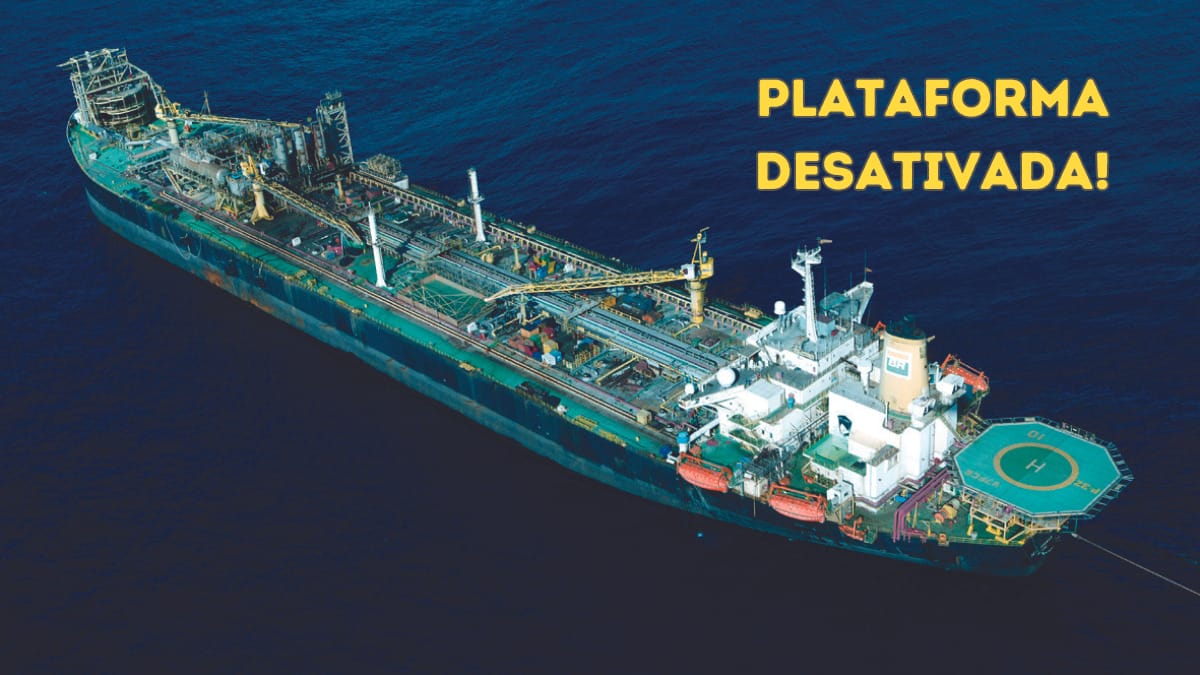

Committed to ESG Practices, Petrobras Leads the Way for Green Decommissioning in Brazil by Sending Platform P-32 to the Rio Grande Shipyard, Creating Opportunities for the Local Industry.
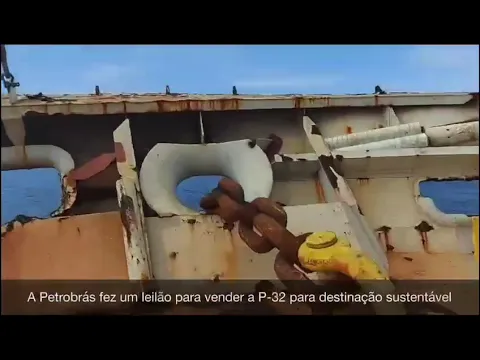
Petrobras achieved a significant milestone last Thursday, (11/23), by unanchoring platform P-32 in the Marlim Field, in the Campos Basin. Following the principles of the best ESG (Environmental, Social, and Governance) practices in the global industry, the company began on Saturday, (11/25), the navigation of P-32 towards the Rio Grande shipyard (RS), where the unit will undergo a recycling process.
P-32: Petrobras Starts Sustainable and Innovative Decommissioning
This pioneering model reinforces Petrobras’s international commitment to sustainability and a fair energy transition.
Furthermore, it represents the creation of new opportunities for the national economic chain, generating value for society.
-
France Revamps 530 Social Housing Units with Large Balconies and Glass Facades Without Demolishing Existing Buildings

-
10-Year-Old Max Makes History with Paris Fashion Show, Launches Own Brand, Hires Staff, and Sets World Record as Youngest Runway Designer

-
Bolivian Female Construction Workers Form Association to Combat Discrimination and 38% Pay Gap in the Industry
-
Near Amsterdam, residents buy land and discover they must also build streets, manage drainage, handle waste, and grow food on half their plot.




Jean Paul Prates, President of Petrobras, highlighted the importance of this milestone: “With P-32 en route to the Rio Grande shipyard, we will carry out the first green decommissioning in Brazil. And this is the first of many!”
The decommissioning of P-32 is part of Petrobras’s Strategic Plan, which foresees the dismantling of more than 20 units in the coming years.
Prates emphasized the significance of this opportunity for the local industry, highlighting the robustness of the Brazilian steel industry.
Gerdau and Ecovix: Strategic Partnership in Offshore Platform Recycling
The sale of P-32 to Gerdau, in partnership with the Ecovix shipyard, was completed in July 2023.
This transaction marks the first time a floating platform will follow Petrobras’s new sustainable vessel disposal model.
Eleven floating units are scheduled to follow the same guideline over the next five years.
The recycling plan developed by Gerdau-Ecovix was approved by Petrobras and encompasses everything from the initial procedures for receiving the unit to the final disposal of dismantling waste.
Petrobras will ensure the execution of the plan, closely monitoring safety, environmental, occupational health, and social responsibility practices.
Green Decommissioning and New Horizons for the National Industry
Decommissioning is a crucial stage in the life cycle of a production system, representing the definitive cessation of a platform’s operations when opportunities for extension or maintenance of production have been exhausted.
P-32, one of the ten units that operated in the Marlim and Voador fields, will be replaced as part of the Revitalization Project for Marlim and Voador.
The General Manager of the Business Unit for Exploration and Production in the Campos Basin, Alex Murteira Célem, highlights a reduction of over 50% in greenhouse gas emissions with the planned replacements.
The Campos Basin Renewal project, with investments of US$ 22 billion by 2028, includes the interconnection of over 200 new wells and the incorporation of 4 new FPSOs.
Legacy of P-32: Pioneering in Deep Waters
The FPSO P-32, a pioneer in deep waters since 1997, was crucial for flowing large volumes produced in the northern area of the field, processing over 130 million barrels of oil equivalent (boe).
The sustainable decommissioning of P-32 not only marks an evolution in oil industry practices but also signals Petrobras’s commitment to environmental and social responsibility.
By carrying out the first green decommissioning in Brazil, Petrobras not only leads in innovation in the industry but also paves the way for a more sustainable approach throughout the sector.
The recycling of P-32 is not just the end of an era but the beginning of a new phase in the pursuit of more responsible and eco-efficient practices in natural resource exploration.
See: Petrobras Platform P-32 Will Be Decommissioned