






 Portuguese
  Spanish
  4 min of reading
  0 comments


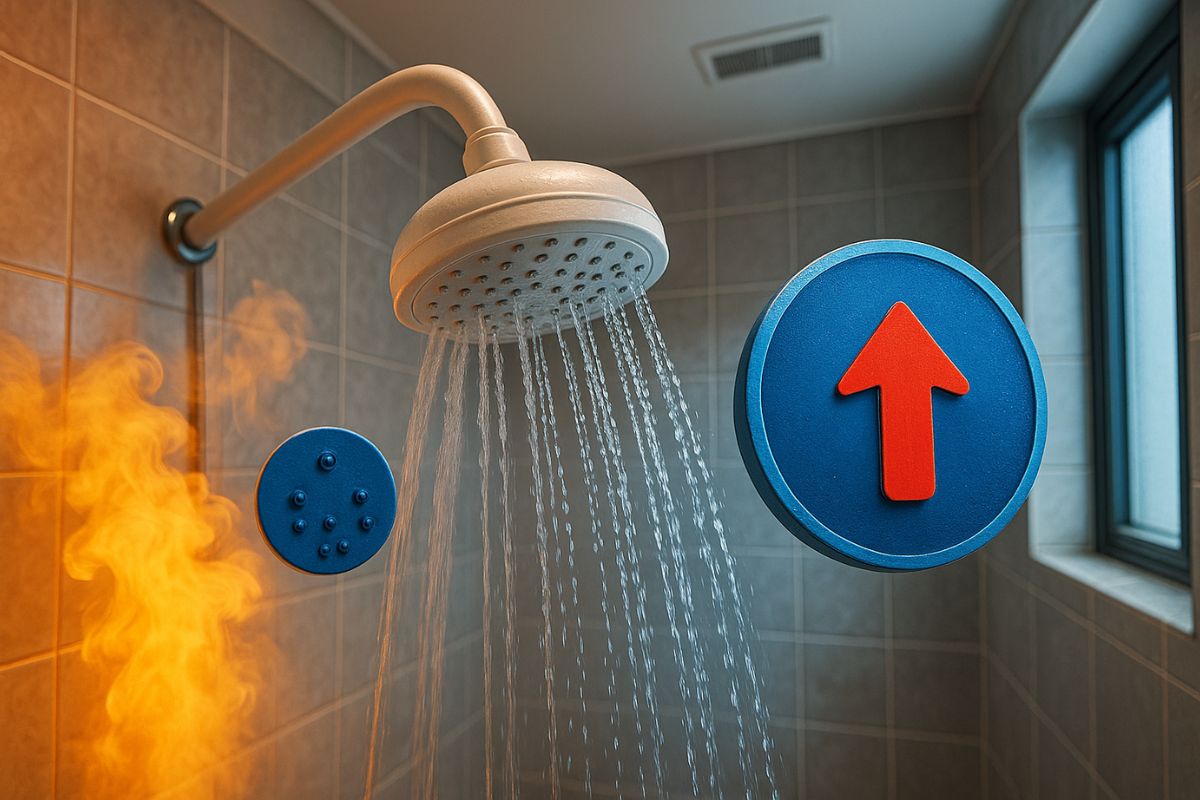
The Temperature of Shower Water Can Change Due to Various Factors, and Many of Them Have Simple Solutions Without Needing to Buy Another Device.
Taking a warm and relaxing shower is one of the most valued daily pleasures, especially on cold days. However, it is common for the shower to experience heating failures: the water comes out lukewarm, takes too long to heat up, or remains cold, even with the switch in the “hot” or “winter” position. Despite the discomfort, the good news is that, in most cases, the problem can be resolved with small adjustments, without the need to replace the equipment.
According to the Tech Tudo portal, understanding what affects water temperature is essential to ensure the proper functioning of the shower. Factors such as power, water pressure, weather conditions, usage mode, and even electrical wiring can compromise the heating. With the correct diagnosis, the shower returns to being hot and safe, without energy waste or electrical risk.
Buy a Powerful Model
Power is the heart of the electric shower. The higher the wattage, the faster and more intense the heating capacity.
-
Space technology used to search for water on Mars is now hunting for invisible leaks under the streets of São Paulo, using satellites, AI, and chlorine signals to help Sabesp recover up to 6.7 billion liters of water.

-
Japan sends ship to extract mud rich in rare earths at nearly 6,000 meters deep in the Pacific, attempts to lift 350 tons per day from the seabed, and transforms sediments near Minamitori Island into a strategic weapon to reduce dependence on China.
-
Venus Aerospace promises a rotating detonation hypersonic engine that takes the Stargazer to Mach 9 and crosses oceans in 1 hour, but the flight that made history barely surpassed the speed of sound.

-
Brazilian student creates a cheap formula that makes plants grow up to 90% faster and wins an award in a global scientific competition.





Models above 5,000 W tend to heat better but require compatible electrical installations. In 110/127 V networks, the limit is usually 5,500 W to avoid overload. Models of 7,500 W or 9,500 W, ideal for cold regions, operate only at 220 V.
In addition to power, it is important to observe the type of temperature control. Electronic models allow for gradual adjustments, offering more precise thermal comfort.
On the other hand, multi-temperature models have fixed positions such as summer and winter. Understanding this difference helps in better utilizing heating and energy efficiency.
Pay Attention to Water Pressure
Pressure directly influences the thermal performance of the shower. When the flow is too high, water passes too quickly through the heating element and doesn’t heat enough.
If it’s too low, the device may not work properly. The ideal situation is to maintain a balance between flow and temperature.
In areas with excessive pressure, it is worth installing a pressure reducer. In homes with low flow, the use of a pressure booster is recommended.
Simple adjustments, such as partially closing the valve, can help temporarily, but constant use may reduce the lifespan of the heating element.
Very Cold Water Doesn’t Heat Up Quickly
The shower depends on the temperature of the water that reaches it. In cold regions or areas at high altitude, the water comes in very cold, requiring more energy to heat up.
This can give the impression of a defect when it is actually just a physical limitation of heating.
A practical solution is to reduce the water flow to increase the contact time with the heating element. Another alternative is to choose a more powerful model that can compensate for the cold.
Small changes can restore thermal comfort without the need to replace the device.
Use the Ideal Mode for the Moment
Each season requires a different setting on the shower switch. On cold days, the “winter” mode or maximum power is recommended. In hot weather, the “summer” mode reduces energy consumption without compromising comfort.
Electronic models allow for fine adjustments, avoiding waste and maintaining a constant temperature. Using the incorrect mode can increase electricity costs or result in a shower that is too lukewarm, so proper calibration makes a difference in both comfort and electricity bill.
Check the Electrical Wiring of the House
Many shower problems are linked to the electrical installation. Thin wires, incorrect circuit breakers, or a circuit shared with other devices can compromise heating and increase the risk of failures.
If the shower is connected to a network that does not deliver the necessary current, the heating element doesn’t heat completely.
The ideal situation is for the circuit to be dedicated, with wiring and breakers compatible with the device’s power. If you lack technical knowledge, it is safest to call an electrician to check the installation.
Burnt Heating Element
The heating element is the component responsible for converting electrical energy into heat. When it is burnt, broken, or has poor contact, the water comes out cold or lukewarm, even if the rest of the system is in good condition.
Warning signs include a burnt smell, metallic noise, or irregular heating. The replacement should be carried out by a technician using original parts compatible with the power and voltage of the shower.
It is also advisable to review the entire electrical and hydraulic installation during the replacement to avoid recurrence.
Heating problems in the shower are common, but in most cases, they have simple solutions—be it adjusting the pressure, replacing the heating element, or checking the wiring.
Before considering replacing the device, it’s worth understanding which of these factors is interfering with performance.
Have you ever needed to solve a problem with warm or cold water in your shower? Share in the comments what the cause was and how you solved the issue in your home.


Be the first to react!