Portuguese
  Spanish





Ambitious Plans Of Brazil To Manufacture A Nuclear Aircraft Carrier By 2040, Even Knowing The Technical, Financial, And Geopolitical Complexities Of This Effort In Modernizing Its Maritime Defense Capacity.
In a bold turnaround for naval defense strategy, Brazil signals its interest in developing a nuclear aircraft carrier, aiming for a significant projection of its maritime power by 2040. This unprecedented initiative in Latin America would place Brazil in an exclusive group of nations capable of operating this powerful tool for global power projection.
Brazil, with its extensive coastline and responsibilities in the Blue Amazon, sees the nuclear aircraft carrier as a critical vector for force projection and defense of its maritime interests. The intention to acquire such capability reflects a long-term vision to strengthen its geopolitical position and national defense.
Operational Challenges To Manufacture A Nuclear Aircraft Carrier


The complexity of operating a nuclear aircraft carrier is colossal, requiring significant investments in technology, training, and infrastructure. Admiral Marcos Sampaio Olsen highlights the current limitations of the Brazilian Navy, indicating the need for a solid financial base to support such an undertaking.
-
They exchanged the idea of a large house for a 35 m² warehouse, spent US$ 12,000 on the structure, and created a tiny house in Colorado with space to live and work.

-
While modern cities rely on pumps and electricity, in Iran, ancient tunnels carried water through the desert using only slope and gravity.
-
Instead of sending families far from the city, a project in Chile intentionally created incomplete houses on expensive urban land and left technical space for each to grow.
-
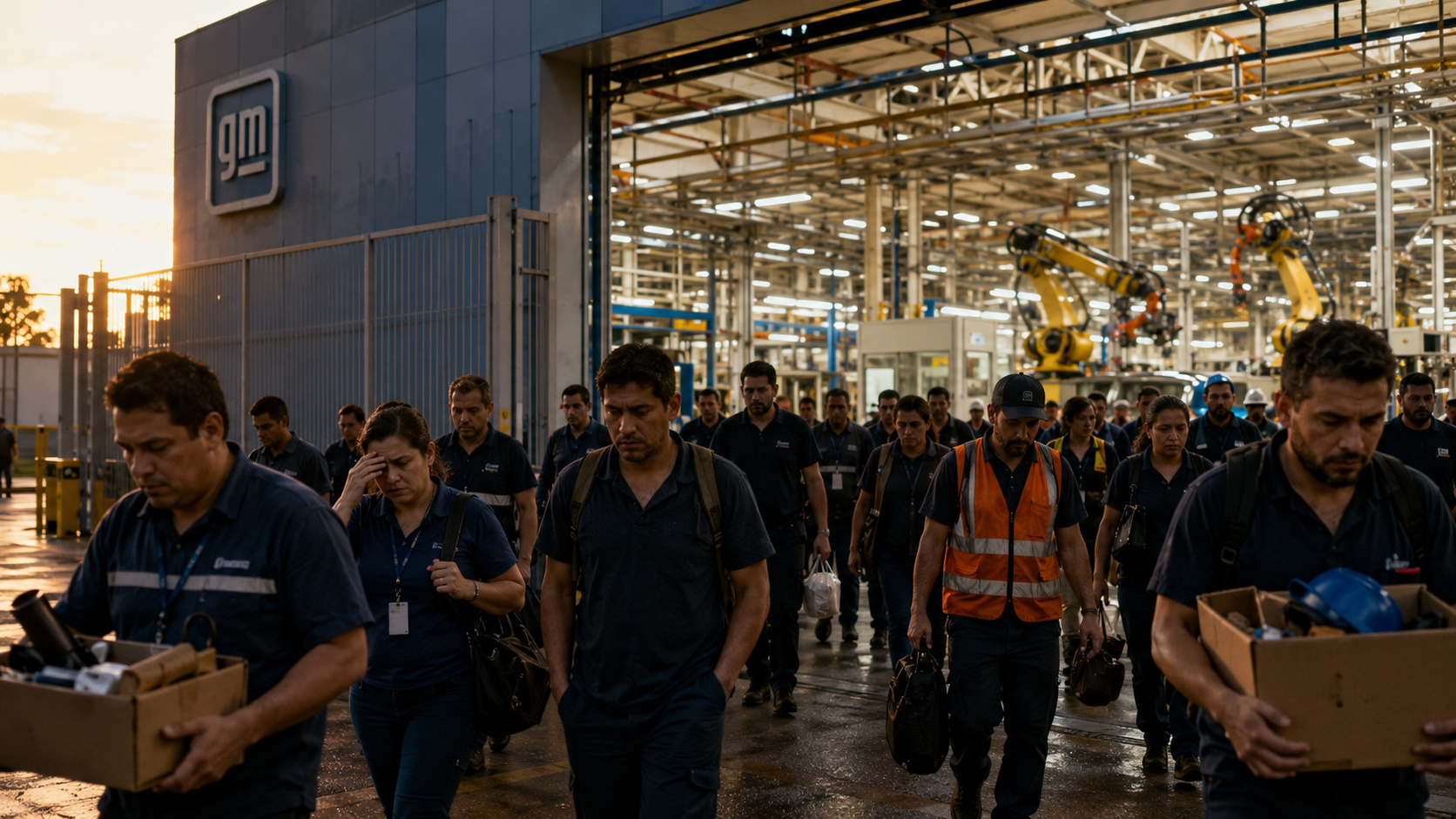
General Motors Replaces Over a Thousand Workers with 50 Cobots at Electric Vehicle Plant, UAW Union Criticizes Move Amid Industry’s Automation Push


Although Brazil’s defense strategy anticipates the incorporation of an aircraft carrier by 2040, the feasibility of this ambition is questioned by analysts. Considerations include the country’s industrial capacity, astronomical costs, and the need for a military doctrine that supports the continuous operation of a naval platform of this magnitude.
Geopolitical And Comparative Context
The example of Russia, which did not prioritize aircraft carriers in its naval strategy, serves as a reference for the debate on the necessity and effectiveness of these ships in Brazilian military doctrine. The decision to proceed with a nuclear aircraft carrier will be influenced not only by national considerations but also by the global geopolitical landscape.
Brazil’s plan to acquire a nuclear aircraft carrier by 2040 is an ambitious goal that would redefine the country’s naval profile on the world stage. The realization of this objective will depend on a series of factors, including technological developments, allocation of financial resources, and the evolution of national defense strategy. The journey to this milestone will be marked by significant challenges, but also by the potential to consolidate Brazil as a prominent naval power.
But, Why Beyond Purchases?
The Brazilian Navy also shows interest in acquiring the HMS Prince of Wales aircraft carrier from the United Kingdom, marking a significant step in its naval ambitions. With the intention of strengthening its power projection and defensive capability, Brazil considers this acquisition to replace the aging decommissioned aircraft carriers. However, the high cost of operation and maintenance, along with the need to modernize and expand the current fleet, raises questions about the feasibility of this acquisition. International competition, especially from Australia, and the technical challenges associated with HMS Prince of Wales add complexity to the final decision of the Brazilian Navy. (Read the full article).
What Is Brazil’s Naval Strength And What Is The Largest Ship Built In Brazil?
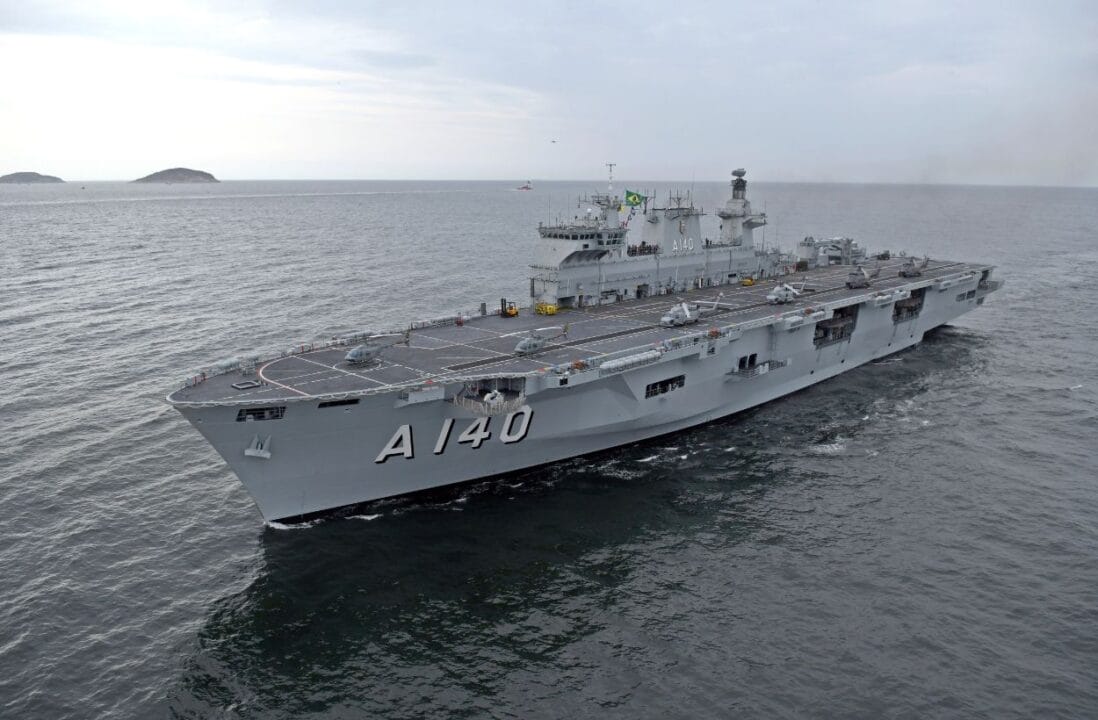
The Brazilian Navy, with a personnel strength of around 81,040 members, is the largest naval force in Latin America and one of the most significant in the Americas. Its responsibilities span the defense of the vast Brazilian coastline, territorial waters, and the Blue Amazon, as well as playing crucial roles in humanitarian, research, and security missions. Equipped with a variety of ships, submarines, and aircraft, the Brazilian Navy is a vital component of the country’s defense strategy and power projection.
The NAM Atlântico (A140), an amphibious assault helicopter carrier, is currently the largest ship operated by the Brazilian Navy. Acquired from the United Kingdom, where it previously served as HMS Ocean, the Atlântico plays a significant role in amphibious operations, command and control, and force projection of the Navy. Although not built in Brazil, its acquisition represents an important milestone in modernization and expansion of the country’s naval capabilities.
In the era of dreadnoughts, Brazil stood out with the acquisition of the dreadnoughts Minas Gerais and São Paulo in the early 20th century. These ships were considered among the most powerful of their time and placed Brazil on the map as a significant naval force in South America. Although the era of dreadnoughts has passed, they remain an important part of Brazil’s naval legacy.