Portuguese
  Spanish


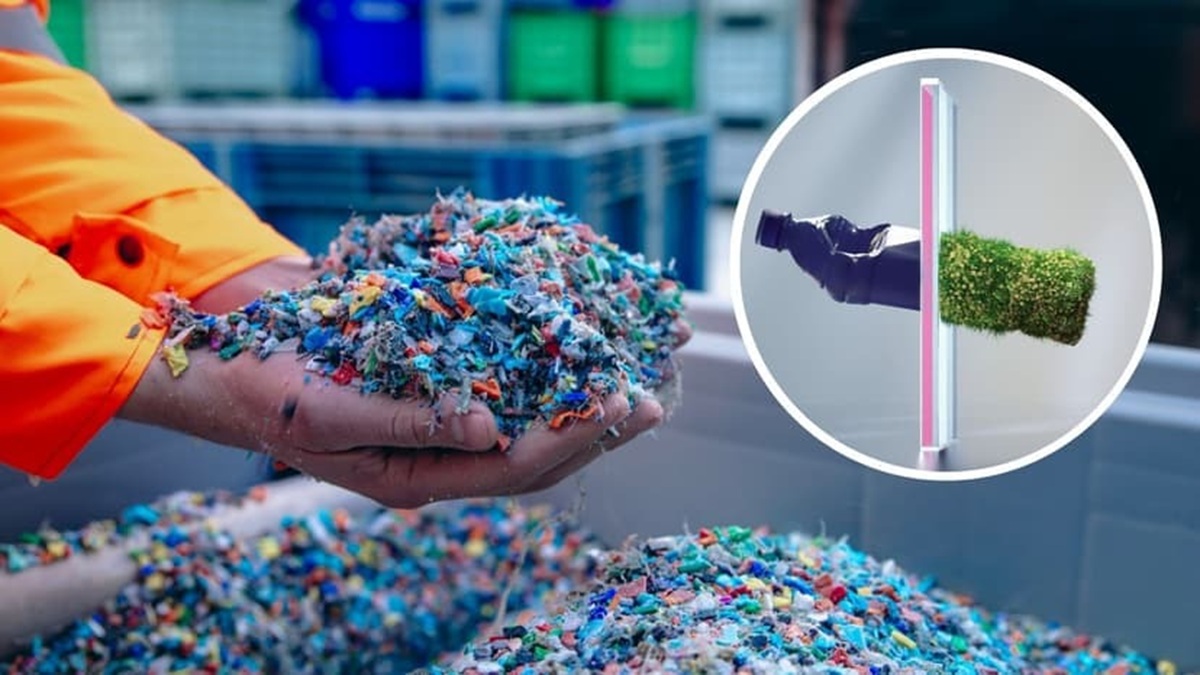


The New Technology Developed at the University of Oldenburg Promises to Revolutionize the Industry by Transforming Green Waste, Hay, and Algae into Fully Biodegradable Bio-PBS Plastics, Offering a Sustainable and Low-Cost Alternative for the Manufacturing of Automotive Components and Essential Medical Materials.
A new Junior Research Group at the University of Oldenburg in Germany is developing a low-cost technology to transform green waste, hay, and algae into fully biodegradable Bio-PBS plastics, aiming for applications in medical products, automotive, and sustainable industrial packaging.
Development of Bio-PBS Plastics and Sustainability Objectives
Researchers in Germany are working to transform green waste, hay, and algae into fully biodegradable plastics. The goal is to create a low-cost and energy-efficient technology to manufacture succinic acid-based polybutylene succinate (PBS) plastics, produced entirely from organic waste.
The project aims to offer plastics made from renewable raw materials as a viable industrial alternative to conventional ones. According to Ralph Bruder, the Rector of the University of Oldenburg, the work of the new Junior Research Group seeks this direct replacement in the market.
-
Netherlands Reports First Child Euthanasia Case Since Rule Expansion for Minors

-
Brazilian Innovator Survives Homemade Submarine Dive in Paraty Despite Hatch Leak and False Oxygen Alarm

-
China Develops Custom 140-Ton Electric Mining Truck with 770 kWh Swappable Battery, Deploys 290 Units in Xinjiang’s Largest Zinc Mine
-
Meta to Launch Arena, a New Prediction App Targeting 3.56 Billion Users, Competing with Polymarket and Kalshi




The approval of funding by the BMFTR recognizes the university’s research infrastructure and highlights the potential of EcoPBS. The goal is to create an environmentally and climatically sustainable circular economy from these materials.
Researchers revealed that PBS resembles conventional plastics, such as polypropylene and polyethylene, in terms of strength and processability. The major advantage cited is that the material is easily biodegradable compared to current synthetics.
Optimization of Biotechnological Fermentation Processes
However, scientists have not yet managed to produce a fully biobased material that is completely recyclable. Current manufacturing processes are still not suitable for large-scale use in the chemical industry.
Walther stated that, for high yield, easily cultivable microorganisms are needed. They must be sufficiently stable to ensure efficiency in low-cost and low-energy consumption processes.
In three subprojects, the group will investigate how to transform biological substrate composed of garden waste and agricultural residues into Bio-PBS. The first step for the team will be to optimize the fermentation process in a newly developed biotechnological system.
They will assess the effectiveness of converting organic material into bioplastics using different types of microorganisms. A key factor is that two processes will be tested: Acetone-Butanol-Ethanol (ABE) fermentation and succinic acid fermentation.
Chemical Processing and Refining of Materials
The second subproject will focus on downstream processing, which is the process of removing foreign substances from the converted material. The main objective is to convert the organic compound n-butanol into 1,4-butanediol.
1,4-butanediol is a bivalent alcohol and an important raw material for plastics. With the help of simulations and machine learning, researchers will seek ways to improve the material and energy balance of this specific process.
It was highlighted that a new chemical substance is needed to remove contaminants and to produce the first fully biodegradable PBS. The team has already developed a basic project for this substance and has applied for a patent.
Energy Efficiency and Final Industrial Applications
In the third subproject, the plan is to further refine the developed technology. Another central objective is to utilize the waste from bio-PBS production to generate renewable electricity and heat to operate the laboratory facilities.
In the final stage, researchers intend to manufacture the first products for industrial use. This includes packaging and medical materials, using 3D digital models and fully biobased PBS.
These innovative materials will also be applicable in automotive components and insulation. The focus remains on the industrial viability and sustainability of the complete production cycle, according to the statement released.