






 Portuguese
  Spanish


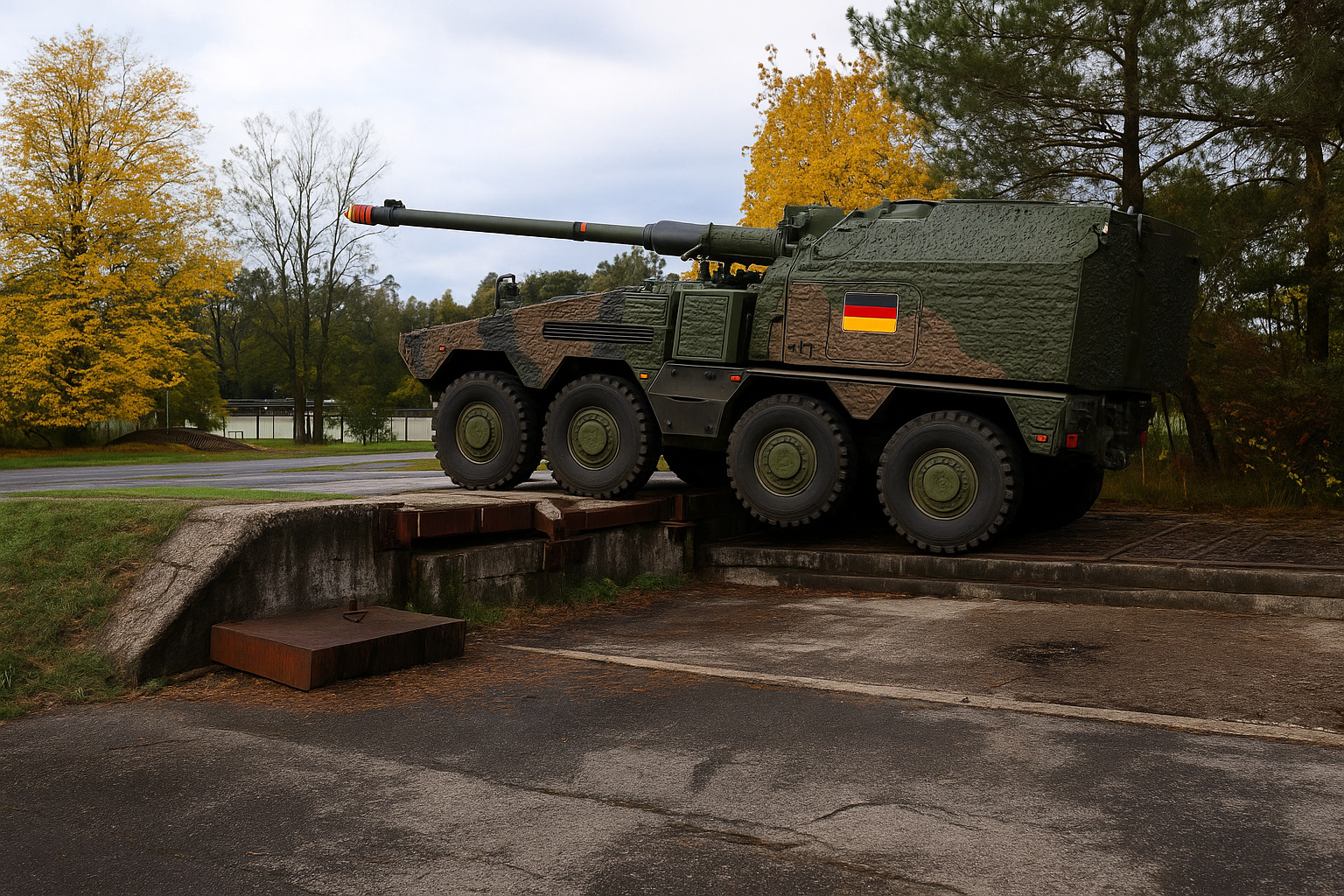

Official Report Reveals Historic Record of € 12.8 Billion in Defense Exports, Consolidating Berlin as Europe’s Main Supplier to Kiev.
Germany solidified its position as the largest defense exporter in Europe in 2024, following the release of the Defense Export Report 2024, presented on August 27, 2025 by the Federal Ministry for Economic Affairs and Climate Action (BMWK).
According to official figures, the country authorized € 12.83 billion in arms exports, reaching a historic record. Ukraine received € 8.15 billion, which accounted for 64% of the total.
Furthermore, actual deliveries reached € 13.37 billion in 2024, demonstrating the ability of the German defense industry to respond swiftly to the demands of the war against Russia.
-
Chinese Nuclear Submarine Launches Simulated Warhead Missile in Pacific, Heightening Regional Tensions Amid Naval Drills with Russia Near Qingdao; New Zealand and Papua New Guinea Warn of Persistent Chinese Military Presence

-
Ayatollah Ali Khamenei’s Funeral Draws 15 to 20 Million in Tehran, Calls for Revenge Against Trump After Joint Israel-U.S. Attack

-
U.S. Establishes Permanent Embassy in Jerusalem, Reigniting International Debate Over Israel’s Capital
-
The world has nearly 12,000 nuclear warheads, with the majority held by the United States and Russia; see the figures for China, France, and the United Kingdom.


Supply of Armored Vehicles, Air Defense, and Artillery
The shipments sent to Ukraine in 2024 covered three main combat fronts:
- Armored and Ground Mobility — The package included Leopard 2A6 tanks, Marder infantry fighting vehicles, Puma, and Boxer platforms, along with support and engineering vehicles.
- Multilayer Air Defense — Germany delivered IRIS-T systems, Patriot launchers, Skynex batteries, and Gepard units, enhancing protection against drones and missiles.
- Artillery and Reconnaissance — Also sent were PzH 2000 howitzers, 155 mm ammunition, precision projectiles, and observation drones.
Thus, the support provided mobility, air defense, and continuous firepower, essential elements for Ukrainian resistance.
Approved Licenses and Strategic Refusals
According to the official report, 86% of the licenses issued in 2024 went to NATO countries, the European Union, and allies such as South Korea and Singapore.
However, 62 export requests did not proceed, including applications from Pakistan, Thailand, and Malaysia. Thus, the government maintained a selective stance aligned with security criteria and international commitments.
Zeitenwende and Transformation of German Policy
The record of 2024 was part of the “Zeitenwende” strategy announced on February 27, 2022 by Chancellor Olaf Scholz in the Bundestag. This shift repositioned Germany in the global defense landscape.
Furthermore, companies like Rheinmetall and Krauss-Maffei Wegmann expanded their production lines and hired thousands of employees, strengthening the national arms industry.
Internal Debate on Limits and Responsibilities
Despite the progress, the increase in exports has reignited the debate within the country. Critics warned that Germany may compromise its tradition of diplomatic restraint.
On the other hand, supporters argued that support for Ukraine has become essential in light of the Russian invasion. Thus, German society has been divided between preserving old restrictions or meeting European security demands.
Timeline of Events
- February 27, 2022 — Olaf Scholz announces the “Zeitenwende” strategy in the Bundestag.
- December 18, 2024 — BMWK releases preliminary export figures, with Ukraine as the main destination.
- January 22, 2025 — The government confirms the consolidation of data and prioritization of Kiev.
- August 27, 2025 — Official presentation of the Defense Export Report 2024, confirming a record of € 12.83 billion.
European and Global Impact
With the figures from 2024, Germany has taken a central position not only as the largest economy in Europe but also as one of NATO’s main arms suppliers.
Moreover, the increase in exports reinforced German influence in European security decisions and reshaped its role in the global defense landscape.
Meanwhile, Ukraine, the primary beneficiary, continued to receive large-scale military support to sustain its resistance against the Russian offensive.
What do you believe should prevail for Germany: the tradition of historical caution or the definitive consolidation as a global military power?







