Portuguese
  Spanish


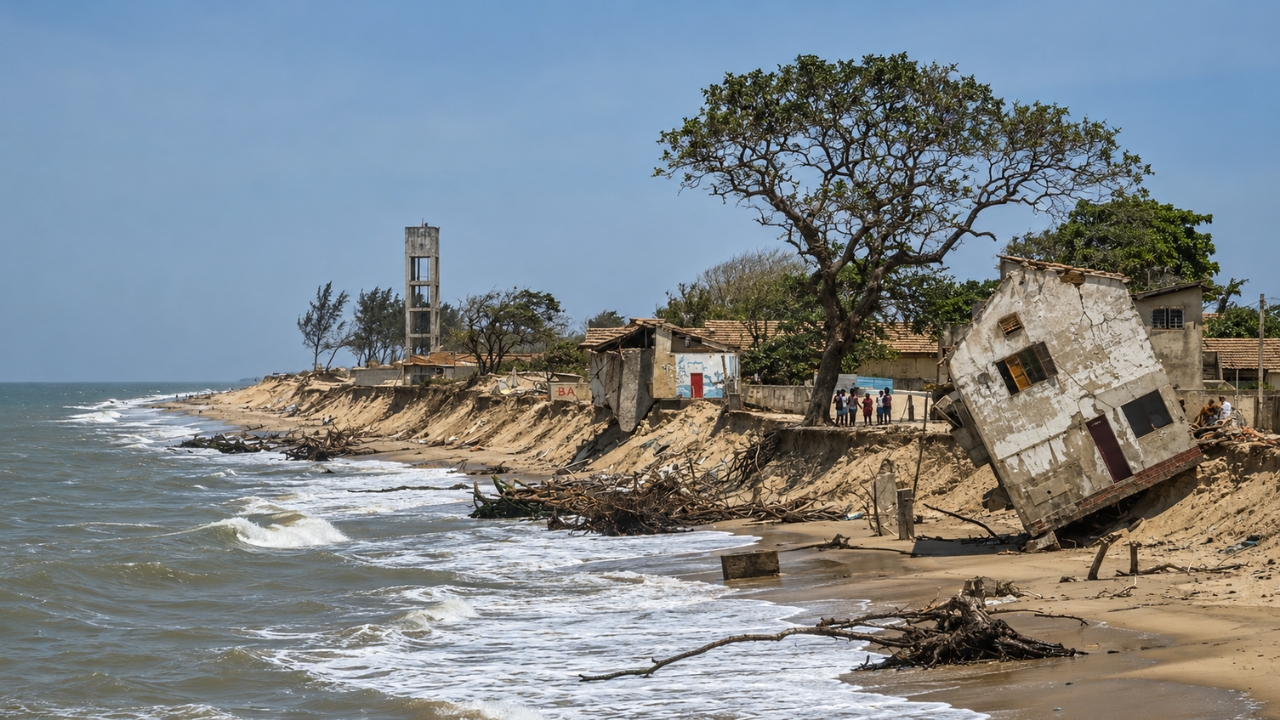
One week after the tremors, La Guaira concentrates destruction, lack of food, pressured hospitals, damaged schools, and million-dollar requests for international aid to assist thousands of homeless
The earthquakes in Venezuela have already left 1,943 dead, 10,500 injured, and 6,461 people rescued from the rubble, according to the Venezuelan government. One week after the catastrophe, UN agencies warn of food shortages, collapse of basic services, disease risks, and estimated losses of $6.7 billion.
Earthquakes in Venezuela worsen humanitarian crisis in La Guaira
La Guaira, north of Caracas, appears as the region most affected by the tremors. The UN High Commissioner for Refugees warned of “widespread food shortages” and stated that basic services “have collapsed” in the area.
The agency also pointed to an increase in “community tensions” due to limited access to humanitarian aid. Thousands of people were left homeless after the destruction of homes.
-
Brazil Deploys Navy Field Hospital with ICU, Orthopedics, Pediatrics to Earthquake-Stricken Area in Venezuela, Offering 30 Beds and 150 Daily Consultations

-
European Union Announces €260 Million Investment to Extend EllaLink Submarine Cable to Northern Brazil, Reducing Digital Dependence on U.S. Routes

-
U.S. Women’s History Museum Stalled in Congress Amid Gender Identity and Diversity Debate
-
European Parliament Approves Digital Euro, Aiming to Challenge Visa and Mastercard’s Dominance and Transform Payments Across Europe by 2029




In Catia La Mar, a coastal locality of La Guaira, residents reported nights on the streets. “We are sleeping on the ground, I am sleeping on the ground because I have no mattresses,” said Jenny Tortoza, interviewed by AFP.
Billion-dollar loss and thousands of buildings affected
The extent of the destruction is still being assessed in the field, but estimates based on satellite images indicate widespread damage.
Researchers from American universities in Oregon and New York estimated that 58,870 buildings were affected by the tremors. Meanwhile, the UNDP Rapid Digital Analysis calculated material damages close to $7 billion.
The account includes residences and economic assets affected, such as vehicles, buildings, and businesses. The value mentioned in the material reaches $6.7 billion, equivalent to R$ 34.75 billion at the current exchange rate.
Officially, the Venezuelan government acknowledges 855 buildings affected, in addition to 1,943 dead, 10,500 injured, and 6,461 rescued.
Children, schools, and food enter the center of the emergency
Unicef estimated that 1.8 million people need immediate humanitarian assistance. Of this total, 680,000 are children.
According to Manuel Rodríguez Pumarol, the organization’s representative in the country, thousands of children are without reliable access to drinking water. UNICEF also expressed concern about the destruction of schools.
With preliminary information, the organization counted 432 schools damaged in the Capital District alone. The impact is expected to hinder the continuation of children’s education.
UNICEF mobilized approximately US$ 3.5 million in its own emergency funds for the initial dispatch of teams and supplies.
The entity estimates that US$ 52 million will be needed to respond to the emergency.
The World Food Programme also launched an initial appeal of US$ 50 million to feed about 500,000 people for three months.
Public health concerns after infrastructure collapse following earthquakes
The WHO warned of a “high risk of disease outbreaks” in Venezuela. The concern is linked to the loss of basic infrastructure and the massive displacement of people.
Among the risks cited are vaccine-preventable diseases, such as measles, diphtheria, and whooping cough, as well as yellow fever, dengue, chikungunya, zika, and malaria.
WHO spokesperson Christian Lindmeier stated that Delcy Rodríguez informed the organization that 38 hospitals were affected by the earthquakes.
“Health services are under extreme pressure, with centers operating above their capacity,” declared Lindmeier, citing a large influx of trauma patients.
The Brazilian Air Force reported that a KC-30 aircraft departed for Venezuela with equipment to expand a field hospital set up by a Brazilian team in La Guaira. Brazilian Navy personnel are also embarking to work at the unit.
The Spanish Red Cross announced the dispatch of an “emergency clinic,” with health teams, psychosocial support, and medical equipment.
This article was prepared based on information from AFP, UNHCR, UNICEF, UNDP, WHO, World Food Programme, Brazilian Air Force, and Spanish Red Cross, with data, numbers, and statements preserved as per the consulted material.