Portuguese
  Spanish




Germany Is Intensifying Its Efforts to Position Itself as a Dominant Military Power in Europe. The Country Announced the Purchase of 120 High-Tech Missiles in an Investment of €641.6 Million as Part of a Strategy to Compete with France’s Military Influence
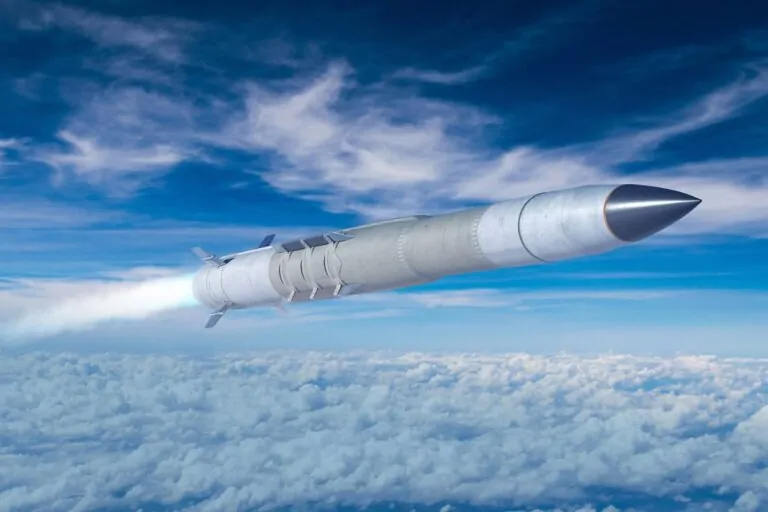
The German Armed Forces (Bundeswehr) have confirmed the purchase of 120 guided missiles of the Patriot PAC-3 MSE type, in a move aimed at strengthening its air defense, solidifying its position as a European military power.
The acquisition will be made through the Foreign Military Sales (FMS) program, with a budget of €763.5 million approved by the German Parliament’s Budget Committee on December 18, 2024.
The Foreign Military Sales (FMS) program is a U.S. government initiative that allows allied and partner countries to purchase equipment, services, and military training directly from the U.S. government.
-
European Parliament Approves Digital Euro, Aiming to Challenge Visa and Mastercard’s Dominance and Transform Payments Across Europe by 2029

-
Israel finds Hezbollah militarized tunnel over 200 meters long under village, with 4 missile launch shafts, 12 chambers, anti-tank missiles, drones, and weapons depots at a depth of 25 meters.

-
Ukraine launches largest drone attack on Moscow since 2022, Russia claims to have intercepted nearly 200 aircraft near the capital, Kapotnya refinery targeted again, and offensive reignites alert about war reaching the Russian energy heart just a few kilometers from the Kremlin.

-
Truck drivers, freight, and fines from 2022 take center stage in politics: Chamber approves MP with amnesty, mandatory tracking by CIOT, million-dollar penalties, and new minimum wage for those who spend more than 24 hours on the road.



Advance Purchase and Scheduled Delivery
To ensure quicker delivery, Germany made an upfront payment, covering the total value of the contract.
The direct cost of the missiles will be €641.6 million. This amount will come from the Bundeswehr’s special fund. The import tax, amounting to €121.9 million, will be paid at the time of delivery and will come from the regular defense budget.
Of the total, 75 missiles are expected to arrive in Germany in 2028. The other 45 are scheduled for 2029.
Additionally, two missiles will remain in the United States for lot verification. They may be sent to Germany after five years if not used in testing.
The primary supplier is Lockheed Martin, the American defense giant.
The agreement follows the same conditions as contracts with the U.S. Armed Forces, in accordance with FMS program rules.

Strategic Reinforcement for Germany
The decision marks an important step in strengthening German air defense. The PAC-3 MSE is a more advanced version of the Patriot missiles.
It is capable of intercepting targets at long ranges and high altitudes, with greater precision.
The new armament also reinforces Germany’s commitment to NATO’s collective security.
In light of recent tensions in Europe, the country seeks to expand its response capability to aerial threats and ballistic missiles.
The integration of these missiles into the national arsenal is seen as a direct response to new strategic challenges on the continent.
Transformations in the Bundeswehr in 2025
The purchase is part of a larger plan to modernize the German Armed Forces. In 2025, the Bundeswehr will undergo a structural and technological transformation.
The government has created a special fund of €100 billion to modernize equipment and expand capabilities. The goal is to increase the number of soldiers from the current 180,000 to 203,000.
Another important step is the new military service model, which aims to recruit 5,000 young people per year. A fourth division focused on internal security is also being established.
Additionally, the cyber defense and digital technology sector is gaining status as a separate military branch.
Despite the advancements, there are obstacles. Germany still faces a shortage of ammunition and delays in the delivery of new systems.
Differences Compared to France
In comparison to France, Germany is catching up in terms of conventional forces. Both countries have military budgets of around €50 billion.
However, Germany has an additional fund of €100 billion for modernization.
While France maintains a global strategy with a presence in Africa and the Indo-Pacific, Germany focuses on European defense. France also has nuclear capability and more experience in external operations.
In the industrial sector, France maintains strong domestic production. In contrast, Germany has been increasing its reliance on American suppliers, as shown by the new contract with Lockheed Martin.
Even so, Germany is rapidly advancing in reshaping its forces. The reinforcement with the PAC-3 MSE missiles is yet another clear sign of this change.