






 Portuguese
  Spanish


Researchers from USP and UFSCar Create Lightweight Ceramic Clay with Sargassum Algae, Offering an Innovative and Eco-Friendly Solution for Construction. Learn How Sargassum Became an Ally of Sustainability.
What was once just a nuisance on the beaches of the Caribbean, the United States, and Northern Brazil can now become an ally of sustainability. Researchers from the University of São Paulo (USP) and the Federal University of São Carlos (UFSCar) have developed a lightweight ceramic clay using algae of the genus Sargassum, known as sargassum.
The study, recently published, shows that the material can be used in construction, offering environmental and structural benefits.
The research was conducted with support from FAPESP and involved tests at different temperatures and types of ovens, including microwave ovens.
-
China Develops Custom 140-Ton Electric Mining Truck with 770 kWh Swappable Battery, Deploys 290 Units in Xinjiang’s Largest Zinc Mine

-
Meta to Launch Arena, a New Prediction App Targeting 3.56 Billion Users, Competing with Polymarket and Kalshi

-
Scientist Challenges Famous Human Evolution Theory, Argues Homo Sapiens Evolved Gradually Over Thousands of Years
-
15-Year-Old American Builds Ocean Generator with PVC Pipe and 3D-Printed Propeller for $12, Wins National Prize, Presents at White House, and Makes Forbes 30 Under 30 List




How Sargassum Algae Became Raw Material
Sargassum, a brown algae common in the central region of the Atlantic Ocean, has been accumulating in large volumes on beaches, causing serious impacts on health, tourism, fishing, and biodiversity.
During its decomposition, it emits toxic gases and is usually discarded in landfills.
In light of this scenario, Professor João Adriano Rossignolo from the Faculty of Animal Science and Food Engineering at USP decided to investigate ways to repurpose this biomass.
“Normally, sargassum is collected and discarded in landfills with no practical use. Therefore, we decided to research a way to utilize this large amount of biomass on the beaches,” he explained.
Applications in Construction
The team incorporated sargassum into samples of ceramic clay in proportions of 20%, 40%, and 0% (control), subjecting them to sintering processes at temperatures of 800 °C, 900 °C, and 1,000 °C.
The tests were conducted in both conventional ovens and microwave ovens.
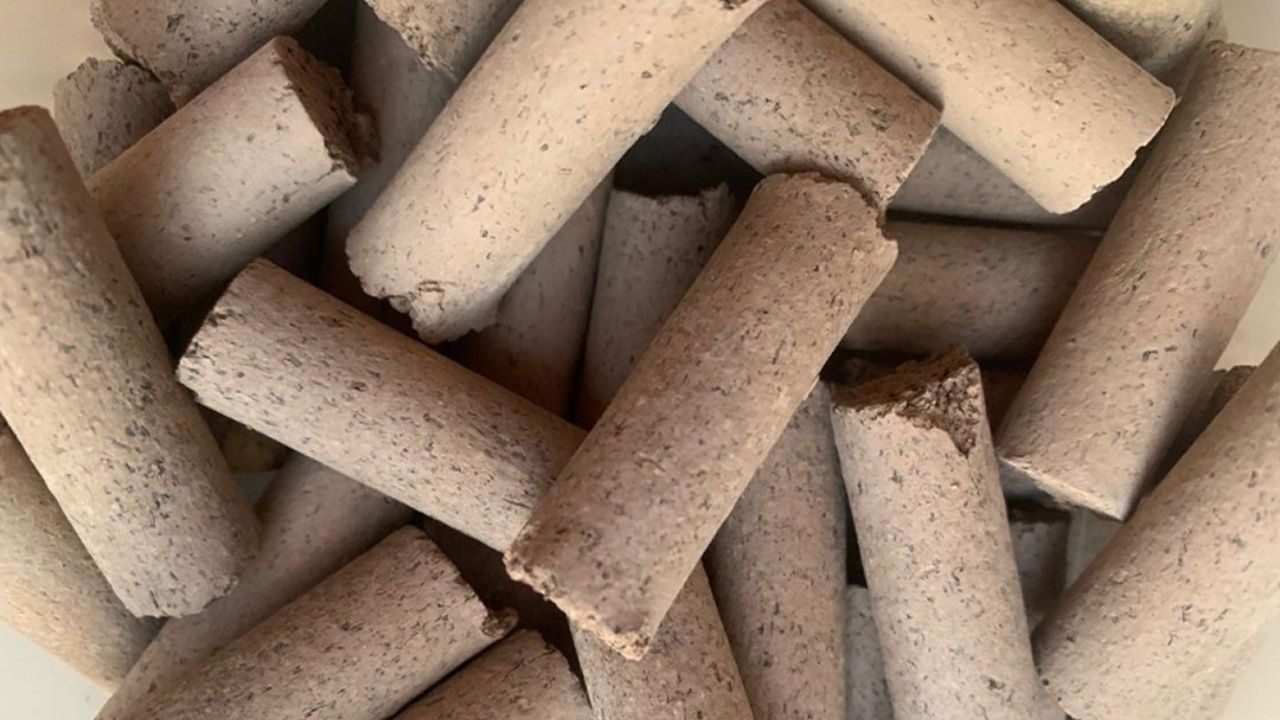
These ceramic clays are used in construction for slabs, lightweight concretes, and gardening due to their ability to reduce weight and improve thermal comfort.
The results showed that the addition of sargassum reduced the apparent density of the aggregates, especially at the 40% concentration.
The materials sintered in the microwave oven were the only ones that met resistance requirements at all temperatures.
Furthermore, the study compared the life cycle of clays with and without sargassum, revealing that versions with algae demonstrated better environmental performance, with lower consumption of natural resources and greater energy efficiency.
New Possibilities with Sargassum
In addition to ceramic clay, researchers also tested the use of sargassum in particle boards for furniture and fiber cement roofing tiles.
The ashes of the algae were used as substitutes for limestone, with surprising results.
“We managed to use 30% sargassum in the panels and replace 100% of the limestone with its ashes, with results that fully comply with current standards for these products and improve the durability and mechanical properties of the materials,” Rossignolo stated.
The use of Sargassum algae in construction represents a viable alternative to mitigate the environmental impacts caused by its accumulation on beaches.
By transforming a waste into a resource, Brazilian researchers show that innovation and sustainability can go hand in hand.
This discovery paves the way for new research and applications, reinforcing the role of science in the search for solutions that benefit both the environment and society.





