






 Portuguese
  Spanish
  2 min of reading
  1 comment


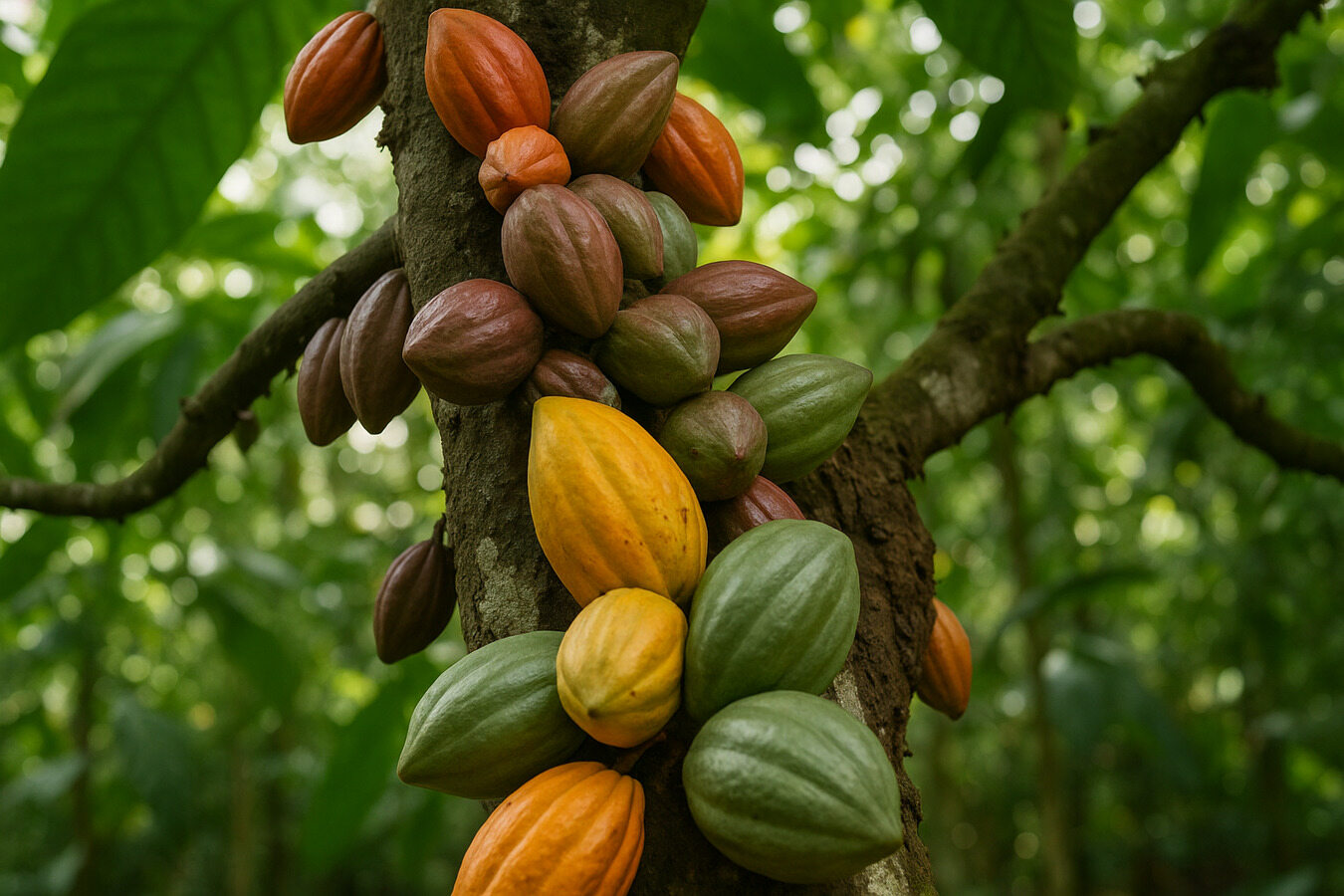


Behind Chocolate Is the Cacao Tree, a Tropical Tree That Enchanted Maya and Aztecs and Still Sustains the Economy of Whole Countries
Few people know the exact origin of chocolate. Behind this global passion is the cacao tree, a tree that produces the fruit that gives rise to the sweet. Its scientific name is Theobroma cacao, a Greek expression meaning “food of the gods.”
This plant is native to the tropical forests of South and Central America. Ancient peoples like the Maya and the Aztecs already used cacao in religious ceremonies and even as a form of payment.
In other words, besides providing food, the cacao tree played an important role in the culture and economy of these peoples.
-
Survivor of 1966 SS Daniel J. Morrell Shipwreck in Lake Huron Recounts 38-Hour Ordeal in Extreme Cold

-
The Greatest Hoax in World Cup History? The Film That Denied Brazil’s 1958 Victory and Exposed How Fake Evidence Can Seem Convincing on TV
-
Fake South Korean Online Stores Offer Shopping Thrill Without Spending Money or Receiving Products
-
The War of Jenkins’ Ear: How a Severed Ear Sparked One of the 18th Century’s Most Unusual Conflicts


Today, cacao cultivation remains essential. Many tropical countries depend on its planting as an economic activity.
The fruit, called cacao pod, goes through several stages before it transforms into the chocolate that reaches store shelves.
From Fruit to Chocolate
The process begins with harvesting. The pods are opened, and their seeds are removed. Next, these seeds go through fermentation, drying, roasting, and grinding. This is how chocolate is created.
The cacao tree grows in warm and humid areas. Therefore, it thrives in regions such as South America, West Africa, and parts of Asia.
The plant needs partial shade and begins to bear fruit at around three to four years of age.
Characteristics of the Tree
Growing between 4 and 8 meters tall, the cacao tree has large, glossy leaves. Its flowers are small, usually white or pink, and grow directly on the trunk or branches—a phenomenon called cauliflory.
Each fruit measures between 15 and 30 centimeters. The color varies: it can be green, yellow, red, or purple, depending on the type.
Inside the pod are between 20 and 60 seeds surrounded by a sweet pulp. It is these seeds that, after all the processing, become the chocolate consumed worldwide.
With information from ND Mais.





Hi i think that i saw you visited my web site thus i came to Return the favore Im attempting to find things to enhance my siteI suppose its ok to use a few of your ideas