






 Portuguese
  Spanish


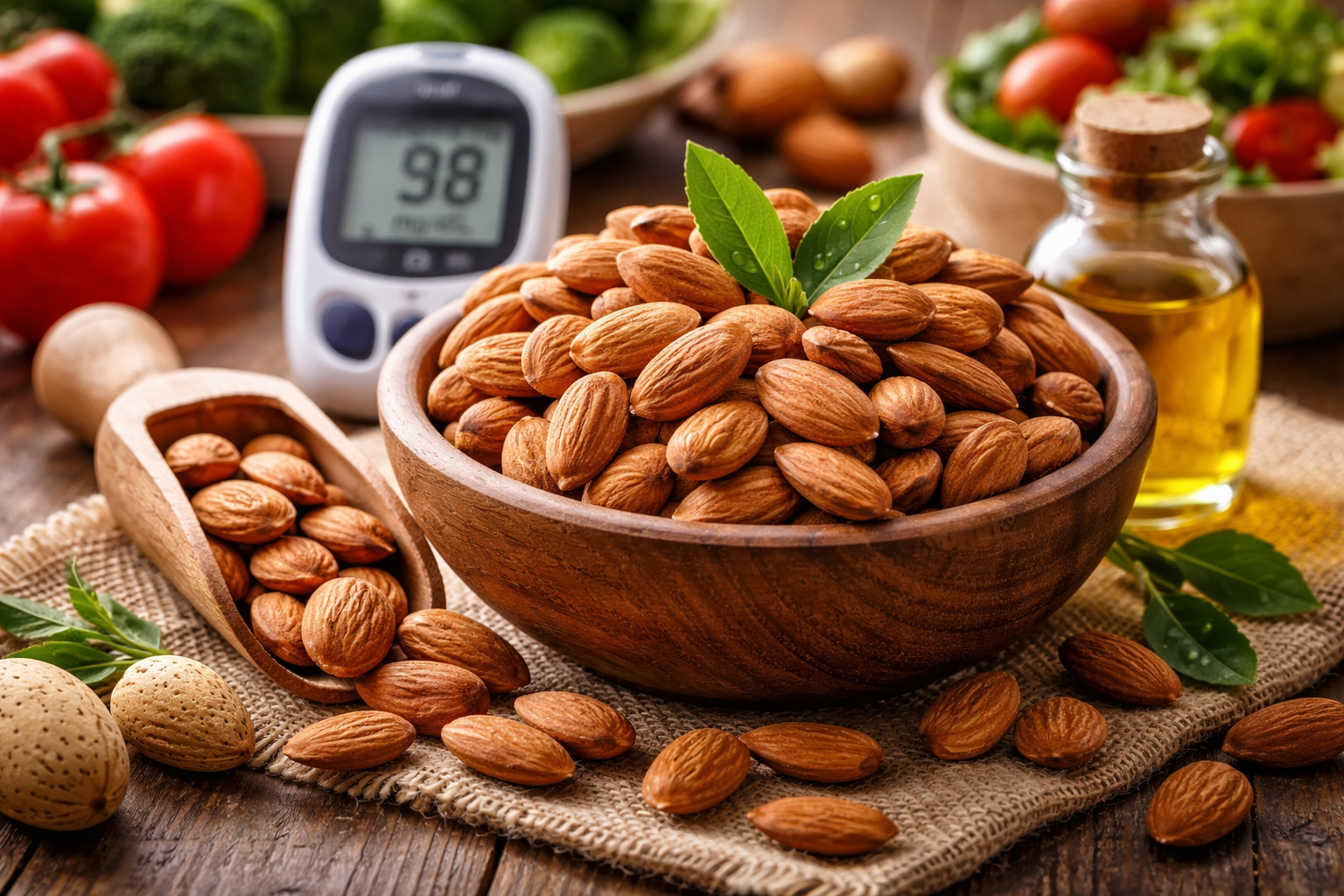


Recent Research Redefines The Role Of Almonds In Nutrition, Alters Understanding Of Pre-Diabetes And Expands Expectations For Evidence-Based Nutritional Interventions
High-profile scientific studies have drawn attention to the role of almonds in blood glucose control, especially in people with pre-diabetes. Research conducted over the past decade, with results consolidated between 2019 and 2024, indicates that controlled consumption of the food, combined with healthy habits, may significantly improve metabolic response to insulin. This advancement repositioned almonds as a relevant part of nutritional strategies aimed at preventing type 2 diabetes.
Although the name suggests something harmless, pre-diabetes represents an important clinical alert. Data published by the Centers for Disease Control and Prevention (CDC) through 2023 indicate that the condition substantially elevates the risk of progression to type 2 diabetes. Additionally, as a consequence, it also increases the likelihood of cardiovascular diseases and stroke. Thus, the search for effective interventions has gained priority among researchers and healthcare professionals.
Metabolic Changes Explain The Advancement Of The Condition
Pre-diabetes occurs when the body begins to respond inadequately to insulin, the hormone responsible for allowing glucose to enter cells. As a result, sugar remains circulating in the blood, progressively raising blood sugar levels. This process, while silent, compromises metabolism and creates an environment conducive to the development of chronic diseases.
-
China Develops Custom 140-Ton Electric Mining Truck with 770 kWh Swappable Battery, Deploys 290 Units in Xinjiang’s Largest Zinc Mine

-
Meta to Launch Arena, a New Prediction App Targeting 3.56 Billion Users, Competing with Polymarket and Kalshi

-
Scientist Challenges Famous Human Evolution Theory, Argues Homo Sapiens Evolved Gradually Over Thousands of Years
-
15-Year-Old American Builds Ocean Generator with PVC Pipe and 3D-Printed Propeller for $12, Wins National Prize, Presents at White House, and Makes Forbes 30 Under 30 List




In this scenario, researchers began investigating foods capable of modulating this metabolic response. Since approximately 2010, almonds have been studied for their nutritional composition, rich in fiber, unsaturated fats, and bioactive compounds associated with glycemic control.
Clinical Results Catch The Attention Of The Scientific Community
One of the most relevant studies, conducted between 2021 and 2022, revealed that the consumption of small portions of almonds before meals for three months led 25% of participants with pre-diabetes to return to normal blood glucose levels. The scientists involved classified the finding as “the holy grail of medicine”, as it represents a reversal of the condition without the use of medications.
Furthermore, another study, conducted with Asian adults and published in 2023, showed that the intake of 20 grams of almonds before breakfast, lunch, and dinner reduced blood sugar levels. At the same time, reductions in body weight, body mass index (BMI), total cholesterol, and LDL, known as bad cholesterol, were observed. These results increased scientific interest in the metabolic impact of the food.
Positive Effects Also Appear Outside The At-Risk Group
The observed benefits were not limited to individuals with pre-diabetes. Studies published between 2019 and 2024 indicated that the consumption of almonds after carbohydrate-rich meals reduces spikes in glucose and insulin even in individuals without prior diagnosis. This effect suggests a relevant preventive role in glycemic control.
In comparative experiments, meals accompanied by almonds showed significantly lower glycemic impact compared to similar meals without the food. Thus, the data reinforce the potential of almonds as modulators of the postprandial metabolic response.
Nutritional Strategies Gain New Prominence
Despite the promising results, the researchers themselves emphasize that almonds do not constitute a standalone cure. The positive effect occurs within the context of balanced eating and healthy habits. Still, the accumulated evidence up to 2024 reinforces the importance of science-based nutritional strategies, aligned with the guidelines of institutions such as the CDC and international research groups in metabolism.
In light of this scenario, do you believe that evidence-based dietary interventions should gain more space in global strategies for the prevention of type 2 diabetes?






