






 Portuguese
  Spanish
  4 min of reading
  0 comments


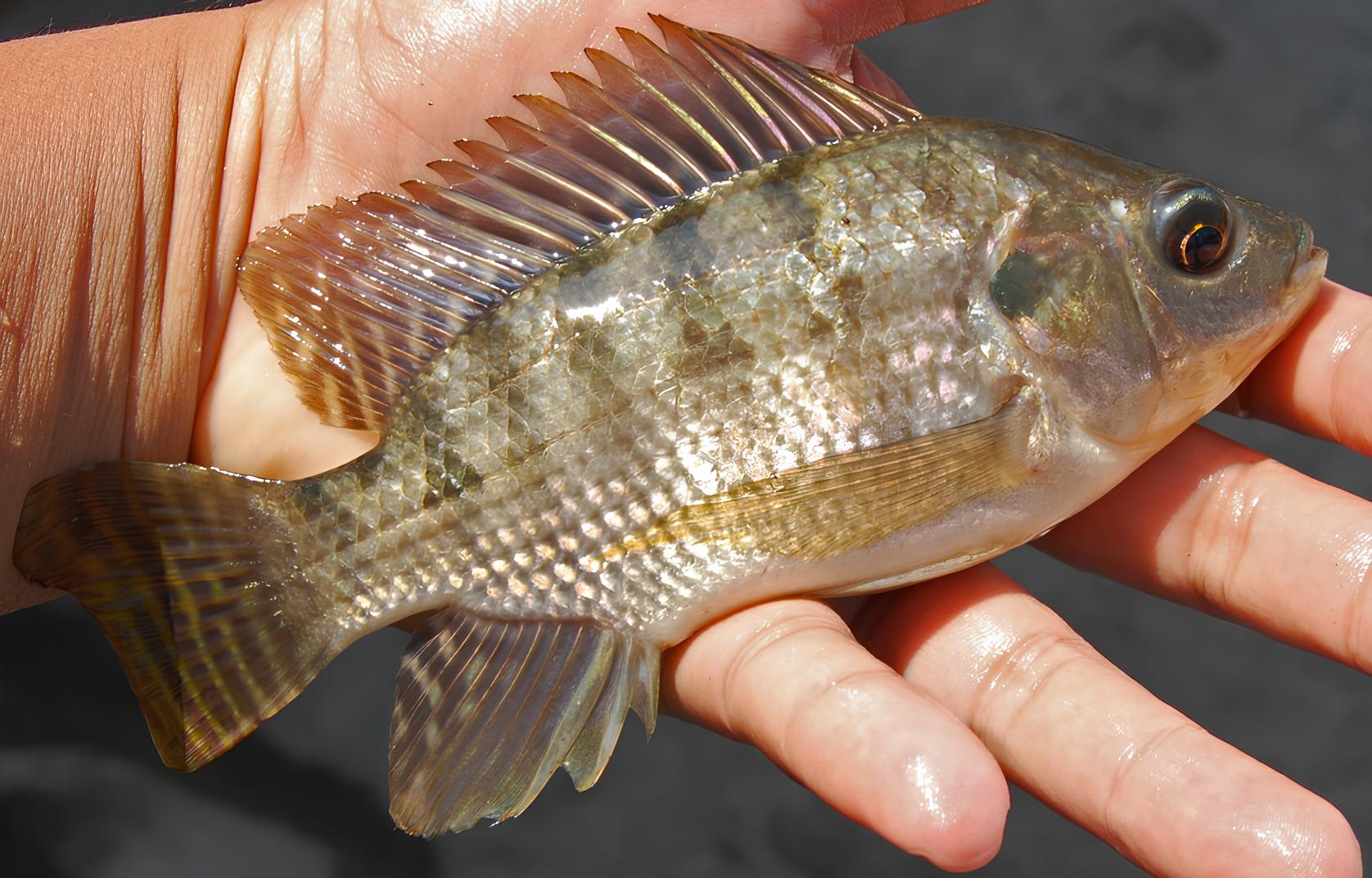
Nile Tilapia alters sediments, turbidity, plankton, and aquatic vegetation, expanding eutrophication in invaded lakes and reservoirs.
The Nile tilapia (Oreochromis niloticus) is often seen as a popular consumption fish and a driver of modern aquaculture, but outside its native area, it can also act as an environment-remodeling species. In invaded systems, the effect is not limited to the presence of one more fish: it involves resuspension of sediments, increased turbidity, alteration of water quality, and impact on invertebrates and aquatic vegetation.
This contradiction helps explain why the species has become a recurring theme in ecological studies and management guides. The FAO classifies the Nile tilapia as the predominant species in global tilapia farming, records its introduction in Brazil in 1971, and highlights that its production has been commercialized in over 100 countries, which greatly expanded its diffusion and the risk of escapes into natural environments.
Tilapia bioturbation returns sediment and nutrients to the water
The first step of this transformation is physical. The FAO fact sheet describes that the male establishes territory and digs a crater-shaped nest during reproduction, a behavior that helps explain why the species easily stirs the bottom in shallow areas and reservoir margins.
-
In the USA, thousands of people are being paid to wash dishes and clean the house with body cameras, every movement turning into data to train robots to imitate humans, in a new “digital gig” that could redefine the future of domestic work.

-
At 22 years old, a young person from Recife creates an artificial intelligence startup with a team barely over 25, serves giants like Bayer and Ipiranga, earns millions without taking a cent from investors, and transforms a young company into a national AI phenomenon.
-
The invisible danger inside the house: plugging too many devices into the same outlet and spreading extensions throughout the rooms can overload the electrical network, silently heat wires, and turn a common habit into one of the leading causes of house fires.

-
Goodbye traditional laundry: Roborock launches washer and dryer with super hydrolysis, microbubbles, 99.99% sterilization, low-temperature drying, automatic detergent, app control, and cycles to remove stains, odors, mites, and bacteria from clothes.






In an experimental study published in Oecologia Australis, Brazilian researchers observed that the Nile tilapia reduces water transparency and that this effect is linked to bioturbation or sediment resuspension.
In practice, the fish acts as a mechanical agent of bottom disturbance, recirculating material that was previously deposited in the sediment.
Murky water changes plankton and pushes the system to a new balance
The same study showed that the presence of tilapia tends to reduce larger zooplankton, favor smaller phytoplankton algae, and decrease water transparency. This means that the impact is not confined to the lake bottom: it rises to the water column and reorganizes the base of the food chain.
When the water becomes murkier and the planktonic community changes, the system begins to operate differently. Instead of a more balanced web, the environment becomes more prone to states where suspended particles, algae, and tolerant organisms gain space, while more sensitive species lose ecological advantage.
Aquatic vegetation and benthic community enter the path of impact
The ICMBio guide on invasive exotic species states that fish like the Nile tilapia suspend sediments, increase water turbidity, and alter its quality, generating strong effects on the benthic community, invertebrates, and aquatic vegetation. This shows that the alteration is not just chemical or visual, but structural.
When this type of disturbance persists for a long time, the habitat loses stability. Areas that served as shelter, feeding, and reproduction for various species begin to operate in a scenario of less ecological predictability, with more sediment in suspension and less biological complexity.
Tilapia in Brazil exposes the boundary between aquaculture production and biological invasion
The expansion of tilapia in Brazil did not happen by chance. The FAO records that the species arrived in the country in 1971, coming from the Ivory Coast, and presents it as the main tilapia cultivated in the world, driven by its hardiness, adaptation to various farming systems, and strong market acceptance.
However, the same species valued by fish farming appears, in the ICMBio guide, among the invasive exotic continental fish, originating from African river basins. The document also shows that the problem is not only in the presence of the animal but in its ability to disperse and the ecological impacts generated when these populations establish themselves outside of cultivation.
Eutrophication arises when fish, sediment, and excess nutrients begin to act together
The ICMBio states that species like the Nile tilapia can accelerate eutrophication processes in natural and artificial environments and, in high densities, cause deterioration of water quality. The guide also warns of the possibility of eutrophied environments favoring excessive growth of algae and cyanobacteria, with sanitary and operational impacts on supply systems and reservoirs.
This reading directly relates to the Brazilian experimental study. In it, the authors state that environmental problems may arise after the introduction of
O. niloticus, especially in environments with low water renewal, and observe that the fish’s activity and the inputs associated with cultivation can accelerate the degradation of water quality.
Reclaiming an invaded lake is much more difficult than allowing the invasion
Once tilapia establishes itself in high density, reversing the situation does not depend on a single measure. The ICMBio guide itself is built on the logic of avoiding introduction and dispersion, as well as eradicating, containing, or reducing populations of invasive exotic species when it is still feasible.
In practice, this means that management needs to tackle two fronts simultaneously: the invasive population and the environment that has come to favor degradation.
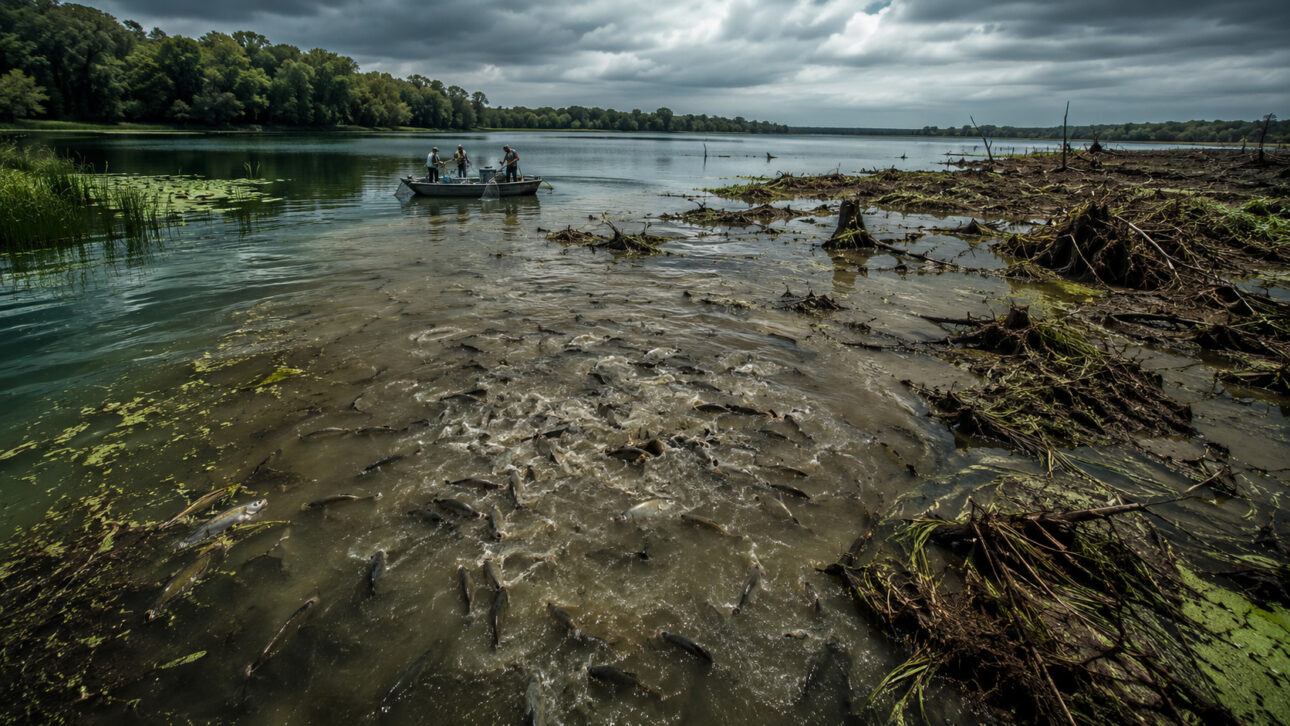
If the nutrient input remains high, the system remains vulnerable to eutrophication even with some biological or fishing control efforts.
The economic strength of the species is real. The FAO highlights that tilapia is among the most important groups of farmed fish in the world and that its ability to grow quickly, accept different farming systems, and withstand adverse conditions has supported its large-scale commercial expansion.
But the ecological side is also real and increasingly documented. Between the fish that generates income and the fish that increases turbidity, resuspends sediments, pushes lakes towards eutrophication, and pressures native aquatic communities, there is a contradiction that can no longer be treated as a technical detail.






Be the first to react!