Portuguese
  Spanish


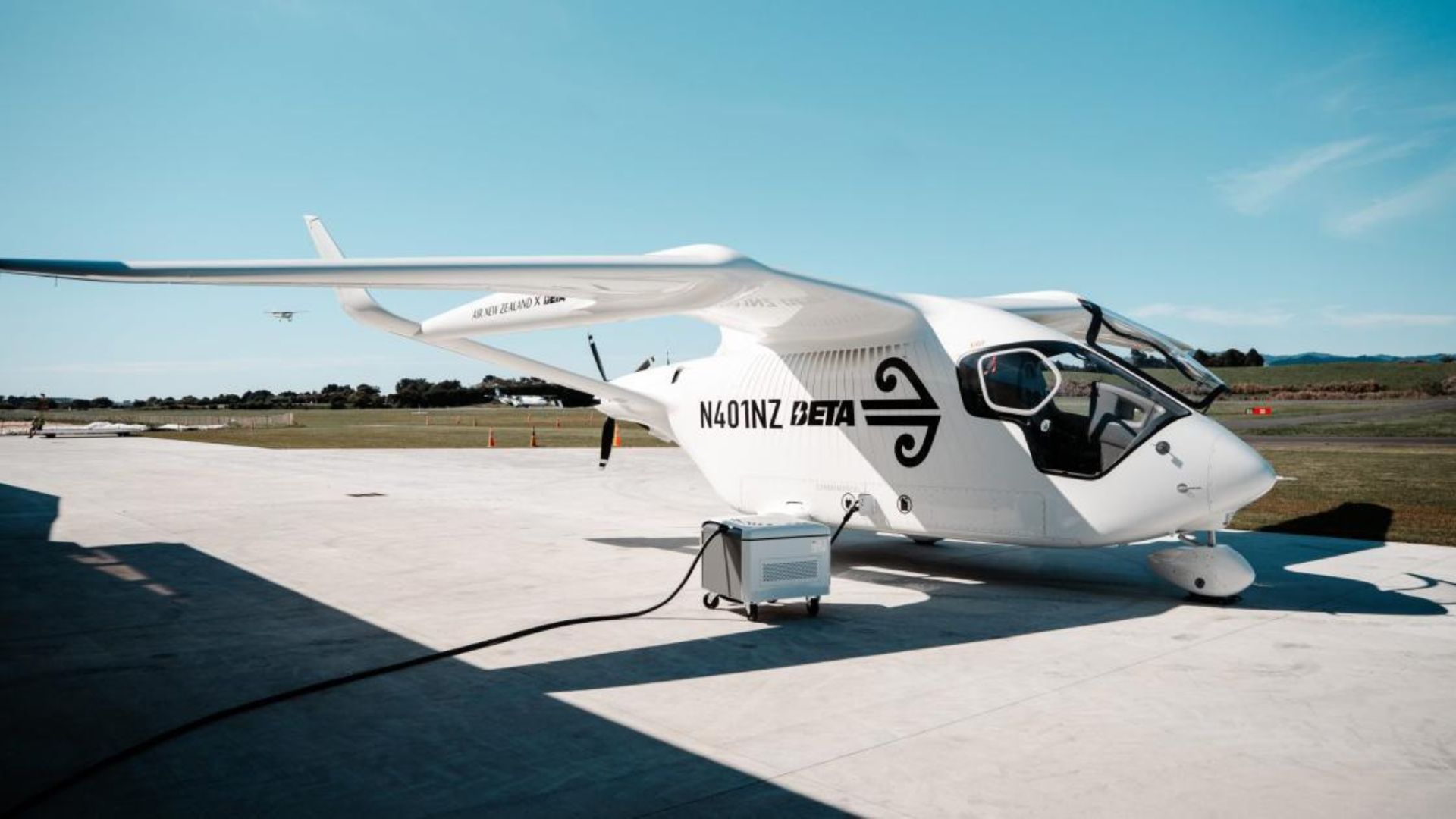

Technology in real operation repositions regional flights with silent electric aircraft, ground recharging, and integration with existing airports, while tests in different cities evaluate performance, logistics, and regulatory adaptation for short routes without direct emissions during flight.
The ALIA CX300, an electric plane developed by the American company BETA Technologies, has been integrated into operational tests conducted by Air New Zealand, which is evaluating how battery-powered aircraft can operate on regional routes with less noise and no direct emissions during flight.
Inserted into a broader technical program, the model functions as a validation platform to measure performance, recharging, dispatch, and training, as well as observing how the aircraft adapts to existing airport infrastructure without requiring deep structural changes.
How the ALIA CX300 works in practice
Designed with electric propulsion, the plane adopts the CTOL configuration, an acronym in English for conventional takeoff and landing, which allows its operation in traditional airports without the need for complex adaptations aimed at vertical landing aircraft.
-
Thailand Converts 8 Tons of PET Bottles into 3,500 School Backpacks, Showcasing Circular Economy with Over 40 Factories Involved

-
Mysterious Bats Spotted in Paris’s Père Lachaise Cemetery, Drawing Tourists to the “Vampire Cemetery”

-
From Selling Street Food to Leading a $300 Million Construction Firm: The Journey of a Brazilian Entrepreneur

-
Abandoned Penthouse in Houston Reveals Million-Dollar Suite with 24-Karat Gold, Tiffany Crystals, and Opulence Even Elvis Might Have Snubbed





Unlike more radical experimental proposals, this technical choice brings the model closer to the already consolidated routines of commercial aviation, facilitating its integration with operational procedures and reducing logistical barriers for tests in a real environment.
According to Air New Zealand, the aircraft carries two crew members and up to 5.6 cubic meters of cargo, equivalent to 200 cubic feet, and can reach about 398 kilometers in maximum range, or 215 nautical miles.
In demonstration flights, however, the company chose to limit the routes to approximately 200 kilometers, a range considered more suitable to analyze the model’s behavior within the reality of New Zealand’s regional network.
Tests on regional routes and varied conditions
The campaign began in Hamilton and gradually advanced through cities like Wellington and Blenheim, with planning aimed at exposing the aircraft to different weather conditions, short routes, and diverse airport environments.
Upon reaching Blenheim, the operation entered a phase considered strategic, including flights between Wellington and Marlborough Airport, crossing the Cook Strait, an area relevant for evaluating performance in typical regional conditions.
Far from a simple technological exhibition, the program was structured over four months with the aim of gathering consistent technical and environmental data, involving pilots, engineers, partner airports, BETA Technologies, and regulatory authorities.
Recharging infrastructure and operational routine


Besides flight performance, the project’s viability directly depends on ground infrastructure, an aspect that has taken a central role in the evaluation conducted by the airline.
For this, the demonstrator was equipped with 65 kW mobile chargers installed at strategic points, allowing recharging in about 90 minutes and enabling multiple daily operations within the same logistical cycle.
With this arrangement, the discussion shifts from focusing solely on the aircraft to considering the entire operational chain, including ground time, route planning, and integration between technical and airport teams.
Focus on regional aviation and next steps
Although the project does not represent an immediate replacement of the conventional fleet, Air New Zealand directs the tests to understand in which scenarios electric planes can efficiently perform short-distance missions.
In this context, regional operations and light cargo transport emerge as priority applications, especially on routes where the limited range and energy profile of the model are compatible with existing demand.

According to BETA Technologies, the ALIA family was designed to meet different operational configurations, including passenger and cargo transport, with an architecture aimed at short missions and integration with airports already used by traditional aviation.
Each stage of the tests contributes to mapping technical, regulatory, and operational requirements, providing support for the eventual insertion of electric aircraft in regular commercial routes in the future.
As the program progresses, the ALIA CX300 consolidates its role as one of the most concrete examples of practical application of electrification in regional aviation, supported by real data collected in a controlled operational environment.
Even so, large-scale expansion will depend on factors such as certification, operational costs, autonomy, cargo capacity, and availability of electrical infrastructure compatible with the routine of airlines.