Portuguese
  Spanish


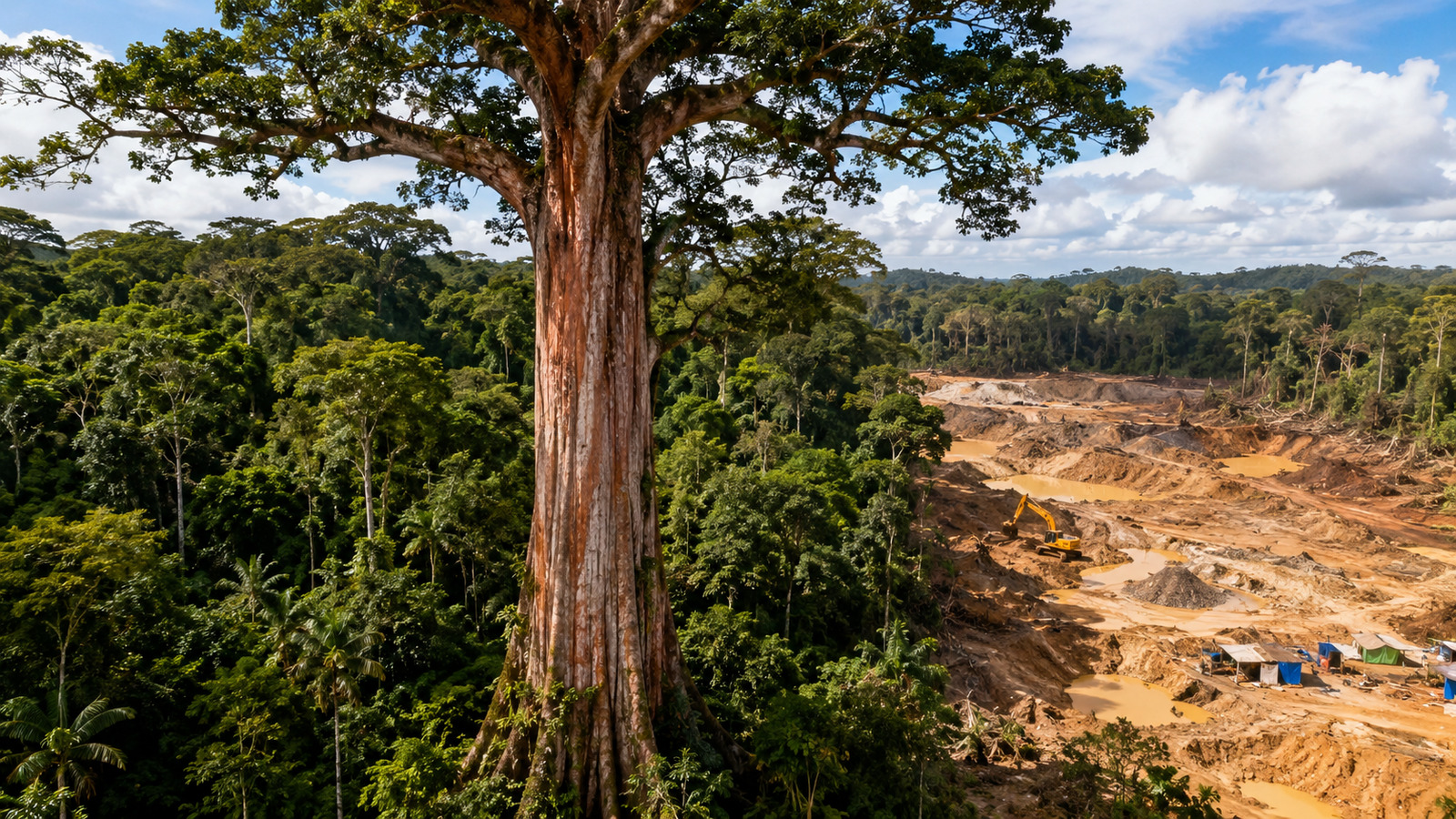

Ibama Operation in the Jari River Valley found mercury, excavators, clandestine runway, and miners’ camps near red angelins reaching 88.5 meters in the Amazon
The forest of giant trees, between Pará and Amapá, is under pressure from illegal mining in the Jari River Valley. In an operation accompanied by Fantástico, Ibama found mercury, excavators, a clandestine runway, and camps near red angelins reaching 88.5 meters.


Illegal mining approaches the giant trees
The inspection took place in an environmental protection area considered one of the most restrictive in the country. At the beginning of the operation, a plane linked to mining took off from a clandestine runway and nearly hit one of Ibama’s helicopters.
According to the agents, the aircraft was supplying an illegal mining front installed within the ecological station.
-
Architecture Students Design 8×12-Foot Microhouse for Homeless in Newark, Proposing Compact Shelter as Urban Solution Amid Housing Crisis

-
From Humble Beginnings to Industry Leader: The 30-Year-Old Scrap Dealer Transforming Brazil’s $1.8 Billion Metal Recycling Sector

-
From Hotel Porter to CEO: Brazilian Entrepreneur Leads Travel Agency Serving Major Brands and Generating $270 Million in Revenue

-
From Selling Cleaning Products in Vans to Over 300 Franchises: Entrepreneur Targets $30 Million by Expanding into Professional Cleaning Services and Laundries




On site, inspectors found camps used by miners, illegal mercury, and operating excavators.
The miners fled into the forest and left behind an improvised village with food, clothes, and equipment.
The camp was destroyed by the team to prevent the area from being quickly reoccupied.
Largest tree in Brazil is a few kilometers from destruction
A few kilometers from the inspected area are the giant red angelins, known as “forest cathedrals.”
The largest specimen mapped in the region measures 88.5 meters in height and is considered the largest tree in Brazil.
Experts warn that mining is approaching preserved areas where these monumental trees have grown for centuries.
Satellite image analyses show that an illegal front is about 1.5 kilometers from one of the giant trees.
Satellite mining specialist Cesar Diniz stated that if gold shows signs of being present in that direction, mining tends to advance into that area. The alert reinforces the direct risk to one of the rarest environments in the Amazon.

Forest gathers unique conditions for trees of almost 90 meters
The region has natural characteristics that help explain the exceptional size of the angelim-vermelho trees.
The clay-rich soil, protected by geological formations against winds and lightning, favors the growth of these trees.
The material also points out that dust from the Sahara Desert, after traveling thousands of kilometers across the Atlantic Ocean, helps fertilize the area. This set of factors creates rare conditions for the development of the forest.
Besides the local ecological importance, the giant trees play a role in climate balance. Researchers estimate that there are about 55 million giant trees in the Amazon, each releasing up to a thousand liters of water vapor per day into the atmosphere.
Organized crime increases pressure on preserved areas
In one of the inspected areas, inspectors found a Brazil nut tree about 50 meters tall felled amid the land devastated by illegal mining. The scene shows the practical impact of mining on large trees.
According to Ibama, the situation has worsened in recent years with the entry of organized crime into the financing of the activity.
Authorities state that factions have started investing in mining due to the high profit and the appreciation of gold in the international market.
Data from the Gold Bulletin, from the Federal University of Minas Gerais, indicate that combating illegal trade and inspection operations have reduced the participation of illegal gold in the Brazilian market.
Even so, researchers warn that mining continues to migrate to new areas of the Amazon.
Concern increased after the Chamber of Deputies approved, last week, a project that prohibits the destruction of equipment used in environmental crimes. For Ibama, the measure may weaken actions against illegal mining.
An angelim-vermelho tree can take about 300 years to reach the monumental size recorded in the forest of giant trees.
Therefore, the advance of illegal mining represents an immediate threat to a natural heritage formed over centuries.
This article was prepared based on information from Fantástico, Ibama, and the Gold Bulletin of the Federal University of Minas Gerais, with data, numbers, and statements preserved as per the consulted material.